

Table of Contents
- Why Unisex Clothing Requires a Different Approach to Fit
- How to Measure Body for Clothing: Step-by-Step Instructions
- Understanding Garment Measurements and Size Charts
- Unisex Size Chart Conversion: From Gendered to Gender-Neutral Sizing
- How Unisex Clothing Fits Different Body Types
- Troubleshooting Common Fit Issues
- Fabric Quality and Durability: Why It Matters for Fit Longevity
- Conclusion
Why Unisex Clothing Requires a Different Approach to Fit
Finding the perfect fit in unisex clothing isn't about luck, it's about understanding how these pieces are engineered differently than traditional gendered apparel. At BALIVENO FASHION HOUSE LTD, we've learned that unisex garments prioritize versatility over body-specific tailoring, which means your approach to sizing and fit needs to shift.
Unisex pieces typically feature straighter lines, drop shoulders, and relaxed proportions that accommodate a broader range of body shapes. Rather than nipping in at the waist or tapering at the shoulders, they create space for movement and comfort across different frames.
A unisex size chart isn't simply a middle ground between men's and women's sizing, it's a completely separate system with its own logic. When you apply gendered sizing logic to unisex pieces, you'll end up frustrated, either drowning in fabric or constrained where you shouldn't be.
The real advantage is flexibility. Once you learn to read these garments correctly, you gain access to pieces that work harder in your wardrobe. A single unisex hoodie layers over everything from fitted basics to oversized sweaters. This versatility only works if the fit actually suits your body.

How to Measure Body for Clothing: Step-by-Step Instructions
Accurate body measurements are the foundation of finding your unisex clothing fit. Measuring yourself takes about five minutes and requires only a cloth tape measure and a mirror.
Wear fitted clothing, a t-shirt and leggings work best. Stand naturally in front of a mirror. The tape measure should sit comfortably against your skin without digging in or sagging. Write down each measurement as you take it.
Measuring Your Chest Circumference
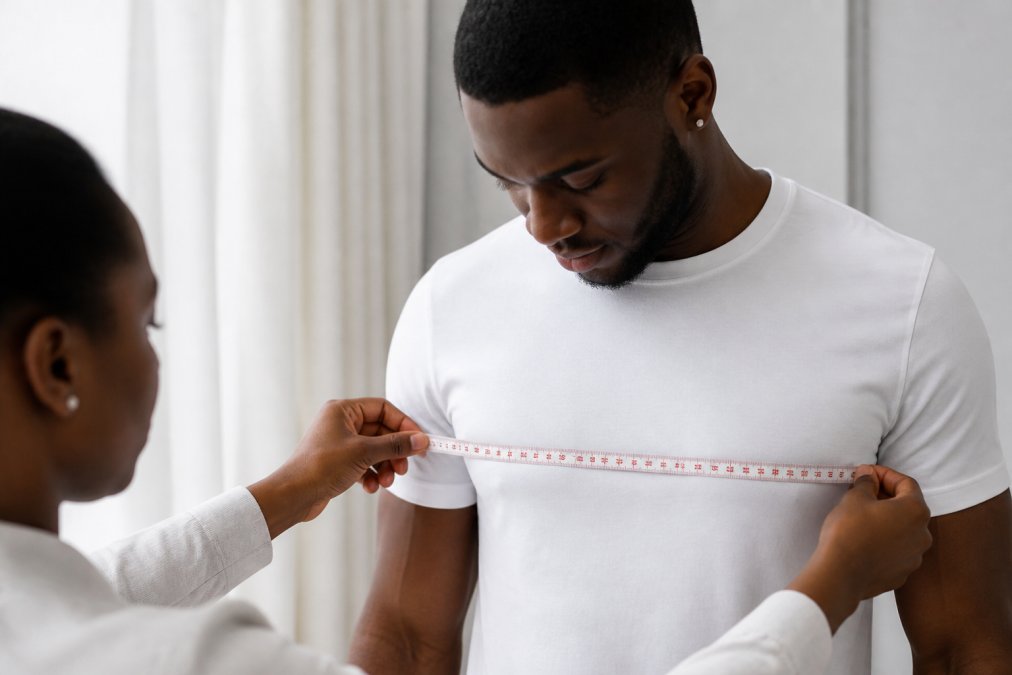
Your chest circumference is the widest part of your torso, measured horizontally across your back and front. Place the tape measure around the fullest part of your chest, keeping it parallel to the ground. Breathe normally; don't hold your breath.
This measurement shapes your entire fit experience. A garment designed for a 36-inch chest circumference will feel snug on a 40-inch frame and oversized on a 32-inch frame. For unisex pieces, chest circumference often matters more than traditional gendered sizing because these garments sit away from the body rather than follow its contours.
Finding Your Waist Measurement
Your waist measurement determines how a garment will sit at your midsection. Find your natural waist, the narrowest part of your torso, typically just above your hip bones. Wrap the tape measure around this point, keeping it horizontal and parallel to the ground.
Because unisex garments don't cinch or taper, the waist measurement tells you whether the garment will bunch, gap, or sit smoothly. A piece with a 32-inch waist measurement will look different on someone with a 28-inch waist than on someone with a 36-inch waist, even if both wear the same overall size.
Getting an Accurate Inseam
Inseam measurement matters for pants, joggers, and long dresses. Wear the shoes you plan to wear with the garment. Stand with your feet hip-width apart and have someone measure from your inner thigh straight down to the top of your shoe.
Inseam accuracy directly impacts how polished a piece looks. Too long, and you'll trip or drag fabric. Too short, and the proportions feel off. For unisex pieces, which often feature relaxed, slightly longer silhouettes, getting this measurement right prevents the garment from looking awkward or unflattering.
Understanding Garment Measurements and Size Charts
Once you have your body measurements, the next step is learning to read a garment's size chart. A size chart isn't a suggestion, it's the designer's specification for how that piece is cut.
Garment measurements and body measurements serve different purposes. Your body measurements tell you your size. Garment measurements tell you how much room a piece will give you. The difference between these two is what creates fit.
A garment with a 40-inch chest measurement is designed to have 4 inches of ease (extra room) if you have a 36-inch chest (peer-reviewed research). That 4 inches allows for comfortable movement and layering. For unisex clothing fit, understanding ease is critical because these pieces are intentionally designed with more ease than fitted garments.
Reading a Unisex Size Chart
Unisex size charts typically organize information by size (XS, S, M, L, XL, etc.) and list measurements for chest, waist, length, and sleeve length. Start with chest measurement. Find the row where the garment's chest measurement matches your chest measurement plus your desired ease. Then cross-reference the other measurements: Does the waist measurement work for you? Is the sleeve length appropriate?
The most common mistake: ignoring measurements you think don't apply to you. Hip measurement matters for unisex fit even if you've never cared about it before. Shoulder width affects how sleeves hang. Every measurement on the chart exists for a reason.
Garment Dimensions vs. Body Measurements
Understanding the difference between garment dimensions and body measurements prevents frustration. Garment dimensions are how the piece is actually cut. Body measurements are your physical size.
Garment dimensions include ease, which is intentional extra room. A t-shirt designed for someone with a 36-inch chest might have a 38-inch chest measurement (2 inches of ease). A relaxed unisex hoodie might have a 46-inch chest measurement for someone with a 36-inch chest (10 inches of ease).

For unisex clothing fit, paying attention to garment dimensions reveals design intent. If a brand consistently uses generous ease across all their pieces, they're designing for relaxed comfort. If they use minimal ease, they're designing for a more fitted silhouette.
| Measurement Type | What It Measures | Why It Matters |
|---|---|---|
| Body measurements | Your actual size | Determines which garment dimensions will fit |
| Garment dimensions | How the piece is cut | Shows how much room and ease the garment provides |
| Ease | Extra room built into the garment | Affects comfort, movement, and how the piece drapes |
| Fit profile | How the piece is designed to sit | Tells you if it's relaxed, tailored, oversized, or fitted |
Unisex Size Chart Conversion: From Gendered to Gender-Neutral Sizing
Converting from gendered sizing to unisex sizing requires understanding that these are separate systems. A women's size 8 doesn't automatically equal a unisex medium, just as a men's large doesn't convert to a specific unisex size.
Start with your actual body measurements, not your typical size label. If you usually wear a women's medium, that tells you your body is approximately a 34-36 inch chest. Use that measurement to find your unisex size by looking at unisex size charts and finding where your chest measurement falls.
If your chest is 36 inches and you want 4-6 inches of ease for a relaxed piece, look for a unisex size with a 40-42 inch chest measurement. The label doesn't matter; the measurements do.
Unisex pieces often run larger than their gendered equivalents because they're designed with more ease. A unisex medium might feel closer to a women's large than a women's medium. This isn't a mistake in sizing, it's intentional design. Many people find they need different unisex sizes for different pieces from the same brand, which is why checking individual size charts for each garment matters.
How Unisex Clothing Fits Different Body Types
The beauty of unisex clothing fit lies in its adaptability. Because these pieces are cut with straighter lines and more generous proportions, they accommodate diverse body shapes more naturally than many gendered alternatives.
Relaxed Fit vs. Tailored Silhouettes
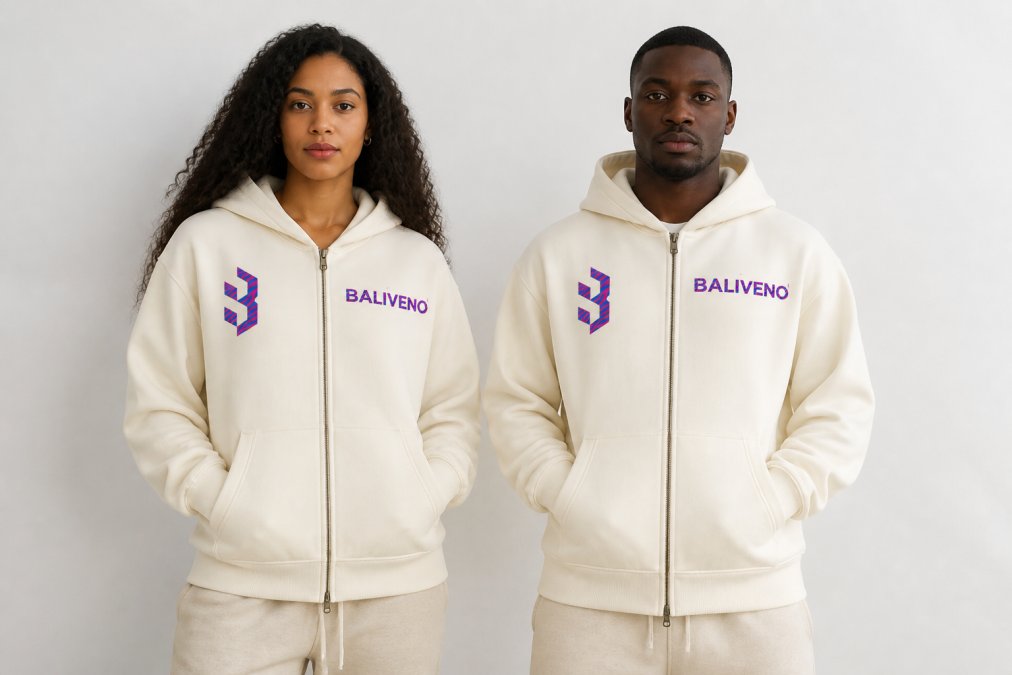
Relaxed fit is the most common unisex silhouette. These pieces feature straight sides, drop shoulders, and generous ease throughout. A relaxed-fit unisex hoodie sits away from your body, creating a comfortable, casual look that works across different body types (peer-reviewed research).
The advantage: it doesn't emphasize or de-emphasize any particular body part. It simply provides comfortable coverage. Tailored unisex pieces do exist, though they're less common.
The key difference: relaxed pieces accommodate a wider range of body types because they don't rely on your body's proportions to look good. Tailored pieces depend more on your actual proportions matching the garment's cut.
Oversized Designs and Shoulder Width Considerations
Oversized unisex designs provide even more flexibility in fit than standard relaxed garments. However, oversized fit introduces a critical variable: shoulder width. When a garment is significantly larger than your body, how the shoulders fall becomes essential.
Shoulder width is one of the most overlooked measurements on size charts, yet it's crucial for unisex clothing fit. A garment designed with 20-inch shoulders will look completely different on someone with 16-inch shoulders than on someone with 18-inch shoulders.
When choosing oversized unisex pieces, pay attention to shoulder width first. If the shoulder measurement works, the oversized silhouette will look intentional and flattering. If the shoulders are too wide, you'll look lost in the garment rather than stylishly relaxed.
Troubleshooting Common Fit Issues
Even with careful measurement and size chart reading, fit issues sometimes happen. Understanding common problems and their solutions helps you adjust your approach.
Excess fabric at the waist: The waist measurement is too large. Solution: look for a brand that offers different proportions, or consider tailoring for pieces you love.
Sleeves that are too long: Unisex pieces often have longer sleeves than gendered alternatives. Solution: cuff the sleeves, have them tailored, or choose brands known for shorter sleeve lengths.
Shoulders pulling or feeling tight: The shoulder width measurement is too small. Solution: size up, or seek brands with wider shoulder constructions in their unisex lines.
Garment length creating an unflattering proportion: Unisex pieces run longer to accommodate different body types. Solution: look for brands with different length options, or consider tailoring.
Fit changing after washing: This usually indicates fabric quality or garment construction isn't holding up to care. Premium unisex pieces maintain their shape through proper fabric selection and construction methods. Solution: follow care instructions carefully, or invest in higher-quality pieces with better fabric durability.
Fabric Quality and Durability: Why It Matters for Fit Longevity
A garment's fit doesn't end the day you buy it. How well the piece maintains its shape through wear and washing directly impacts how it continues to fit over time.
Premium fabric quality is the foundation of fit longevity. Natural fibers like organic cotton and quality blends hold their shape better than lower-quality alternatives. When a garment's fabric begins to pill, stretch out, or lose its structure, the fit deteriorates.
BALIVENO FASHION HOUSE LTD pieces are constructed from premium materials specifically chosen for durability. A 100% organic cotton t-shirt maintains its shape through dozens of wash cycles. The fabric doesn't pill, the seams don't fray, and the overall silhouette remains true.

Fabric weight also affects durability. Heavier fabrics (measured in ounces per square yard) tend to hold their shape better than lightweight alternatives. A 7-8 ounce t-shirt provides structure that lasts. For unisex pieces, which rely on their silhouette to look good, fabric weight is particularly important.
The construction method matters equally. Reinforced seams, quality stitching, and thoughtful garment construction prevent the piece from degrading. Care practices also influence fit longevity. Following washing instructions, avoiding high heat, and storing garments properly preserves fabric integrity.
According to the Sustainable Apparel Coalition's environmental impact data, higher-quality garments worn for longer periods have significantly lower environmental impact per wear than fast-fashion alternatives that degrade quickly. Investing in durable unisex pieces that maintain their fit isn't just better for your wardrobe, it's better for the environment.
Conclusion
Finding your perfect unisex clothing fit is a learnable skill that transforms how you shop and builds confidence in your purchases. Start by measuring your body accurately, learn to read size charts as specifications rather than suggestions, and understand that unisex sizing operates by its own logic separate from gendered alternatives.
Premium unisex pieces from BALIVENO FASHION HOUSE LTD are designed with this philosophy in mind, garments cut with generous ease, constructed from durable fabrics, and engineered to fit diverse body types without compromise. Once you understand how your measurements translate to unisex garments, you'll spend less time returning pieces and more time enjoying clothes that actually work for your body.
Frequently Asked Questions
Q: What size should I get if it's unisex?
A: Start by comparing your body measurements to the unisex size chart rather than relying on your typical gendered size. Measure your chest circumference, waist, and inseam, then match these to the garment dimensions listed. Unisex pieces typically run larger with relaxed silhouettes, so you may size down from what you normally wear. If you're between sizes, consider the fit profile: oversized designs offer more room, while tailored cuts fit closer to the body.
Q: How do I measure myself for unisex clothing?
A: Use a cloth tape measure and wear fitted clothing. For chest circumference, measure horizontally across your bust or chest at its fullest point. For waist, measure at your natural waist where your body bends. For inseam, measure from your inner thigh to your ankle while standing barefoot. Write down all three measurements in inches, then cross-reference them against the garment's size chart. Accuracy is critical, even a half-inch difference can affect how unisex pieces drape on your frame.
Q: Why is unisex sizing different from gendered sizing?
A: Unisex sizing uses standardized dimensions that don't account for typical gender-specific proportions like bust shaping or hip curves. Instead, unisex garments feature neutral silhouettes with consistent shoulder width, chest circumference, and length across all sizes. This means a unisex small might fit differently on different body types than a traditional women's small or men's small. The trade-off is versatility: one cut works across multiple body types, but fit depends entirely on accurate body measurements and understanding the specific garment's construction.
Q: What does a relaxed fit mean in unisex clothing?
A: A relaxed fit provides extra room through the chest, waist, and shoulders for comfort and ease of movement. Unisex pieces with relaxed silhouettes typically feature drop shoulders and boxy proportions that don't follow the body's contours closely. This design choice makes unisex clothing more accommodating across different body types and sizes. Relaxed fits work well for layering and casual wear, though they require accurate measurement to avoid looking oversized or sloppy.
Q: How do I convert men's or women's sizes to unisex sizing?
A: There's no universal conversion ratio because sizing varies between manufacturers. Your best approach is to measure your body and compare those measurements directly to the unisex size chart. If you typically wear a women's medium, that doesn't automatically equal a unisex medium, the garment dimensions differ. Check the chest circumference, waist measurement, and length of the unisex piece against your own measurements. Many brands publish detailed size conversion guides that show how their unisex small, medium, and large align with traditional women's and men's sizing.
Q: What fabric qualities should I look for in unisex clothing?
A: Prioritize breathability, durability, and fabric weight. Unisex pieces often use cotton blends or organic cotton for comfort and longevity. Check the fabric composition, higher cotton percentages offer better breathability, while polyester blends add durability and wrinkle resistance. Fabric weight (measured in ounces per square yard) indicates how substantial the garment feels; heavier fabrics hold their shape better through repeated washing. Look for construction details like reinforced seams and quality finishing, which signal that the piece will maintain its fit and silhouette over time.
Q: Do unisex pieces run big or small?
A: Most unisex clothing runs larger than gendered equivalents because of the relaxed, oversized silhouette that's standard in gender-neutral design. However, 'running big' depends on the specific brand and garment. Some unisex pieces are intentionally oversized for comfort, while others offer a more tailored fit. The only reliable way to know is to check the actual garment dimensions on the size chart and compare them to your body measurements. Don't assume; measure and verify against the manufacturer's specifications before ordering.
Ready to build a unisex wardrobe that actually fits? Explore BALIVENO's collection of premium, sustainable unisex essentials designed for everyday confidence. Each piece is constructed from high-quality materials and engineered for lasting durability, so your investment continues to work for you season after season. Shop our best sellers and discover how the right fit transforms your entire wardrobe.
This article was written using GrandRanker


