

Table of Contents
- Ethical Fashion vs Sustainable Fashion: The Core Differences
- Where the Two Overlap and Where They Diverge
- How to Identify Ethical Fashion Brands
- Benefits of Sustainable Fashion Beyond the Environment
- Transparency in Fashion Supply Chains: What Full Disclosure Looks Like
- Can a Brand Be Sustainable but Not Ethical?
- Frequently Asked Questions
Last Updated: September 15, 2026
Ethical Fashion vs Sustainable Fashion: The Core Differences
The terms get used interchangeably in almost every brand's marketing, but they answer two different questions. Ethical fashion is about how people are treated in the making of a garment: wages, working hours, safety, and whether the factory can be inspected. Sustainable fashion is about what the garment does to the planet: the fiber, the water, the chemicals, and what happens when you stop wearing it.
That distinction matters because a garment can pass one test while failing the other. A recycled polyester jacket made in a factory with unpaid overtime is sustainable on paper and unethical in practice. At Baliveno, we build around the overlap: organic cotton, audited factories, and pieces designed to stay in your wardrobe rather than rotate through it.

Below, we break down where ethical and sustainable fashion overlap, where they split, and how to tell which one a brand is actually delivering.
Where the Two Overlap and Where They Diverge
Ethical fashion and sustainable fashion overlap most in materials and labor, and diverge most in scope. Both care about how a garment is produced; only sustainability extends to what happens after you buy it.
The overlap sits in three places:
- Raw materials. Organic cotton, recycled fibers, and low-impact dyes serve both goals at once.
- Factory conditions. An audited facility with fair wages is an ethical requirement and a sustainability one, because poor facilities waste energy and materials.
- Longevity. A shirt that lasts five years displaces four replacements, which is an ethical outcome and an environmental one.
The divergence shows up in scope. Ethical fashion stops at the people in the supply chain. Sustainability keeps going: water use in cotton farming, microplastics shed in the wash, the carbon cost of shipping, and whether the garment is biodegradable at end of life. A brand can be fully ethical and still ship a synthetic garment that sheds plastic for years.
How to Identify Ethical Fashion Brands
The fastest way to identify an ethical fashion brand is to look for third-party verification, not brand-written claims. A brand that says "ethically made" with no auditor named has told you nothing you can check.
Start with the label and the website. Ethical brands publish the name of the factory, the country, and the standard it was audited against. Vague language like "conscious collection" or "responsibly sourced" without a certifying body attached is a marketing layer, not a commitment.
Certifications and Audits That Carry Real Weight
Certifications matter because they require an outside party to inspect the claim. The ones worth trusting cover labor, fiber, or both.
- Fair Trade Certified verifies wages, hours, and safety conditions at the farm or factory level.
- GOTS (Global Organic Textile Standard) covers organic fiber content plus chemical and wastewater rules in processing.
- B Corp Certification assesses a company's entire social and environmental performance, not one product line.
- SA8000 is a social accountability standard focused specifically on worker treatment.
A brand carrying one of these has been checked. A brand carrying none, while using the vocabulary, has not.
Red Flags in Brand Marketing Language
Watch for claims that sound ethical but commit to nothing. "Ethically inspired," "made with care," and "conscious" are not standards, and no auditor enforces them.
Three patterns should make you cautious:
- No named factory or country of origin. If the supply chain is a secret, the ethics claim is unverifiable.
- A single vague certification badge with no standard name or certificate number.
- A "sustainable" collection sitting next to a fast-turnover core line, which suggests the label is a marketing tier rather than a company-wide practice.
Benefits of Sustainable Fashion Beyond the Environment
The benefits of sustainable fashion reach past carbon and water into your closet, your budget, and your wardrobe's lifespan. The environmental case is well known; the practical case is what changes buying habits.

Durability is the clearest one. Natural fibers like cotton hold their shape and hand-feel through repeated washing in a way that cheap blends often do not, which is why a well-made cotton tee outlasts three fast-fashion replacements. Fewer replacements mean less money spent per year of wear, even when the upfront price is higher.
There is also a comfort argument. Organic cotton skips the finishing chemicals used in conventional processing, which matters for anyone with sensitive skin or a child in the house. And a smaller, better-made wardrobe reduces decision fatigue: fewer pieces, each one you actually reach for.
This is the case for buying fewer, better pieces rather than a full closet refresh every season.
Transparency in Fashion Supply Chains: What Full Disclosure Looks Like
Transparency in fashion supply chains means publishing the factories, countries, and standards behind each product, not just a corporate promise page. Full disclosure is specific enough that a journalist or a customer could verify it independently.
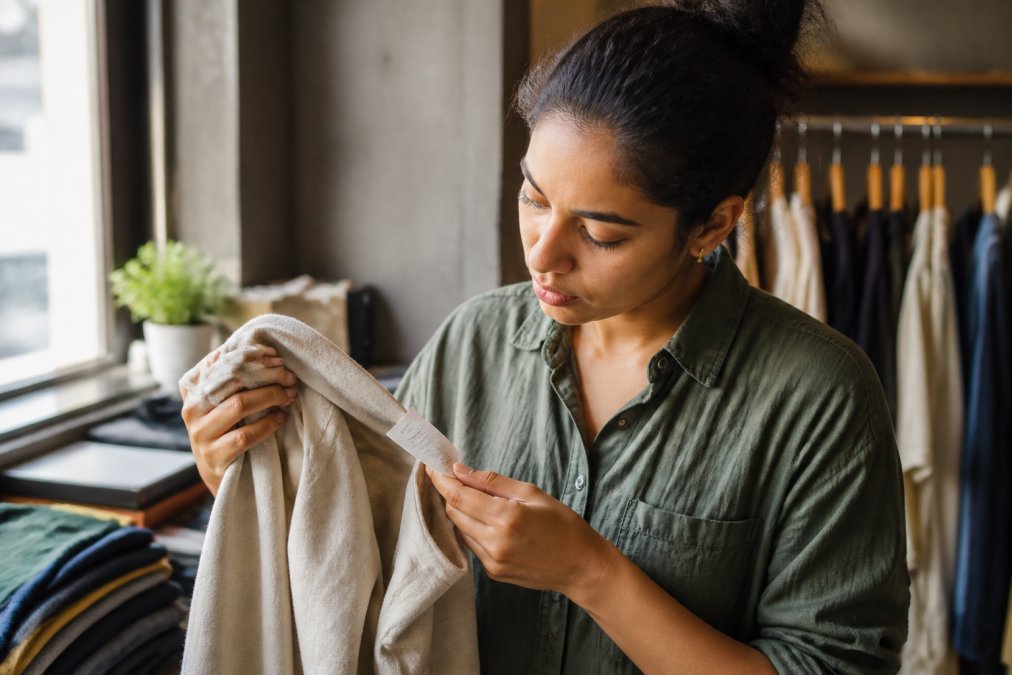
Here is what a genuinely transparent brand publishes:
- The factory name and location for each product, not a general "made in" country.
- The audit standard the facility meets, with the certifying body named.
- Fiber composition and weight, so you know what you are buying and how it will wear.
- Care and end-of-life guidance, including whether the material is biodegradable.
Partial transparency is common and worth noting. A brand might disclose its tier-one factory (final assembly) while staying silent on tier-two (fabric mills) and tier-three (raw fiber). The deeper tiers are where most labor and environmental problems occur, so a disclosure that stops at assembly tells half the story.
Baliveno publishes fiber composition and weight on every product page. The Baliveno Organic Cotton T-Shirt lists certified organic cotton at 155 g/m², produced in a renewable-energy-powered factory audited for social and sustainability standards. That level of detail is what "transparent" should mean in practice.
Can a Brand Be Sustainable but Not Ethical?
Yes. A brand can be sustainable but not ethical, and the reverse is also true. Sustainability measures environmental impact; ethics measures human treatment, and the two do not automatically follow from each other.
Consider a brand that uses recycled materials and carbon-offset shipping, but sources from a factory with suppressed wages. Environmentally, the numbers look good. Ethically, the people making the product are not being treated fairly. The sustainability report is accurate and the ethics gap is real.
The reverse happens too. A small workshop paying fair wages and providing safe conditions might use conventional cotton with heavy water demands. Ethical on labor, weak on environment.
This is why the strongest position is the overlap: verified labor standards plus verified fiber standards. When you shop, ask both questions. If a brand can only answer one, you know which half of the story you are missing.
| Question | Ethical Fashion | Sustainable Fashion |
|---|---|---|
| Focus | People in the supply chain | Environmental impact |
| Key proof | Fair Trade, SA8000 audits | GOTS, recycled content, low-impact dyes |
| Typical claim | "Fair wages, safe factories" | "Organic cotton, lower water use" |
| Blind spot | Can still use polluting materials | Can still use unfair labor |
| Best outcome | Both verified together | Both verified together |
The challenge is that most brands only tell half the story, and the label rarely tells you which half. Baliveno builds around the overlap: certified organic cotton and recycled fibers, factories audited for social and sustainability standards, and pieces made to last rather than turn over.
Frequently Asked Questions
What is the main difference between ethical and sustainable fashion?
Ethical fashion focuses on how people are treated throughout the supply chain, including fair wages, safe working conditions, and no child labor. Sustainable fashion focuses on environmental impact, covering materials, water use, waste, and carbon emissions. A brand can be strong in one area and weak in the other. The most responsible brands address both, which is why the ethical fashion vs sustainable fashion differences matter when you evaluate what you buy.
Can a brand be sustainable but not ethical?
Yes. A company can use organic cotton and recycled packaging while still paying garment workers below a living wage or sourcing from factories with poor safety records. Environmental certifications do not automatically guarantee fair labor practices. When you research how to identify ethical fashion brands, check labor disclosures separately from material claims. Look for factory lists, third-party social audits, and clear statements about wages and working conditions.
What should consumers look for to identify truly ethical brands?
Start with transparency in fashion supply chains. Ethical brands publish where their materials come from and name the factories that assemble their garments. Look for third-party certifications covering both environmental and labor standards. Check whether the brand explains its pricing structure and commits to long-term supplier relationships. Vague claims like eco-friendly without supporting detail are a warning sign. Specific, verifiable information is the strongest indicator.
What are the benefits of sustainable fashion for everyday shoppers?
Sustainable fashion often means better fabric quality and construction, so garments last longer and need fewer replacements. Natural fibers like organic cotton breathe better and hold shape through repeated washing. You also reduce exposure to harmful chemicals used in conventional dyeing and finishing. Many sustainable pieces are designed as timeless basics rather than short-lived trends, which simplifies your wardrobe and lowers the total cost per wear over time.
How do environmental standards differ from labor rights in the garment industry?
Environmental standards govern material sourcing, chemical use, water consumption, and waste management. Labor rights cover wages, working hours, safety conditions, and freedom of association. A factory can pass an environmental inspection while still violating wage laws. That gap is why the ethical fashion vs sustainable fashion differences matter. Responsible brands report on both areas separately and submit to independent audits for each, rather than treating one as a substitute for the other.
EXPLORE THE BALIVENO EDIT
Continue the story
Discover a BALIVENO piece or collection related to the ideas in this article.
BALIVENO Sustainability & Our Impact Explore BALIVENO clothing

