

Table of Contents
- What Fair Trade Clothing Actually Means
- The Human Cost of Fast Fashion: Impact on Human Rights
- How Fair Trade Certification Standards Protect Garment Workers
- Living Wage vs. Minimum Wage: The Gap That Keeps Workers in Poverty
- How to Identify Fair Trade Clothing Brands
- Modern Slavery in Supply Chains: Why Transparency Matters
- The Link Between Environmental and Social Sustainability
- Regulatory Frameworks and Government Oversight
- The ROI of Worker Welfare for Brands
- Technological Solutions for Monitoring Supply Chains
- Conclusion: Why Fair Trade Clothing Matters More Than Ever
- Frequently Asked Questions
Last Updated: September 19, 2026
What Fair Trade Clothing Actually Means
Fair trade clothing is apparel produced under a system of verified standards that require safe working conditions, fair compensation, and the right to organize for the people who make it. This guide from Baliveno Fashion House explains what those standards cover, where they fall short, and how to shop with confidence in 2026.
Most shoppers recognize the phrase and very few can define it. That gap matters, because the label gets applied loosely across the market.
The Core Principles Behind the Label
At its foundation, fair trade rests on a set of commitments that buyers can verify rather than assume. The core principles include:
- Fair compensation that meets a living wage, not just a legal minimum
- Safe working conditions, including fire safety and occupational health protections
- No forced labor and no child labor anywhere in the production chain
- Freedom of association and collective bargaining rights
- Environmental standards that limit chemical use and waste
- Transparent supply chains that allow independent auditing
The Fair Trade Certified program standards sets out these requirements in detail, and certification bodies verify them through scheduled and unannounced inspections.
The label is not decorative. It represents a contractual obligation between producer and certifier. Where most guides get this wrong is treating all certifications as equivalent when the actual auditing requirements vary considerably.
The Human Cost of Fast Fashion: Impact on Human Rights
The impact of fast fashion on human rights shows up in three places: factory floors, pay stubs, and the daily treatment of workers who have little recourse when something goes wrong. Rapid production cycles push pressure downward, and the people sewing garments absorb most of it.
Unsafe Factories and Wage Theft
Building safety remains the most visible failure. When brands demand faster turnarounds at lower unit costs, factories cut corners on maintenance, fire exits, and structural repairs. Wage theft is quieter but just as common: withheld overtime, unpaid hours, and deductions that leave workers below the legal floor.
Gender Discrimination and Harassment in Garment Work
Women make up the majority of garment workers globally, and gender equity issues run through the entire value chain. Documented problems include pregnancy discrimination, unequal pay for equivalent roles, and harassment that goes unreported because workers fear losing their jobs. Worker empowerment programs and confidential grievance channels are the two interventions that consistently move the needle.
How Fair Trade Certification Standards Protect Garment Workers
Fair trade certification standards protect garment workers by requiring independent verification of wages, hours, safety conditions, and worker representation. The certification process is not self-reported; accredited auditors inspect facilities and review payroll records.
What the Auditing Process Actually Involves
A certification is not a one-time stamp. The typical cycle runs like this:
- Application and self-assessment, the producer submits documentation on facility conditions, wage records, and workforce composition.
- On-site audit, an accredited third-party auditor visits the facility, interviews workers privately, reviews payroll and timekeeping records, and inspects safety infrastructure.
- Corrective action plan, findings that fall short of the standard generate a remediation timeline the producer must meet.
- Certification decision, an independent review body, not the auditor who conducted the visit, issues the certification.
- Surveillance audits, unannounced or semi-announced follow-up visits occur during the certification period to confirm conditions hold.
The separation between the auditor and the certifying body matters. It reduces the conflict of interest that arises when the same organization both inspects a facility and decides whether it passes.
Key Certifications to Look For
Several credible certifications cover apparel. Each has different scope, so knowing which one applies to your purchase matters:
| Certification | Primary Focus | What It Verifies | Best For |
|---|---|---|---|
| Fair Trade Certified | Worker wages and conditions | Social compliance, fair pricing, worker premiums | Broad apparel programs |
| GOTS | Organic fiber and processing | Organic content, chemical restrictions, social criteria | Cotton-heavy garments |
| B Corp | Whole-company social impact | Governance, worker, community, and environmental scores | Brand-level accountability |
| SA8000 | Factory labor conditions | Social accountability across eight labor areas | Manufacturing audits |
| OEKO-TEX | Chemical safety in textiles | Harmful substance limits in finished textiles | Consumer health assurance |
A garment can carry more than one certification. A GOTS-certified cotton tee, for example, may also come from a Fair Trade Certified factory. The two certifications cover different things and stack rather than replace each other.
What Certification Does Not Guarantee
Certification covers a defined scope, and that scope has edges. A certified factory can still subcontract work to an uncertified facility without immediate detection. A brand can hold certification on one product line while sourcing another line entirely differently.
What most guides miss is that certification verifies a process, not a finished garment. Traceability across every tier of the supply chain is the harder problem, and it is where most brands still struggle.
How to Verify a Certification Claim in Practice
Most shoppers never check the certificate behind the logo. Here is how to do it in a few minutes:
- Find the certificate number. It is usually printed near the logo or listed on the brand's sustainability page.
- Search the certifier's public database. Fair Trade Certified, GOTS, SA8000, and OEKO-TEX all maintain searchable registries of valid certificates.
- Check the expiry date. An expired certificate means the facility is no longer under active verification.
- Confirm the scope. The certificate should name the facility or product line it covers, not just the parent brand.
A brand that publishes a certificate number you can look up is doing something a brand that only displays a logo is not. That difference is the whole point of third-party verification.
Living Wage vs. Minimum Wage: The Gap That Keeps Workers in Poverty
A living wage is the income a worker needs to cover housing, food, healthcare, education, and modest discretionary spending in their region. A minimum wage is whatever the law requires, and in most garment-producing regions the two figures diverge sharply.
That gap is the central problem in ethical manufacturing. A worker earning the legal minimum can be fully compliant on paper and still unable to feed a family without debt.
Closing it requires brands to pay more per unit, which raises costs. The honest trade-off is that fair compensation shows up in the retail price. There is no version of this where workers earn more and the garment costs the same.
How to Identify Fair Trade Clothing Brands
You can identify fair trade clothing brands by checking four things: published factory lists, third-party certification, wage disclosures, and a stated grievance mechanism. Brands that publish this information are accountable to it. Brands that do not are asking for your trust without evidence.
Here is a practical checklist you can run through in under five minutes:
- Does the brand publish a named list of its factories and their locations?
- Is there a third-party certification logo with a verifiable certificate number?
- Does the brand state a specific wage benchmark, not just "fair wages"?
- Is there a public channel for workers or customers to raise concerns?
- Does the brand disclose fiber composition and processing standards?
- Are care instructions specific enough to extend garment life?
A brand that answers four or more of these clearly is doing more than most. A brand that answers none is a marketing exercise.
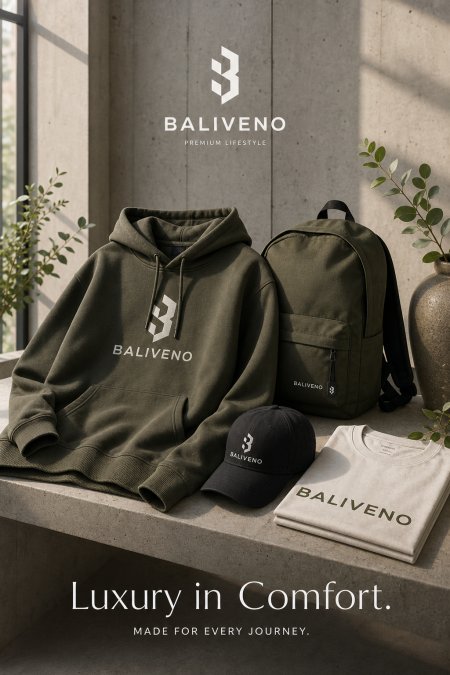
Baliveno Fashion House builds its collections around this standard. Our recycled hoody, for example, is made from 50% post-consumer remanufactured organic cotton and 50% organic cotton in a factory audited for social and sustainability criteria, and we publish that specification rather than implying it.
Modern Slavery in Supply Chains: Why Transparency Matters
Modern slavery in supply chains refers to forced labor, debt bondage, and human trafficking embedded in the production of goods, and it persists because supply chains are long and opacity is profitable. Supply chain mapping is the first defense: you cannot fix what you cannot see.
Human rights due diligence has moved from a voluntary gesture to an expectation in many markets. Corporate social responsibility programs that once consisted of a page on a website now require documented risk assessment across the value chain.
The uncomfortable truth is that most exploitation hides in tiers three and four, deep below the brand's direct suppliers. Raw material sourcing, spinning, and dyeing are where visibility collapses. Traceability programs that reach those tiers are the ones that actually reduce risk.
The Link Between Environmental and Social Sustainability
Environmental and social sustainability are the same problem viewed from two angles. Factories that dump untreated effluent into local waterways are poisoning the same communities whose residents work the sewing lines. Air quality inside a plant is an occupational health issue and an environmental one.
This is why separating the two agendas fails. A brand that markets recycled fabric while sourcing from facilities with unsafe conditions is not sustainable; it is selectively green.
Social sustainability and environmental impact share a root cause: production models that externalize costs onto workers and ecosystems. Fix the labor model and the environmental footprint tends to improve alongside it. The reverse is not reliably true, which is why worker welfare has to come first.
Regulatory Frameworks and Government Oversight
Government oversight of apparel supply chains has tightened over the past several years, though enforcement remains uneven. The clearest example is the Uyghur Forced Labor Prevention Act (UFLPA), signed into law in 2021, which created a rebuttable presumption that goods from certain regions of China are made with forced labor and are therefore barred from import unless the importer can prove otherwise. U.S. Customs and Border Protection enforces it, and shipments have been detained at the border under this authority.
On the disclosure side, the California Transparency in Supply Chains Act requires large retailers and manufacturers doing business in the state to disclose what they do to eradicate slavery and human trafficking from their direct supply chains. It does not require them to actually eliminate the problem, only to say what they are doing about it. That distinction is the law's most criticized feature.
At the federal level, the Tariff Act of 1930, Section 307, prohibits importing goods made with forced labor, and CBP issues Withhold Release Orders against specific facilities or regions when evidence supports it. These orders are public and searchable, which makes them one of the few enforcement tools a consumer can actually track.
What the Regulatory Patchwork Means for Shoppers
The practical effect is that disclosure is becoming standard for large brands while smaller ones remain largely unregulated. A company below the revenue threshold of the California law, for example, may face no disclosure requirement at all. That asymmetry means consumer pressure still carries weight. Where the law does not reach, purchasing decisions do.
Labor protections also vary significantly by jurisdiction, and a garment can pass through several regulatory regimes before it reaches a shelf. A shirt may be cut in one country, sewn in another, and finished in a third, with different labor laws applying at each stage. Checking where a brand manufactures and what that jurisdiction requires is a reasonable starting point, though it is not a substitute for brand-level transparency.
Where Enforcement Still Falls Short
Three gaps persist. First, most disclosure laws require reporting, not remediation, a brand can comply fully while changing nothing on the factory floor. Second, enforcement resources are limited relative to import volume, so only a fraction of shipments are examined. Third, the deepest tiers of the supply chain, raw material extraction and spinning, are the least visible to both regulators and brands.
That is why regulatory frameworks function as a floor, not a ceiling. They set the minimum a company must do and create public records that advocates and journalists can use. The rest of the gap is closed by certification, brand policy, and consumer choice working together.
The ROI of Worker Welfare for Brands
Worker welfare pays back, and this is the angle most coverage ignores. Brands that invest in fair compensation and safe conditions see measurable returns in three areas:
- Lower turnover, which cuts recruitment and training costs
- Higher productivity, because stable teams produce more consistent output
- Reduced audit and remediation costs when problems surface publicly
- Stronger brand equity with buyers who research before purchasing
The calculation is straightforward. A factory with high turnover constantly retrains staff, and quality suffers during every ramp-up. A factory with stable, fairly paid workers produces more reliable garments with fewer defects. That reliability is worth money to a brand selling on quality rather than price.
The mistake is treating worker welfare as philanthropy. It is an operational investment with a defensible return, and brands that frame it that way tend to sustain the commitment longer.
Technological Solutions for Monitoring Supply Chains
Technology has changed what supply chain monitoring can realistically achieve. Where audits once relied on scheduled visits and paper records, current systems can track materials, verify factory locations, and flag anomalies in near real time.
The most useful tools fall into a few categories:
- Blockchain-based traceability that records each transfer of materials between parties
- Satellite and geospatial monitoring that detects unauthorized subcontracting
- Worker-facing mobile reporting that lets employees flag issues anonymously
- Payroll analytics that identify wage theft patterns across facilities
- Digital product passports that carry sourcing data with the garment
None of these replace human auditors. They extend reach and reduce the lag between a problem occurring and someone noticing it. For brands operating across dozens of facilities, that lag is where the worst outcomes hide.
Conclusion: Why Fair Trade Clothing Matters More Than Ever
Production has never been faster, and the pressure on the people making our clothes has never been higher. Every purchase is a vote for a production model, whether or not you intend it as one. Fair trade clothing is the mechanism that makes that vote count.
Baliveno Fashion House was built around the belief that premium quality and ethical manufacturing belong together. Our pieces use organic and recycled materials, our factories are audited for social and sustainability criteria, and our unisex designs are made to last through years of wear rather than a single season. If you want a wardrobe that reflects your values without compromising on finish, explore our best sellers and see the difference for yourself.
Frequently Asked Questions
What is the biggest problem in the fashion industry?
The biggest problem is the widespread exploitation of garment workers. Many factories operate in unsafe conditions, pay below living wages, and deny workers the right to organize. The 2013 Rana Plaza collapse that killed over 1,100 workers remains the most visible example. Beyond safety, wage theft and gender discrimination are systemic issues that fair trade clothing aims to address through auditing standards and supply chain transparency.
How do fair trade certifications protect garment workers?
Fair trade certification standards require brands to pay premiums that fund community development, ensure safe working conditions, and prohibit child and forced labor. Certified operations must allow collective bargaining and provide fair compensation. Independent audits verify compliance. While certification is not a perfect guarantee, it creates accountability mechanisms that do not exist in unregulated supply chains. Look for recognized seals when evaluating fair trade clothing.
What is the difference between sustainable fashion and fair trade clothing?
Sustainable fashion focuses primarily on environmental impact: materials, waste, and carbon footprint. Fair trade clothing emphasizes labor rights, fair compensation, and safe working conditions. The two overlap significantly because social sustainability and environmental sustainability are connected. A brand can use organic cotton but still underpay workers. True ethical manufacturing addresses both. When evaluating brands, check whether they publish information about both environmental practices and worker welfare.
How does the fashion industry impact animal welfare?
The fashion industry affects animal welfare through leather, fur, wool, and down production. Some fair trade clothing brands extend their ethical commitments to animal treatment, requiring humane handling and prohibiting live plucking or fur farming. Certifications like Responsible Wool Standard address this. Consumers prioritizing animal welfare should look for brands that disclose material sourcing and hold suppliers to third-party auditing standards for animal treatment alongside labor protections.
Why is transparency in the supply chain essential for ethical fashion?
Supply chain transparency lets consumers and regulators verify that labor protections and environmental claims are real. Without traceability, brands cannot confirm where materials originate or under what conditions garments are made. Modern slavery and wage theft thrive in opaque supply chains. Brands that practice supply chain mapping and publish factory lists enable independent scrutiny. This accountability is the foundation of ethical manufacturing and consumer trust.
What does employee welfare mean in garment manufacturing?
Employee welfare in garment manufacturing covers safe working conditions, fair compensation, reasonable hours, freedom of association, and protection from discrimination and harassment. It includes access to clean water, breaks, and healthcare. Worker empowerment programs go further by giving employees a voice in decisions affecting their work. Brands committed to social upliftment track these indicators through regular auditing standards and stakeholder engagement with worker representatives.
Fair trade is not a perfect system, and no certification covers everything. But the alternative, buying without asking any questions, guarantees nothing at all. Start with one brand that publishes its standards, and let the rest of your wardrobe follow.

EXPLORE THE BALIVENO EDIT
Continue the story
Discover a BALIVENO piece or collection related to the ideas in this article.
£37.94
Baliveno Drop Shoulder Cotton T-Shirt Explore all clothing

