

Table of Contents
- The Verdict: When Transparency Pays Off
- Strengths: The Benefits of Supply Chain Transparency in Fashion
- Weaknesses: What Transparency Costs You
- How to Identify Ethical Fashion Brands (and Verify Their Claims)
- Fashion Supply Chain Traceability Tools That Do the Work
- Is a Transparent Fashion Supply Chain Worth It for Your Wardrobe?
- Conclusion
- Frequently Asked Questions
Last Updated: September 11, 2026
The Verdict: When Transparency Pays Off
A transparent fashion supply chain is worth it when you can verify what you're claiming, and it's a liability when you can't. That's the whole argument in one sentence. The question "is transparent fashion supply chain worth it" gets treated as a moral one, but it's really an operational one: can you trace where your cotton came from, prove who stitched it, and show the receipts when someone asks?
At Baliveno, we build around this principle rather than bolt it on afterward. Our organic cotton t-shirt, for instance, is made from 100% organic ring-spun cotton, and we publish the sourcing origin rather than leaving it vague. That's the difference between transparency as a marketing word and transparency as a practice.

Below, we'll break down exactly who benefits, who should skip it, and what it actually costs.
The Short Answer
Transparency pays off for brands whose customers ask hard questions and for shoppers who want proof, not promises.
For a label selling $22 organic cotton t-shirts to people who care where the cotton came from, traceability is the product. For a fast-fashion operation competing purely on price, it's overhead with no return.
The honest middle ground: transparency is worth it when it's tied to a specific claim you can defend. It's not worth it as a blanket virtue signal.
Who Should Skip It
Skip full traceability investment if your customer base buys on price alone and never asks about origin. Skip it if you can't maintain the records, because a half-built transparency program is worse than none. And skip the consumer-facing layer if your supply chain has problems you haven't fixed yet. Publishing a map of a supply chain you haven't cleaned up just hands critics a roadmap.
Strengths: The Benefits of Supply Chain Transparency in Fashion
The benefits of supply chain transparency in fashion come down to two things: trust you didn't have to buy, and risk you caught before it became a headline.
Consumer Trust and Brand Integrity
Shoppers increasingly treat "sustainable" as a claim to be tested, not accepted. A brand that can name its mill, its fiber origin, and its audit standard clears a bar that most competitors can't. That's brand integrity in practice: the gap between what you say and what you can prove shrinks to zero.
The practical upside is retention. A customer who verified your claims once tends to stop re-checking. Baliveno's organic ribbed beanie is a small example, but the label carries the fiber content and sourcing note because that's what a skeptical buyer looks for first.

Risk Mitigation and Operational Efficiency
Traceability is a risk tool before it's a marketing tool. When you know your tier-n suppliers, you catch a labor or environmental problem at the source instead of reading about it in a report. Supply chain mapping also exposes duplication and waste: brands routinely find they're paying two intermediaries for the same step.
That's the operational efficiency angle most people miss. Transparency forces you to see your own value chain clearly, and clarity usually reveals money you're leaking.
Weaknesses: What Transparency Costs You
Transparency has real costs, and pretending otherwise is how brands end up with a program they can't sustain. The useful question isn't whether it costs money, it's whether the cost is recoverable, and for whom.
The Price Tag of Proof
Audits, traceability software, and record-keeping all cost money and staff time. For a small label, that's the honest tradeoff: every hour spent documenting a supply chain is an hour not spent on design or sales.
The cost isn't just cash. It's the ongoing discipline of maintaining audit trails, updating supplier records, and re-verifying when a supplier changes subcontractors. A transparency page that's two years stale is a liability.
The ROI Question for Small and Medium Brands
Most transparency content is written for companies with a sustainability department. Smaller brands face a different math, and it's worth walking through it plainly.
Where the cost lands:
- Supplier outreach and record collection, usually the largest time cost, because suppliers rarely have organized documentation ready.
- Audit and certification fees, which scale with the number of facilities you want covered.
- Software or platform subscriptions, if you choose to use them.
- Ongoing maintenance, re-verification, updates, and record hygiene.
Where the return lands:
- Fewer returns and lower support load. Specific fiber content, weight, and care instructions reduce the "this wasn't what I expected" returns that eat margin on small order volumes.
- Higher repeat purchase rate. A customer who verified a claim once tends to stop re-checking and buy again. Retention is cheaper than acquisition at any scale.
- Pricing power on a defensible claim. A verifiable sourcing claim lets a small brand compete on proof rather than on price, which is the only lane a small brand can win against a fast-fashion operation.
- Risk avoidance. Catching a labor or environmental problem at the source costs far less than managing it after publication.
The honest verdict for an SME: the return is real but it's concentrated in retention, returns reduction, and risk avoidance, not in a marketing spike. A brand that expects transparency to function as an acquisition channel will be disappointed. A brand that treats it as a retention and risk tool will usually find the cost recoverable.
The Greenwashing Trap
This is the weakness that sinks brands. Publishing partial information, or information you can't back up, reads as greenwashing the moment someone checks. A "sustainable" tag with no fiber origin, no audit standard, and no verification path is the exact pattern regulators and shoppers have learned to distrust.
The trap is subtle: brands often greenwash by omission rather than by lying. They show the nice part of the supply chain and hide the rest. The Federal Trade Commission's Green Guides set the standard for how environmental marketing claims must be substantiated, and they're worth reading before you publish any sourcing claim.
There's a second-order risk too. Once you publish a traceability claim, you've created a record that can be checked against your actual suppliers. If the two don't match, the gap between the claim and the proof is where greenwashing accusations live, and it's a gap you created yourself.
Who Should Skip It
Skip full traceability investment if your customer base buys on price alone and never asks about origin. Skip it if you can't maintain the records, because a half-built transparency program is worse than none. And skip the consumer-facing layer if your supply chain has problems you haven't fixed yet. Publishing a map of a supply chain you haven't cleaned up just hands critics a roadmap.
How to Identify Ethical Fashion Brands (and Verify Their Claims)
You identify an ethical fashion brand by checking whether its claims are specific, verifiable, and complete, not by reading its mission statement. Vague language is the first red flag. Specific fiber content, named audit standards, and a stated origin are the green flags.
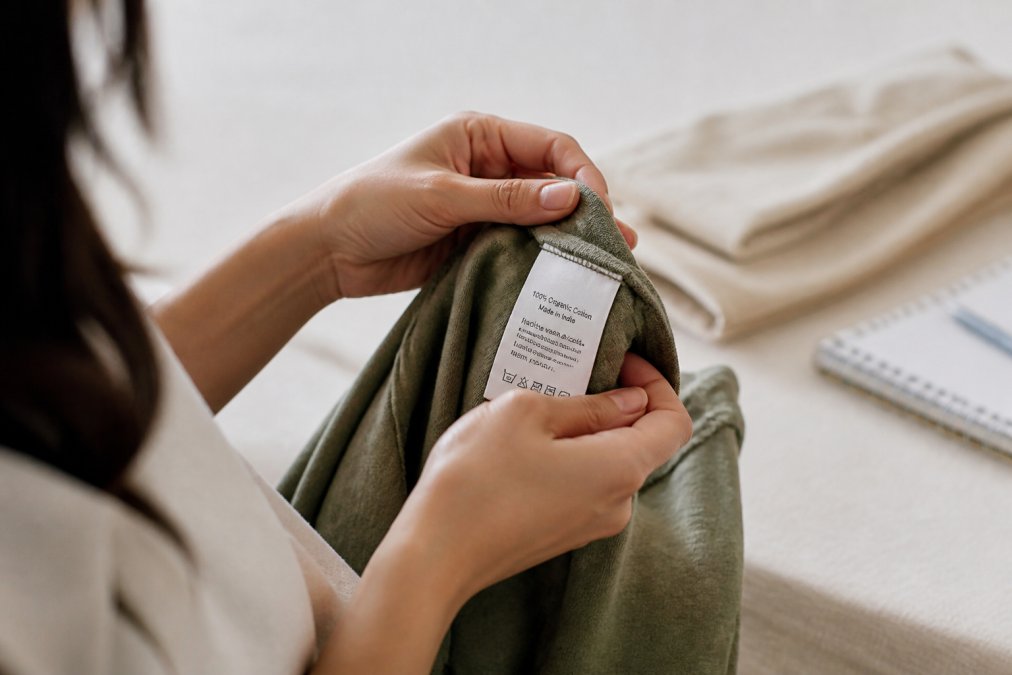
Here's a practical checklist you can run in about two minutes per brand:
- Does the product page state the fiber content and weight, not just "organic"?
- Is the manufacturing origin named, even at country level?
- Is there a stated audit or certification standard, with a name you can look up?
- Does the brand describe care instructions that extend garment life?
- Can you find the same claim repeated consistently across the site, or does it change?
A concrete example: Baliveno's Vintage Washed Oversized Cotton T-Shirt lists 100% cotton at 7.7 oz/yd² (260 g/m²) with specific wash instructions. That level of detail is what separates a verifiable claim from a slogan. The Federal Trade Commission's Green Guides set the standard for how environmental marketing claims must be substantiated, and they're worth reading before you trust any "sustainable" label.

Fashion Supply Chain Traceability Tools That Do the Work
Traceability tools range from full supply chain mapping platforms to simple documentation systems, and the right pick depends on whether you need backend compliance or consumer-facing proof. Most brands need both, but they're different jobs, and conflating them is the single most common mistake in transparency programs.
Backend Compliance vs. Consumer-Facing Proof
Backend compliance tools track suppliers, audits, and certifications for internal and regulatory use. Consumer-facing tools translate that data into something a shopper can read on a product page. A brand that only builds the first layer has compliance without trust; a brand that only builds the second has marketing without substance.
The distinction shows up in the data itself. A compliance record might say "tier-2 spinner verified against a social audit standard in Q2." The consumer-facing version of that same fact is a one-line sourcing note on the product page. Same underlying evidence, two different audiences, two different formats.
The Main Tool Categories
- Tier-n supply chain mapping platforms. These trace a product backward through each production tier, finished goods, fabric mill, yarn spinner, raw material, and flag where records break. The break points are the useful output: they show you exactly where you can't yet make a claim.
- Certification and audit databases. Standards bodies and certification programs maintain searchable registries of certified facilities. Cross-referencing your supplier list against these registries is the cheapest first step most brands can take.
- Chain-of-custody and material-tracking systems. These follow a specific material (organic cotton, recycled polyester) from origin through each processing step, which is what backs a fiber-origin claim.
- Digital product identifiers. QR codes and similar tags that link a physical garment to its traceability record. These are the consumer-facing layer, and they only work if the backend data behind them is real.
- Documentation and record-keeping systems. The unglamorous layer. Spreadsheets, supplier files, and audit-trail discipline. A brand can run a credible program on this alone if the records are complete and current.
What Each Layer Actually Costs You
Cost here isn't mainly licensing fees. It's staff time and maintenance discipline. Mapping a single product line to tier-2 or tier-3 typically takes weeks of supplier outreach, not hours, because most suppliers don't have their own records organized. Certification registries are usually free to search but require your suppliers to hold current certifications. Digital identifiers add a per-item production step. And every layer needs re-verification whenever a supplier changes subcontractors, which happens more often than brands expect.
The SME Angle Most Guides Skip
For small and medium brands, the practical sequence is: start with certification registries and documentation discipline, add tier-n mapping for your highest-risk materials first, and only build the consumer-facing layer once the backend records can survive scrutiny. Building the public layer first is the expensive mistake, it creates claims you can't defend and turns your transparency page into a liability.
For shoppers, the practical takeaway is simpler: look for brands that publish material provenance and care detail at the product level. That's the visible output of a traceability system that actually works, and its absence tells you just as much.
Is a Transparent Fashion Supply Chain Worth It for Your Wardrobe?
For your wardrobe, a transparent fashion supply chain is worth it when it helps you buy fewer, better pieces that last. The value isn't in the label's ethics alone; it's in whether the garment holds up, keeps its shape, and earns its place for years.
That's the ROI angle most transparency debates skip. A traceable, well-made piece that survives hundreds of washes beats three cheap replacements, both financially and environmentally. Durability is the quiet benefit of ethical sourcing, because brands that document their materials tend to use better ones.
Baliveno's approach fits this logic: premium materials, unisex designs, and care instructions built for longevity rather than novelty. If you're rebuilding a minimalist wardrobe, that's the standard to hold every purchase against.
Conclusion
The hard part isn't deciding that transparency is good. It's building a supply chain you can actually document, then resisting the urge to publish claims you can't defend. Most brands fail at the second step, not the first.
Baliveno builds for the first step: premium materials, sustainable sourcing, and unisex luxury comfort pieces designed to last. Our organic cotton t-shirt, the Vintage Washed Oversized Cotton T-Shirt, and the Organic Ribbed Beanie all carry the fiber and care detail that makes a claim verifiable. Shop best sellers and start with pieces you can check for yourself.
Frequently Asked Questions
What does 'transparent supply chain' mean in fashion?
A transparent supply chain means a brand publicly shares who makes its clothes, where materials come from, and under what conditions. This includes naming factories, disclosing tier-n suppliers, and publishing audit results. The goal is to let consumers and regulators verify claims about ethical sourcing and environmental impact rather than trusting marketing language alone.
Does transparency lead to higher production costs for brands?
Yes, often. Mapping suppliers, running audits, and certifying materials add costs that brands pass to consumers. A certified organic cotton t-shirt typically costs more than a conventional one. The trade-off is durability and accountability: Baliveno's Organic Cotton T-Shirt is $22, while the Vintage Washed Oversized Cotton T-Shirt is $25, reflecting the premium for traceable materials and audited factories.
How can consumers verify a brand's supply chain claims?
Look for specific, checkable details: named factories, certification numbers, and audit dates. Brands that publish traceability tools or digital product passports make verification easier. If a brand only uses vague words like 'eco-friendly' without proof, treat the claim with caution. You can also check whether the brand participates in recognized sustainability reporting frameworks.
What is the difference between supply chain transparency and traceability?
Transparency is the act of sharing information publicly. Traceability is the system that tracks materials and products through every stage of production. A brand can claim transparency but lack traceability if it cannot trace a garment back to the raw material. Real accountability requires both: traceability tools generate the data, and transparency shares it with consumers and regulators.
Are there legal requirements for supply chain disclosure in the US?
Yes. The UFLPA (Uyghur Forced Labor Prevention Act) bans imports made with forced labor and requires supply chain due diligence. The FTC Green Guides set rules for environmental marketing claims. California's Transparency in Supply Chains Act requires large retailers to disclose efforts to eradicate slavery and human trafficking. These laws make traceability a compliance issue, not just a marketing choice.

EXPLORE THE BALIVENO EDIT
Continue the story
Discover a BALIVENO piece or collection related to the ideas in this article.
£35.94
Baliveno Drop Shoulder Cotton T-Shirt Explore all clothing

