

Table of Contents
- Recycled Wool vs. Virgin Wool: Key Differences
- Is Recycled Wool as Warm as Virgin Wool?
- Recycled Wool vs Virgin Wool Durability: What the Fiber Length Means
- The Environmental Impact of Choosing Recycled Wool
- Blending Ratios and What to Look For When Buying
- How to Care for Recycled Wool Garments
- The Verdict: Is It Worth the Investment?
- Frequently Asked Questions
Last Updated: September 9, 2026
The question of whether recycled wool is worth it for winter clothing usually comes down to one fear: that sustainability means sacrificing warmth or durability. The short answer is that modern recycled wool performs remarkably close to virgin wool, provided you understand fiber length and how the garment was constructed. This guide from BALIVENO FASHION HOUSE LTD breaks down the technical differences, environmental trade-offs, and what to look for on a label.
Recycled wool is reclaimed fiber sourced from pre-consumer textile waste or post-consumer garments, then mechanically processed back into yarn. It is a cornerstone of circular fashion because it keeps natural fibers in use and reduces the demand for new sheep farming.
Recycled Wool vs. Virgin Wool: Key Differences
The core difference between recycled wool and virgin wool lies in fiber length and the manufacturing process. Virgin wool is sheared fresh and spun with long, continuous fibers, which creates a smooth, strong yarn. Recycled wool comes from shredding existing textiles, a process called mechanical recycling, which breaks those long fibers into shorter staples.
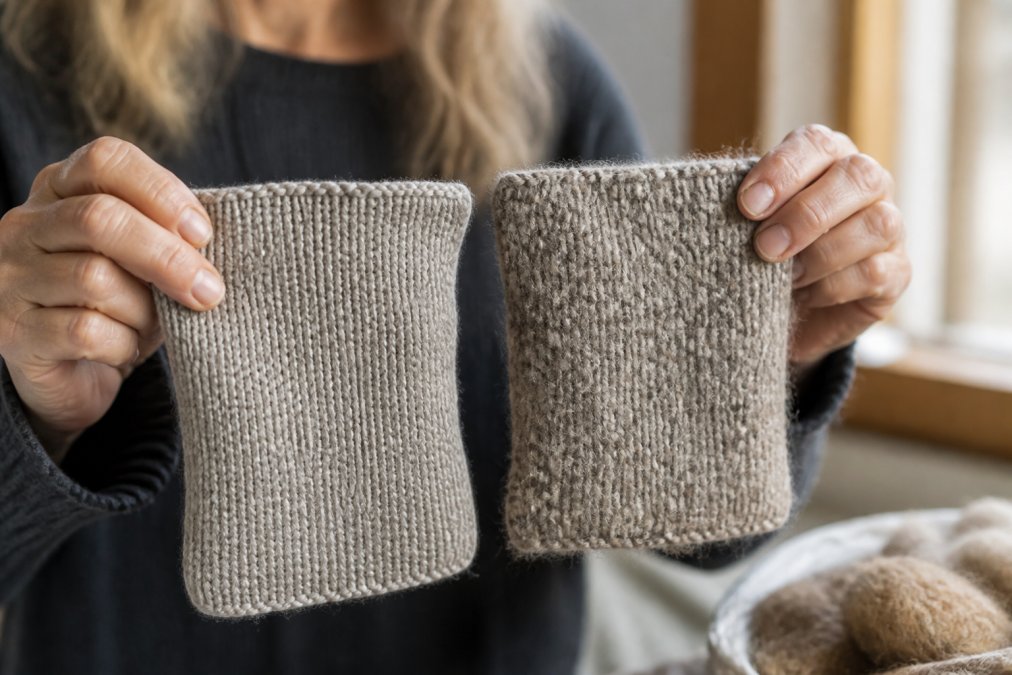
Shorter fibers mean the yarn has more ends that can work loose over time, which is why recycled wool has historically been viewed as less durable. The gap narrows considerably when recycled fibers are blended with nylon or polyester to add tensile strength without sacrificing the wool's natural insulation properties.
| Feature | Virgin Wool | Recycled Wool |
|---|---|---|
| Fiber Source | Fresh sheared fleece | Reclaimed textile waste |
| Fiber Length | Long, continuous | Shorter, varied staples |
| Typical Use | Premium suiting, knitwear | Blankets, outerwear, loungewear |
| Durability | High | Moderate to high with blending |
| Environmental Impact | Higher water and land use | Lower carbon footprint |
Is Recycled Wool as Warm as Virgin Wool?
Yes, recycled wool can be just as warm as virgin wool, because warmth comes primarily from trapped air, not fiber length. Mechanical recycling does not strip wool of its natural crimp, so thermal regulation and breathability remain largely intact.
What matters more is fabric weight and knit density. A heavier, tightly knitted recycled wool garment will outperform a lighter virgin wool piece in cold weather. When comparing winter insulation, look at grams per square meter rather than the source of the fiber.
Recycled Wool vs Virgin Wool Durability: What the Fiber Length Means
The durability gap between recycled and virgin wool is real, but often overstated. Each time wool is shredded and re-spun, fibers shorten and weaken. A garment made from 100% recycled wool with no reinforcement may pill faster and show wear at elbows and cuffs sooner than a virgin wool equivalent.
Reputable manufacturers compensate by blending with stronger fibers, using tighter twist yarns, and opting for denser weaves. If you are buying a recycled wool coat for daily commutes, expect several solid seasons of wear. For rugged outdoor work, a virgin wool or high-blend option is the safer investment.
The Mechanics of Fiber Degradation
Mechanical recycling feeds wool fabric through a garnett machine, a cylinder covered in fine wire teeth, that tears the structure apart and fractures fibers. A typical virgin wool fiber might measure 70 to 100 millimeters in length. After a single pass through a garnett, the average staple length drops to roughly 20 to 40 millimeters; a second cycle can reduce that to under 15 millimeters.
Fiber length directly dictates yarn strength. Shorter fibers require more twist to hold together, but higher twist creates a harder yarn more prone to surface abrasion. Protruding fiber ends are exactly what pilling is, so a 100% recycled wool yarn made from short staples will inherently pill more than a virgin wool yarn of the same weight and knit structure.
How Blending Rescues Durability
The blend ratio is the single most important spec on a label. Adding nylon at 10% to 25% dramatically changes the mechanical profile. Nylon fibers are continuous filaments with high tensile strength and abrasion resistance, acting as a reinforcing skeleton when twisted with short recycled wool staples. The wool provides insulation and moisture management while the nylon carries the mechanical load.
A common industry pattern is a 70/30 blend of recycled wool to nylon for outerwear, allowing the garment to retain wool's thermal character while achieving a Martindale abrasion rating approaching that of virgin wool suiting. A scarf or blanket with a 90/10 blend is acceptable because those items face far less friction than a jacket sleeve.
The Trade-Off You Cannot See
There is a hidden trade-off in heavily blended recycled wool: breathability. Nylon and polyester are hydrophobic, while wool fibers can absorb up to 30% of their weight in water vapor without feeling wet. Adding 20% or more synthetic fiber reduces moisture-wicking capacity. For sedentary winter wear this is rarely noticeable, but for high-output activities like hiking or skiing, a high-synthetic blend can trap perspiration against the skin.
A Practical Durability Benchmark
Assess durability potential from three label details. First, check for a "long-staple recycled wool" claim, which indicates more selective sorting. Second, look for nylon or polyamide between 10% and 25% for daily-wear garments. Third, examine knit density: a tighter, finer gauge holds its shape better than a loose, chunky knit. A garment meeting these criteria will typically deliver five to seven years of regular winter use.
The Environmental Impact of Choosing Recycled Wool
The environmental argument for recycled wool is strong. Wool that is landfilled releases methane as it decomposes. Choosing recycled wool reduces that waste stream and avoids the significant water, land, and energy demands of new wool production.
A recycled wool garment that lasts five years has a far lower environmental impact than a virgin wool garment that lasts eight, because the production footprint is a fraction of the original. Extending the use phase of a recycled wool piece maximizes its waste reduction benefit.
The Circularity Paradox: Can Recycled Wool Be Recycled Again?
What happens to your recycled wool garment at the end of its life? Most recycled wool cannot be mechanically recycled a second time. The shredding process shortened the fiber to a point where a second pass would produce fibers too short to spin into usable yarn, below roughly 10 millimeters, wool fibers cannot be twisted into a coherent thread.
This creates what industry analysts call a "downcycling" loop rather than a true circular one. A virgin wool garment can be recycled into a recycled wool garment, but that garment, once worn out, is far more likely to end up in a landfill than to become a third-generation textile.
What This Means for Your Purchase Decision
The downcycling reality does not negate the environmental benefit, it refines it. The primary ecological win happens at the moment of purchase: you are displacing demand for virgin fiber and diverting waste from a landfill. A 2021 life-cycle assessment in the journal Sustainability found that recycled wool production generates roughly 60% to 70% less carbon dioxide equivalent than virgin wool production.
The circularity claim only holds if the garment is worn for its full potential lifespan. A recycled wool garment must achieve at least 40% of the lifespan of a comparable virgin wool garment to break even on carbon impact. Most well-made recycled wool pieces easily clear that bar.
The Fiber-to-Fiber Recycling Frontier
There is emerging hope for true closed-loop wool recycling. Chemical processes use solvents to dissolve the wool polymer and re-extrude it as fresh fiber without degrading fiber length, making the material functionally equivalent to virgin wool. However, commercial-scale chemical wool recycling is still in its infancy. As of 2026, the vast majority of recycled wool on the market is mechanically processed, so assume any mechanically recycled wool garment you buy is at the end of its fiber's recyclable life.
A More Honest Environmental Calculation
Use a three-part test rather than a simple "recycled = good" heuristic. First, assess the blend: a higher recycled wool percentage means more waste diverted, but a small synthetic reinforcement may extend the garment's life enough to offset its production impact. Second, consider the intended use cycle: a coat worn 100 times a year for five years has a far better impact profile than a trendy sweater worn ten times. Third, plan for end of life: because it likely cannot be recycled again, the most responsible disposal is donation or downcycling into insulation, not the trash bin.
Blending Ratios and What to Look For When Buying
Reading a recycled wool label requires attention to the blend ratio. A garment labeled "recycled wool" can legally contain many recycled content, and the remaining percentage matters. Look for a breakdown like "60% recycled wool, 30% virgin wool, 10% nylon." The virgin wool adds fiber length and softness, while the nylon provides tensile strength and abrasion resistance.
- High recycled content (70%+): Best for scarves, blankets, and low-friction garments.
- Recycled wool blended with nylon or polyester: Ideal for outerwear and jackets where durability is critical.
- Recycled wool blended with virgin wool: Offers a balance of softness, warmth, and longevity for knitwear.
Brands focused on sustainable fashion, like the pieces in the Baliveno collection, often publish these ratios transparently. When a manufacturer invests in a thoughtful blend, the resulting fabric integrity is noticeably higher, and the garment performs closer to a premium virgin wool piece.
How to Care for Recycled Wool Garments
Proper care is the most effective way to extend the life of recycled wool. Because the fibers are shorter, they are more sensitive to agitation and heat. Wash cool, ideally by hand or on a gentle machine cycle, and always hang dry, dryer heat accelerates fiber degradation and causes shrinkage.
Use a wool-specific detergent free of enzymes and brighteners. Fold rather than hang the garment, as hangers can stretch the shoulders. For pilling, use a fabric comb rather than a razor, which can cut fibers. With this routine, a recycled wool garment can maintain its shape and insulation for many seasons.
The Verdict: Is It Worth the Investment?
Recycled wool is worth it for winter clothing when you prioritize environmental impact and choose a well-constructed garment with a sensible blend. It delivers comparable warmth and breathability to virgin wool at a lower ecological cost. The main trade-off is long-term durability, which you can manage through careful selection and maintenance.
For shoppers building a mindful winter wardrobe, the answer is a qualified yes. Look for a mid-weight piece with a reinforced blend and a dense knit, and treat it with the same care you would give a luxury item. If you are seeking a durable, eco-conscious layer that balances comfort and style, recycled wool is a smart investment in both your closet and the planet. Explore how premium recycled materials are crafted into everyday essentials in the Baliveno sustainable collection and see the difference in quality firsthand.
At BALIVENO FASHION HOUSE LTD, we design for longevity. Our pieces, like the BALIVENO STYLISH HOODIE made from 50% post-consumer remanufactured organic cotton, and the denim sherpa jacket with a lining of 100% recycled polyester, are crafted to deliver lasting comfort without compromising on ethics.


Choosing recycled wool is choosing to participate in circular fashion. Baliveno answers the challenge of balancing sustainability with durability by pairing premium recycled materials with construction methods that prioritize garment longevity. Our unisex designs are built to be worn, washed, and worn again, offering a refined alternative to fast fashion.
Frequently Asked Questions
Is recycled wool as warm as virgin wool?
Recycled wool provides solid insulation, though virgin wool typically has a slight edge in thermal efficiency. The shredding and re-spinning process shortens fibers, which can create more air pockets that trap heat, but it also reduces the fiber quality slightly. For most winter conditions, a well-made recycled wool garment with a tight knit will keep you warm. For extreme cold, consider a heavier weight or layering with a base layer. The warmth also depends heavily on the knit structure and garment design.
Does recycled wool lose its durability over time?
Recycled wool can be durable, but its longevity depends on the fiber length and how it is spun. Shorter fibers from the recycling process can lead to pilling or wear over time. To ensure durability, look for recycled wool blended with a small amount of nylon or polyester, which adds strength without compromising the wool's benefits. A tightly spun yarn and a dense weave also improve resistance to abrasion. With proper care, a quality recycled wool garment can last for years, though it may not match the lifespan of a high-grade virgin wool piece.
How do I know if a recycled wool garment is good quality?
Check the label for the percentage of recycled wool and any blended fibers. A higher percentage of wool is good, but a small addition of synthetic fiber like nylon can improve durability. Examine the fabric's density and feel. A tightly woven or knitted fabric will hold its shape better. Look at the stitching and finishing details. If the garment is made from post-industrial waste, it often has longer fibers than post-consumer waste, making it more durable. When in doubt, choose a reputable brand that is transparent about its sourcing and manufacturing.
What are the environmental benefits of choosing recycled wool?
Choosing recycled wool significantly reduces environmental impact. It diverts textile waste from landfills, reducing the demand for land and water used in virgin wool production. The recycling process, which is often mechanical, requires less energy and fewer chemicals than processing new fibers. This lowers the overall carbon footprint of your clothing. By supporting circular fashion, you are contributing to a system where materials are kept in use longer, which is a core principle of sustainable fashion. It is a direct way to make your winter wardrobe more eco-friendly.
Is recycled wool itchy compared to standard wool?
Recycled wool can be itchy, but it is not always the case. The itchiness depends on the fiber's source and quality. Wool from sheep like Merino is naturally finer and less itchy, and this can carry over to recycled versions if the source material is fine. However, recycled fibers can sometimes be coarser. To minimize itch, look for recycled wool garments with a smoother knit or those that are blended with softer fibers like cotton. Wearing a base layer underneath also helps. The texture can also soften with washing and wear.

EXPLORE THE BALIVENO EDIT
Continue the story
Discover a BALIVENO piece or collection related to the ideas in this article.
£35.94
Baliveno Drop Shoulder Cotton T-Shirt Explore all clothing

