

Table of Contents
- What Makes Premium Organic Cotton Clothing Different
-
7 Key Benefits of Premium Organic Cotton Clothing
- 1. Superior Durability and Fabric Quality
- 2. Reduced Exposure to Toxic Chemicals and Synthetic Pesticides
- 3. Benefits for Sensitive Skin and Hypoallergenic Properties
- 4. Enhanced Breathability and Moisture-Wicking
- 5. Environmental Impact: Water Conservation and Soil Health
- 6. Lower Carbon Footprint and Biodiversity Protection
- 7. Microplastic Shedding: A Critical Advantage Over Synthetics
- GOTS Certified Cotton: Understanding Certification Transparency
- The Environmental Impact of Fast Fashion vs. Organic Cotton
- Cost-Per-Wear Analysis: Why Premium Organic Cotton Is a Smart Investment
- Care and Maintenance Guide for Organic Cotton Clothing
- Pros and Cons of Premium Organic Cotton Clothing
- Conclusion: Making the Switch to Premium Organic Cotton
Premium Organic Cotton Clothing: 7 Benefits Explained
Last Updated: July 25, 2026
When you're building a wardrobe that lasts, the fabric matters more than you might think. The benefits of premium organic cotton clothing extend far beyond comfort, they touch on environmental responsibility, skin health, and long-term value. At BALIVENO FASHION HOUSE LTD, we've spent years sourcing and testing premium organic cotton pieces to understand what sets them apart from conventional alternatives. This guide breaks down exactly why premium organic cotton clothing has become the smart choice for conscious consumers who refuse to compromise on quality or ethics.
What Makes Premium Organic Cotton Clothing Different
Organic cotton grows without synthetic pesticides, GMO seeds, or chemical fertilizers. Farmers use natural pest management, crop rotation, and organic fertilizers to maintain soil health and biodiversity. Genuine organic cotton clothing carries certifications like GOTS (Global Organic Textile Standard), which verifies that the fabric is grown organically and processed without toxic chemicals.
Organic Cotton vs. Regular Cotton: The Key Differences
Regular cotton accounts for roughly 2.5% of global agricultural land but consumes approximately 16% of the world's insecticides. Organic cotton eliminates this dependency entirely. Processing also differs, conventional cotton is often bleached and dyed using synthetic chemicals that can linger in the fabric, while premium organic cotton uses natural or low-impact dyes.
7 Key Benefits of Premium Organic Cotton Clothing
1. Superior Durability and Fabric Quality
Premium organic cotton is typically made from longer-staple fibers, creating stronger yarns less prone to pilling. The ring-spun construction used in quality organic cotton pieces creates a smoother surface that resists degradation. A premium organic cotton shirt from BALIVENO FASHION HOUSE LTD maintains its shape, color, and softness after dozens of washes. The fabric softens naturally without losing structural integrity, which is why people keep their favorite organic cotton pieces for years.
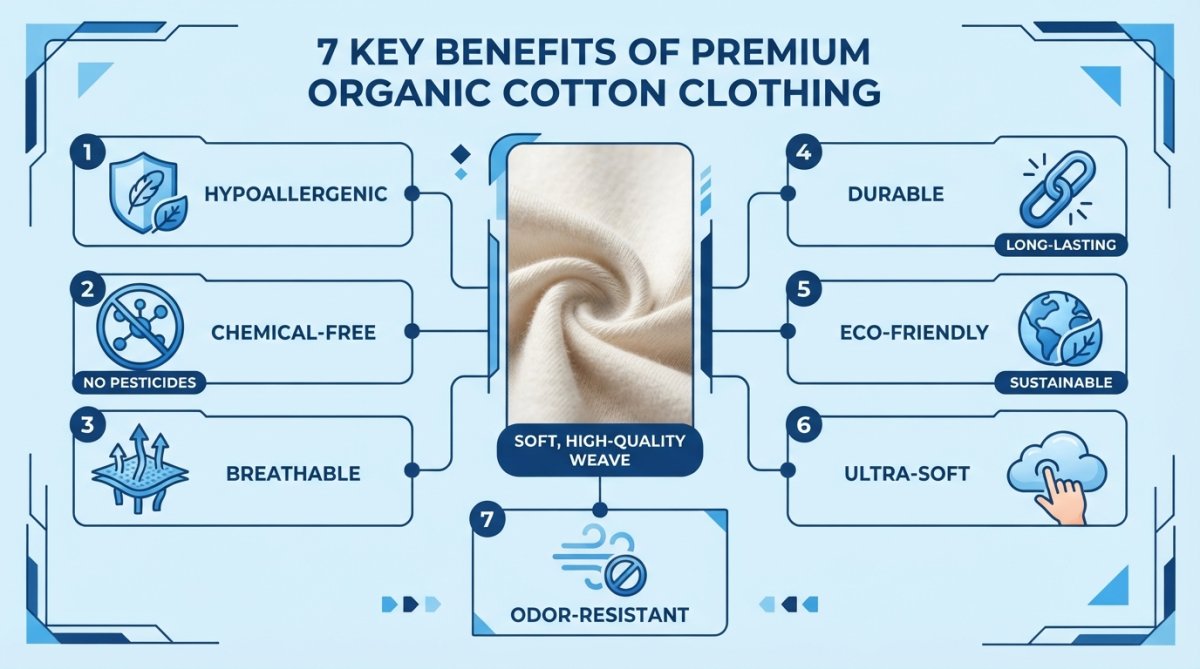
2. Reduced Exposure to Toxic Chemicals and Synthetic Pesticides
Conventional cotton farming relies on synthetic pesticides that can remain in the fiber and transfer to your skin. Organic cotton eliminates this exposure entirely. Processing introduces another layer of chemical exposure, conventional cotton is often bleached with chlorine and dyed with synthetic dyes containing heavy metals or azo compounds. Premium organic cotton uses alternative bleaching methods and natural or low-impact dyes, significantly reducing the chemical load against your body.
3. Benefits for Sensitive Skin and Hypoallergenic Properties
Without synthetic dyes and chemical finishes, organic cotton is less likely to trigger allergic reactions or skin irritation. Conventional cotton's chemical residues can exacerbate skin conditions like eczema. Organic cotton removes these irritants, allowing your skin to breathe naturally. Parents often notice the difference immediately when switching children to organic cotton clothing, rashes diminish and skin appears healthier.
4. Enhanced Breathability and Moisture-Wicking
Premium organic cotton naturally breathes better because it hasn't been chemically treated to reduce wrinkles or improve water resistance. These synthetic finishes impede breathability by creating a chemical barrier on the fabric surface. The natural fiber structure allows air circulation and moisture-wicking that keeps you dry and comfortable year-round. In summer, organic cotton keeps you cooler by allowing moisture to evaporate efficiently. In winter, it regulates body temperature without trapping humidity.
5. Environmental Impact: Water Conservation and Soil Health
Organic cotton farming uses significantly less water than conventional cotton because it relies on rainwater and natural soil moisture retention. Conventional cotton requires approximately 2,700 liters of water to produce a single t-shirt. Organic farming reduces this dramatically through soil health practices that improve water retention.
Soil health is where organic cotton's environmental advantage becomes most apparent. Conventional cotton farming depletes soil through monoculture and chemical inputs. Organic farming builds soil through crop rotation, cover cropping, and natural fertilizers. Healthier soil holds more water, requires less irrigation, and supports biodiversity that creates more resilient agricultural ecosystems.
| Environmental Factor | Conventional Cotton | Organic Cotton |
|---|---|---|
| Water consumption | ~2,700 liters per shirt | ~1,800 liters per shirt |
| Synthetic pesticides | Heavy use | None |
| Soil degradation | Accelerated | Improved through rotation |
| Biodiversity impact | Reduced | Enhanced |
6. Lower Carbon Footprint and Biodiversity Protection
The carbon footprint of organic cotton clothing is lower than conventional cotton across multiple production stages. Organic farming doesn't require synthetic fertilizers, which are petroleum-intensive to manufacture. Manufacturing organic cotton also generates lower emissions because many organic processors prioritize energy efficiency and renewable energy sources.
Biodiversity protection is the environmental benefit most people overlook. Conventional cotton farming destroys habitats through pesticide use and monoculture practices. Organic cotton farming actively protects biodiversity by maintaining diverse plant and animal populations on and around farms, extending to soil microorganisms and pollinating insects.
7. Microplastic Shedding: A Critical Advantage Over Synthetics
Synthetic fabrics shed microplastics with every wash, accumulating in oceans, soil, and human bodies. Organic cotton is completely biodegradable and doesn't contribute to microplastic pollution. When you wash a synthetic garment, it releases thousands of microplastic fibers into wastewater. Organic cotton's fibers break down naturally, and every wash cycle produces zero microplastic pollution.
GOTS Certified Cotton: Understanding Certification Transparency
GOTS (Global Organic Textile Standard) certification verifies that organic cotton clothing is genuinely organic throughout the entire supply chain. The certification verifies organic farming practices, environmental responsibility, and fair labor standards from cultivation through manufacturing. When you see a GOTS label, it means the cotton was grown without synthetic pesticides, processing used low-impact chemicals, and workers were paid fairly with safe working conditions.
Many brands claim organic without certification. GOTS certification requires third-party auditing and ongoing compliance verification. BALIVENO FASHION HOUSE LTD prioritizes GOTS-certified materials because certification transparency builds trust and prevents greenwashing.
The Environmental Impact of Fast Fashion vs. Organic Cotton
Fast fashion produces 92 million tons of textile waste annually, most ending up in landfills. Conventional cotton used in fast fashion contributes significantly to this waste cycle, garments pill, fade, and deteriorate quickly, forcing frequent replacement. Premium organic cotton clothing breaks this cycle by lasting longer. A single premium organic cotton shirt worn for five years has dramatically lower environmental impact than five cheap conventional cotton shirts worn for one year each.
The water and chemical pollution from fast fashion's supply chains is equally concerning. Conventional cotton farming generates significant water pollution through pesticide and fertilizer runoff. Organic cotton eliminates this pollution source while building soil health.
Cost-Per-Wear Analysis: Why Premium Organic Cotton Is a Smart Investment
The price difference between premium organic cotton and conventional cotton often leads people to dismiss organic as unaffordable. However, cost-per-wear tells a different story. A BALIVENO FASHION HOUSE LTD unisex organic cotton t-shirt costs $35. If worn 200 times before wearing out, that's $0.18 per wear. A $12 conventional cotton t-shirt worn 50 times before pilling costs $0.24 per wear. The premium organic option is actually cheaper when accounting for durability.
Over a five-year period, you'll replace conventional pieces multiple times while your organic pieces still look new. The environmental cost-per-wear is equally compelling, with premium organic cotton's lower water consumption and biodegradability spreading across years of use.
Care and Maintenance Guide for Organic Cotton Clothing
Washing, Drying, and Storage Best Practices
Wash organic cotton in cold water whenever possible. Hot water breaks down fibers faster and causes colors to fade. Use mild detergent designed for delicate fabrics and avoid bleach entirely. Turn garments inside out before washing to protect the outer surface from friction damage.
Air dry whenever possible, machine drying generates heat that damages fibers and causes shrinkage. Store organic cotton in a cool, dry place away from direct sunlight, which fades colors and weakens fibers over time.
Pros and Cons of Premium Organic Cotton Clothing
Pros:
- Superior durability and fabric quality that lasts years
- Hypoallergenic properties ideal for sensitive skin
- Zero synthetic pesticide exposure
- Lower water consumption in production
- Biodegradable with zero microplastic shedding
- Better breathability and moisture-wicking
- Improved soil health and biodiversity from organic farming
- GOTS certification provides transparency and verification
- Lower cost-per-wear when durability is factored in
Cons:
- Higher upfront purchase price compared to conventional cotton
- Limited color options due to natural dye restrictions
- Requires careful washing to maintain durability
- Smaller selection available from most retailers
- May shrink slightly if not washed in cold water
The cons are manageable. The higher price is offset by durability and cost-per-wear. The limited selection is actually an advantage for building a minimalist, intentional wardrobe.
Premium organic cotton clothing represents a fundamental shift in how you approach your wardrobe. Rather than treating clothing as disposable, organic cotton pieces become investments that improve with age and use. BALIVENO FASHION HOUSE LTD's collection of premium organic cotton items demonstrates that durability and style aren't mutually exclusive. Start with one quality piece and experience the difference that genuine organic certification, superior construction, and natural fibers make. The environmental and personal health benefits compound over years of wear, making the initial investment genuinely worthwhile.
Global Organic Textile Standard certification requirements and standards
United States EPA guidance on pesticide use in conventional cotton farming
Ellen MacArthur Foundation report on textile industry environmental impact and circular economy solutions
Frequently Asked Questions
What are the main benefits of organic cotton clothing for sensitive skin?
Organic cotton clothing eliminates exposure to synthetic pesticides and toxic chemicals used in conventional cotton production, making it ideal for sensitive skin. Without synthetic dyes and harsh chemical treatments, organic cotton reduces skin irritation, itching, and allergic reactions. The hypoallergenic nature of premium organic cotton clothing also means fewer irritants contact your skin, providing relief for conditions like atopic dermatitis and eczema. Additionally, the breathability of organic cotton allows skin to regulate moisture naturally, further reducing irritation.
How does GOTS certified cotton differ from regular organic cotton?
GOTS (Global Organic Textile Standard) certification ensures that organic cotton meets strict environmental and social standards throughout the entire supply chain, from farming through manufacturing. While all organic cotton avoids synthetic pesticides and GMO seeds, GOTS certified cotton guarantees transparency in production, ethical labor practices, and chemical-free processing. This certification provides consumers with verified proof that the product truly meets organic standards, whereas uncertified organic claims lack independent verification. When shopping for premium organic cotton clothing, look for GOTS certification as proof of authenticity.
Is organic cotton clothing more durable than conventional cotton?
Yes, premium organic cotton clothing typically offers superior durability compared to conventional cotton. Organic cotton fibers are often longer and stronger, and the absence of chemical damage from synthetic pesticides preserves fiber integrity. Additionally, organic cotton garments are frequently produced with higher-quality manufacturing standards and better care during processing. When properly maintained, premium organic cotton pieces can last significantly longer than fast-fashion alternatives, making the higher initial investment worthwhile through extended wear life and reduced replacement frequency.
Why does organic cotton clothing cost more, and is it worth the investment?
Premium organic cotton clothing costs more due to stricter farming practices, certification requirements, ethical labor standards, and superior fabric quality. However, the cost-per-wear analysis often favors organic cotton: these pieces last longer, resist pilling and fading, and maintain their shape through repeated washing. When you factor in durability, health benefits, and environmental impact, the higher upfront cost translates to better long-term value. For consumers committed to sustainable fashion and quality basics, premium organic cotton represents a smart investment in your wardrobe and the planet.
This article was written using GrandRanker


