

Table of Contents
- Why Sustainable Fashion Matters Today
- The Cost Per Wear Formula: Real Financial Savings
- How to Identify Ethical Fashion Brands
- Building a Capsule Wardrobe for Long-Term Value
- Environmental and Health Benefits of Sustainable Fashion
- Durability and Quality: Why Premium Materials Last
- Sustainable Fashion as a Competitive Business Advantage
- Conclusion
Last Updated: August 19, 2026
Why Sustainable Fashion Matters Today
Sustainable fashion has shifted from niche trend to necessity. The conventional approach, buy cheap, wear once, discard, leaves consumers with overflowing closets, mounting debt, and the sense they're throwing money away. At BALIVENO FASHION HOUSE LTD, we've observed a fundamental shift in how discerning consumers think about their wardrobes. The benefits extend far beyond environmental virtue signaling: they touch your wallet, your daily confidence, and the longevity of what you own.
The fashion industry generates significant environmental impact through resource depletion, carbon emissions, and textile waste. Yet this reality creates an opportunity for individuals willing to approach clothing differently. When you invest in sustainable fashion, you're rejecting a broken model and choosing pieces designed to last, made with intention, and constructed to respect both people and planet.
A single quality piece worn 100 times costs far less per wear than a cheap alternative worn five times before it falls apart. This isn't abstract theory, it's practical mathematics anyone can apply to their closet starting today.
The Cost Per Wear Formula: Real Financial Savings
The cost per wear formula is your most honest measure of clothing value. Divide the total price of a garment by the number of times you'll realistically wear it. That's your true cost per wear.
A $125 sustainable jacket worn 200 times costs $0.63 per wear. A $35 fast-fashion alternative worn 8 times costs $4.38 per wear. The math reveals why cheap clothing is expensive.
Most people never calculate this. They see the price tag and decide instantly. But when you apply cost per wear to your actual behavior, everything changes. That premium organic cotton t-shirt at $22 sounds expensive until you realize you'll wear it for five years, 150+ times. Suddenly it costs $0.15 per wear.
The formula works because it forces honesty about your habits. Will you actually wear this piece regularly? If no, the price is irrelevant. If yes, premium quality becomes the rational choice.
| Item Type | Sustainable Price | Annual Wears | Cost Per Wear (Year 1) | Cost Per Wear (Year 3) |
|---|---|---|---|---|
| Organic Cotton T-Shirt | $22 | 60 | $0.37 | $0.12 |
| Premium Sweatshirt | $45 | 80 | $0.56 | $0.19 |
| Quality Denim Jacket | $125 | 100 | $1.25 | $0.42 |
| Eco Raglan Hoodie | $80 | 90 | $0.89 | $0.30 |
Year one looks expensive. Year three reveals the true bargain.
How to Identify Ethical Fashion Brands
Not every brand claiming sustainability delivers it. Greenwashing, making vague environmental claims without real accountability, has become rampant. You need a framework to distinguish genuine commitment from marketing theater.
Start with supply chain transparency. Ethical fashion brands publish information about where and how their products are made. They name their factories, labor standards, and environmental practices. They invite scrutiny rather than hiding behind vague language. When a brand refuses to answer where a product is manufactured or what labor conditions exist, look elsewhere.
Look for third-party certifications. Fair trade certification, organic cotton verification, and sustainability audits from independent organizations carry weight because they involve external accountability.
Examine material composition closely. Sustainable brands specify fiber content and production methods. They use organic cotton, recycled polyester from post-consumer waste, and other materials with documented environmental benefits. A brand that says "100% organic cotton" or "60% organic cotton, 40% recycled polyester" is being precise about what you're buying.
Check how the brand talks about durability. Sustainable fashion companies emphasize longevity. They provide care instructions designed to extend garment life and discuss fabric weight, construction methods, and quality standards. They're building pieces meant to last years, not selling replacements for next season.
Research the brand's environmental commitments beyond individual products. Do they have documented goals for carbon footprint reduction? Do they publish annual sustainability reports? The benefits of investing in sustainable fashion multiply when you choose brands genuinely committed to systemic change.
Building a Capsule Wardrobe for Long-Term Value
A capsule wardrobe is a curated collection of versatile, high-quality pieces that work together across seasons and occasions. It's the practical application of sustainable fashion thinking. Instead of accumulating hundreds of items you rarely wear, you invest in 30-40 pieces that mix and match infinitely.
The capsule approach maximizes the benefits of investing in sustainable fashion because it forces intentionality. You buy less overall, which means you can afford higher quality. You wear each piece more frequently, which improves cost per wear. You reduce decision fatigue, getting dressed becomes simple because everything coordinates.
Start with a neutral color palette: black, white, cream, gray, and navy. These colors coordinate effortlessly and never go out of style. Add one accent color that reflects your personality. This constraint sounds limiting until you realize how many outfit combinations emerge from a small, cohesive palette.
Choose pieces in natural, durable fabrics. Organic cotton, linen, wool, and recycled polyester hold up to repeated wearing and washing. Avoid synthetic blends that pill, lose shape, or fade quickly.
Build around basics first. A well-fitting organic cotton t-shirt, a premium sweatshirt, quality denim, and a versatile jacket form your foundation. These pieces work year-round and pair with everything else. Only after establishing basics should you add statement pieces or seasonal items.


The capsule wardrobe model directly addresses the problem with fast fashion. Instead of buying 50 items you wear occasionally, you own 35 items you wear constantly. That shift in behavior is where real sustainability begins.
Environmental and Health Benefits of Sustainable Fashion
The environmental case for sustainable fashion rests on concrete realities. Conventional textile production consumes enormous quantities of water, generates chemical pollution, and produces significant carbon emissions. Sustainable fashion addresses each through different mechanisms.
Organic cotton eliminates synthetic pesticide use. Conventional cotton farming accounts for a disproportionate share of global pesticide consumption despite using only a small percentage of agricultural land. Organic cotton requires no synthetic inputs, protecting soil health, water quality, and agricultural worker health. When you choose organic cotton pieces like BALIVENO's organic cotton t-shirt or baby bodysuit, you're directly supporting an agricultural model with lower environmental impact.
Recycled materials divert waste from landfills while reducing the need for new resource extraction. The recycled polyester sherpa lining in BALIVENO's denim sherpa jacket comes from post-consumer plastic bottles. Using recycled fibers requires less energy than producing virgin synthetics and eliminates the resource depletion problem entirely.

Ethical manufacturing practices reduce chemical pollution. Sustainable brands work with facilities that treat wastewater properly, minimize dye waste, and use safer chemical processes, protecting both the environment and workers.
The health benefits extend to the wearer. Organic cotton contains no synthetic pesticide residues and breathes better than many synthetic alternatives, reducing skin irritation. Sustainably produced garments avoid harsh chemical finishes that can cause allergic reactions. For parents buying children's clothing, pieces like BALIVENO's organic cotton baby bodysuit eliminate exposure to unnecessary chemicals during vulnerable developmental periods.
When clothing is designed to last and eventually biodegrade or recycle, it prevents the accumulation of synthetic waste in landfills and oceans. This protects water systems, soil quality, and ultimately the food chain. The benefits of investing in sustainable fashion ripple outward through environmental systems that directly affect human health.
Durability and Quality: Why Premium Materials Last
Premium materials survive repeated wearing and washing because they're engineered to. The difference between a shirt that lasts one season and one that lasts five seasons comes down to specific material choices and construction methods.
Fabric weight matters enormously. BALIVENO's men's premium sweatshirt uses 8.5 oz/yd² fleece, substantial enough to maintain structure through hundreds of washes. Lightweight fabrics pill, thin out, and lose their shape. Premium weight fabrics maintain integrity, which is why cost per wear favors quality: heavier, denser fabrics simply outlast thin alternatives.
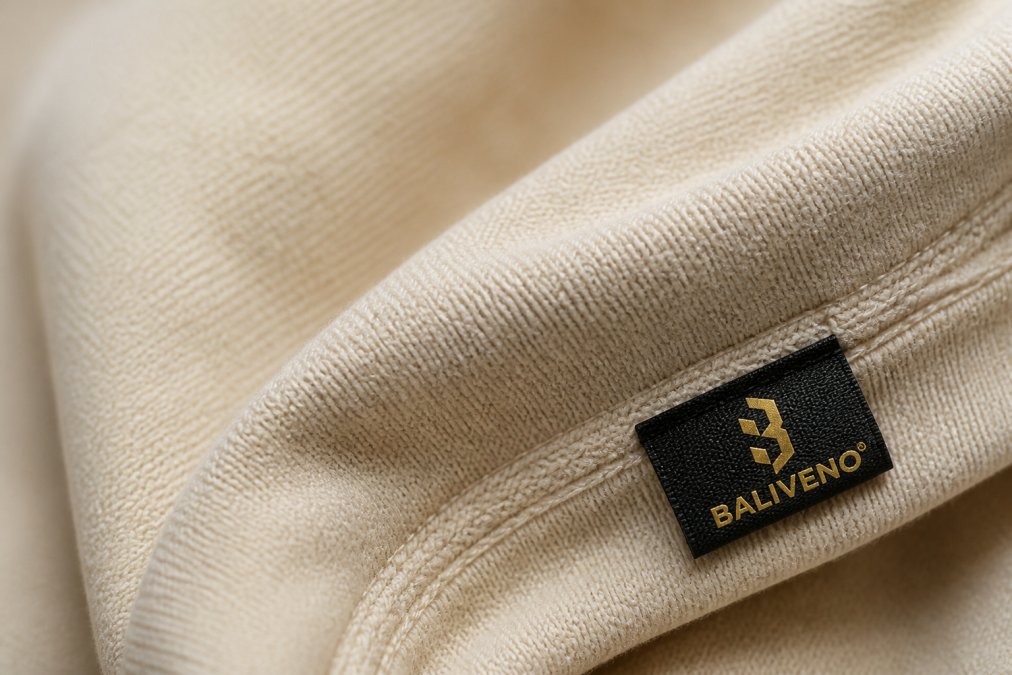
Fiber composition determines longevity. 100% organic cotton maintains its softness and breathability through years of use. Blends that include recycled polyester gain durability, the synthetic fibers prevent excessive stretching and shrinkage. BALIVENO's eco raglan hoodie uses 80% organic cotton with 20% recycled polyester for this reason: the blend creates a garment that resists wear while maintaining natural fiber comfort.

Construction methods separate quality from cheap alternatives. Double-needle stitching on hems and seams distributes stress across two thread lines. Side-seamed construction prevents seams from splitting under arm movement. Reinforced pockets and button attachment points survive repeated use. These details cost more to execute, which is why they appear in premium garments and disappear in fast fashion.
Dye quality affects longevity. Premium dyes bond properly to fibers and resist fading through washing and sunlight. A faded shirt is a dead shirt in most people's eyes, even if the fabric remains structurally sound.
The benefits of investing in sustainable fashion compound through durability. A garment that lasts five years instead of one reduces your annual clothing consumption by 80%. That's 80% less manufacturing, transportation, and waste. The environmental impact of choosing quality is profound.
Sustainable Fashion as a Competitive Business Advantage
Brands investing in sustainable practices respond to a fundamental market shift. Consumer behavior has changed, and competitive advantage now flows to companies that understand this shift early.
Younger consumers, who will drive purchasing decisions for the next three decades, prioritize sustainability. They research brands before buying, share recommendations on social media, and abandon brands caught greenwashing. This isn't a niche preference, it's becoming baseline expectation. Brands that position sustainability as an afterthought lose market share to those making it central to their business model.
Supply chain transparency has become a competitive differentiator. Brands that can prove ethical labor practices, environmental responsibility, and product quality attract customers willing to pay premium prices. The benefits of investing in sustainable fashion extend to the companies making it, they build customer loyalty that transcends price competition.
Resource efficiency improves margins. Waste reduction, energy efficiency, and optimized production processes lower costs while improving environmental impact. Sustainable practices aren't always more expensive; often they're more efficient. Brands that master this efficiency gain structural cost advantages.
Durability creates customer lifetime value. When a customer buys a jacket that lasts five years instead of one, they develop trust in the brand. They return for additional purchases and recommend the brand to others. The lifetime value of a customer buying durable goods far exceeds the value of someone making impulse purchases from fast fashion retailers.
Regulatory pressure is accelerating. Environmental and labor regulations continue tightening globally. Brands already operating under sustainable standards face no compliance risk. Early movers in sustainable fashion gain regulatory advantage.
The benefits of investing in sustainable fashion are no longer theoretical. They're practical, measurable, and increasingly undeniable. When you choose quality over quantity, durability over disposability, and ethics over convenience, you're making a financial decision that happens to align with environmental responsibility. You're reducing waste, lowering your cost per wear, and building a wardrobe that actually serves your life.
BALIVENO FASHION HOUSE LTD demonstrates what this commitment looks like in practice: premium materials sourced from audited facilities, fair labor practices throughout the supply chain, and pieces designed for longevity rather than seasonal replacement. When you shop with brands that prioritize these principles, you're not paying extra for sustainability, you're paying for quality that lasts, which is precisely what sustainability requires.
The shift toward sustainable fashion isn't coming. It's here. The question isn't whether to invest in sustainable fashion, but whether you'll make that shift before your current approach becomes financially and environmentally untenable. The math favors change. The quality favors change. The future favors change. Start building a wardrobe that actually works.
Frequently Asked Questions
How much money can I actually save by investing in sustainable fashion?
Sustainable fashion saves money through the cost per wear formula, dividing a garment's price by how many times you wear it. A $125 sustainable jacket worn 200 times costs $0.63 per wear, versus a $40 fast fashion jacket worn 10 times at $4 per wear. Quality pieces last years longer, reducing replacement costs and total wardrobe spending over time.
What are the primary environmental advantages of choosing sustainable fashion?
Sustainable fashion reduces carbon footprint, water consumption, and textile waste. Organic cotton uses 91% less water than conventional cotton. Recycled polyester diverts plastic from landfills. Ethical production minimizes chemical dyes and synthetic waste. Supporting brands committed to supply chain transparency and fair labor practices also reduces the environmental impact of the entire garment lifecycle.
How do I know if a fashion brand is actually ethical?
Look for verifiable certifications like Fair Trade, GOTS (Global Organic Textile Standard), or B Corp status. Check if the brand publicly shares supply chain information, factory locations, and labor practices. Ethical brands provide transparency about materials sourcing and production methods. Avoid greenwashing by verifying claims with third-party audits rather than relying on marketing language alone.
Why does sustainable fashion cost more upfront?
Sustainable fashion costs more because ethical labor practices, organic materials, and quality craftsmanship all increase production expenses. Fair wages for factory workers, certified organic fibers, and rigorous quality control are more expensive than fast fashion shortcuts. However, the higher upfront cost is offset by durability, pieces last 5-10 years instead of one season, making the true cost per wear significantly lower.
This article was written using GrandRanker
EXPLORE THE BALIVENO EDIT
Continue the story
Discover a BALIVENO piece or collection related to the ideas in this article.
BALIVENO Sustainability & Our Impact Explore BALIVENO clothing

