

Table of Contents
- Why Ethical Fashion Standards for Everyday Clothing Matter
- Core Principles of Ethical and Sustainable Fashion
- How to Identify Ethical Fashion Brands: A Step-by-Step Approach
- Ethical Clothing Certifications: What They Verify and What They Don't
- Sustainable Clothing Materials: Organic, Recycled, and Lower-Impact Choices
- Clothing Brand Supply Chain Transparency: What to Look For
- Evaluating Brands Without Certification: A Practical Standard
- Affordability and Access: Ethical Everyday Wardrobes on a Budget
- Greenwashing and Certification Limitations: How to Spot Unsupported Claims
- Measurable Impact and Trade-Offs in Ethical Fashion
- Building an Ethical Everyday Wardrobe: Practical Steps
- Conclusion
- Frequently Asked Questions
Last Updated: October 12, 2026
Why Ethical Fashion Standards for Everyday Clothing Matter
Ethical fashion standards for everyday clothing are the benchmarks that determine how a garment was made, who made it, what it contains, and what happens to it after you stop wearing it.
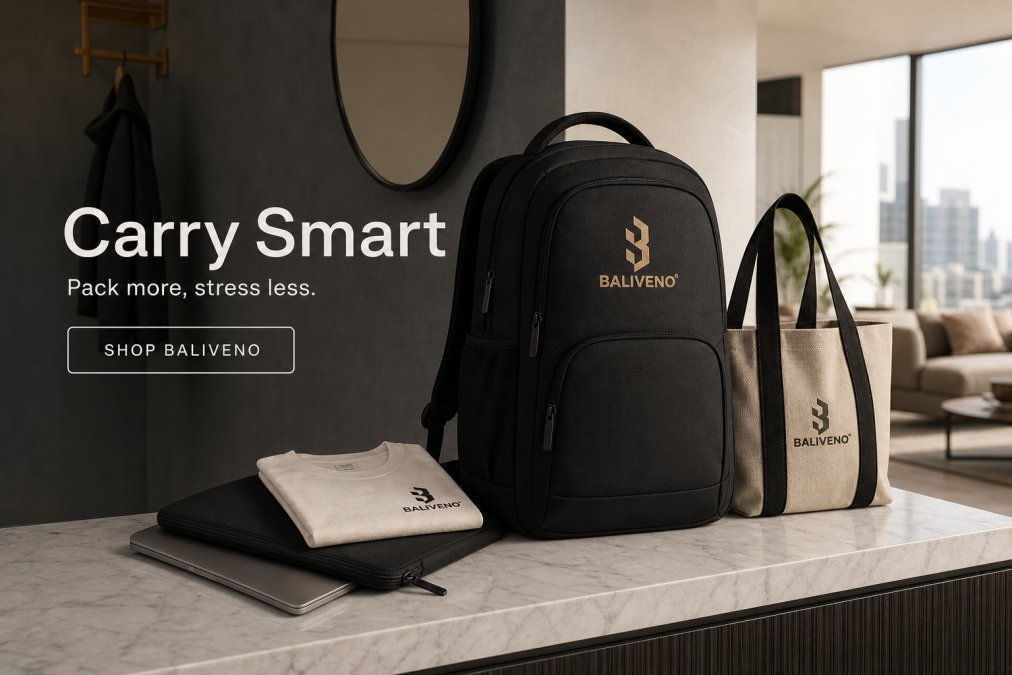
Here at Baliveno, we build our collections around that reality. We are an independently owned fashion house, and we have watched the conversation around ethical clothing shift from a niche concern to a mainstream expectation.
Core Principles of Ethical and Sustainable Fashion
Sustainable fashion is a production and consumption model that reduces harm to people and the environment across a garment's full life, from raw fiber to end of use.
Those two pillars are not interchangeable. A brand can use organic cotton grown without synthetic pesticides and still pay its sewing operators below a living wage.

This is the throughline for everything that follows: ethics in clothing is a verification problem, not a values problem. Almost everyone claims the values.
Fair Labor and Safe Working Conditions
Fair labor means workers are paid a wage they can live on, are not subject to forced or child labor, can organize or raise concerns without retaliation, and work in conditions that do not endanger their health.
The practical difficulty is that most clothing is made in facilities the brand contracts rather than operates. That distance is where problems hide. A common mistake is assuming a well-known brand name guarantees safe factory conditions.
Fair wages deserve a specific note, because "competitive wages" is a phrase that means very little.
Environmental Impact Across the Clothing Supply Chain
The environmental footprint of a garment is spread across several stages, and each stage carries a different kind of harm. Fiber production consumes land and water. Textile production uses energy and chemicals.
Textile waste is the stage consumers see most directly.
Here is the part most guides get wrong. They treat environmental impact as a single score, as if a shirt were either "green" or "not green." In practice you are trading one impact against another.
How to Identify Ethical Fashion Brands: A Step-by-Step Approach
Identifying ethical fashion brands comes down to three checks performed in order: verify certifications, review supply chain transparency, and assess materials and durability claims.
Work through these five steps in sequence. Each one filters out a category of unsupported claim.
- Look for a named certification, not a symbol. A logo without a certification body name and a certificate number is decoration.
- Check whether the certification covers the whole garment or just the fiber. Organic cotton certification says nothing about the factory that sewed it.
- Ask whether the brand publishes its factory list. Brands that name their suppliers can be checked. Brands that describe them in general terms cannot.
- Read the material composition and the care label together. A delicate fabric that requires dry cleaning has a different real-world footprint than a durable one you can wash cold and hang dry.
- Compare cost per wear, not sticker price. A $35 organic cotton t-shirt worn twice a week for three years is cheaper per wear than a $12 shirt that pills after ten washes.
That fifth step is where most budget-focused shoppers get stuck, and it is the step that most often flips the math in favor of buying less and choosing better.

Check Certifications and Labels
Ethical clothing certifications are third-party verification programs that audit a specific claim, such as organic fiber content, chemical safety, or fair trade practices. The critical word is specific. No single certification covers an entire garment's ethics.
A certification is only as strong as its scope. Some programs audit a farm. Some audit a factory. Some audit a finished product. When you see a label, your job is to work out which of those it is, because a fiber-level certification and a factory-level certification answer completely different questions.
Review Supply Chain Transparency
Clothing brand supply chain transparency is the practice of publicly disclosing where and how a garment was made, including the names and locations of supplier facilities.
What most guides miss is that transparency and ethics are not the same thing. A brand can be fully transparent about a supply chain that has serious problems. Transparency is the precondition for accountability, not proof of it.
Assess Materials and Durability Claims
Durability is the most underrated ethical attribute in clothing, and it is the one you can assess most directly. A garment that lasts twice as long halves its effective impact per wearing, regardless of what it is made from.
Look for construction details rather than marketing language. Double-needle stitching at stress points, a ribbed collar that holds its shape, side-seamed construction, and a fabric weight that suits the intended use are all signals that a piece was built to be worn rather than replaced.
Ethical Clothing Certifications: What They Verify and What They Don't
Certifications verify one link in the chain, not the whole chain.
Here is the comparison that matters. Each certification below answers a narrow question, and the fourth column tells you what it leaves unanswered.
| Certification | What It Verifies | Scope | What It Does Not Cover |
|---|---|---|---|
| Organic textile certification | Organic fiber content and processing chain | Fiber through finished textile | Wages, factory safety, durability |
| Global Organic Textile Standard | Organic fiber plus restricted chemical use in processing | Processing stage | Sewing factory conditions, pay |
| OEKO-TEX | Absence of harmful substances in the finished article | Finished product testing | Fiber origin, labor practices |
| Fair Trade | Trade terms and premiums for producers | Producer level | Chemical use, end-of-life impact |
| Factory social audits | Working conditions at a named facility | One facility, one point in time | Subcontracting, fiber sourcing |
Read that table left to right and the logic becomes obvious. A shirt can carry an organic textile certification and an OEKO-TEX certification and still be sewn in a facility nobody has audited.
Sustainable Clothing Materials: Organic, Recycled, and Lower-Impact Choices
Sustainable clothing materials are fibers and fabrics produced with reduced environmental harm at the growing, processing, or manufacturing stage.
Organic cotton is grown without synthetic pesticides and fertilizers, which reduces chemical runoff and soil damage compared with conventional cotton.
None of these is automatically the right answer. Organic cotton still requires water and land.
This is where materials and garment longevity connect.
Clothing Brand Supply Chain Transparency: What to Look For
Supply chain transparency is verifiable when a brand publishes specific, checkable information about its suppliers rather than general statements about its values. The test is simple: could a third party take what the brand published and go verify it independently?
Four things separate real disclosure from marketing copy.
- Named facilities with locations. "Our partners in South Asia" is not disclosure. A factory name and city is.
- Audit results, including failures. Brands that only publish passing audits are curating, not disclosing.
- A stated response when problems are found. Remediation policy tells you whether audits have teeth.
- Coverage of subcontractors. Most garment supply chain problems occur one tier down from the facility the brand contracted.
Traceability goes a step further by connecting a specific finished item to a specific batch of material. Full traceability is rare in apparel because fibers from many farms are typically blended before spinning.
Evaluating Brands Without Certification: A Practical Standard
Most everyday clothing is not certified, and that does not automatically make it unethical.
What you need is a repeatable way to judge a brand that has no certificate to show you.
Score each of the five categories from 0 to 2.
- Supplier disclosure (0-2): 0 means no information beyond a country or a vague region. 1 means the brand names countries of production and describes its supplier relationships. 2 means it publishes factory names and locations, or at minimum a supplier map that a third party could check.
- Labor policy specificity (0-2): 0 means a general statement about respecting workers. 1 means a written code of conduct covering wages, hours, and safety. 2 means the code names a living wage benchmark, describes how wages are measured against it, and explains what happens when a supplier falls short.
- Material honesty (0-2): 0 means descriptors like "premium cotton" or "eco-blend." 1 means a stated fiber composition. 2 means composition plus fabric weight, blend ratios, and the name of the fiber standard if one applies.
- Durability signals (0-2): 0 means no construction detail at all. 1 means general claims about quality. 2 means specific details such as fabric weight in ounces per square yard or grams per square meter, stitch type, seam construction, and where reinforcement is placed.
- End-of-life guidance (0-2): 0 means nothing. 1 means care instructions. 2 means care instructions plus a repair path, a take-back program, or published guidance on resale and recycling.
Here is how that plays out on a real decision.
You still do not know everything about Brand B.
A few cautions about using this standard well.
- Do not average away a zero. A brand that scores 2 on materials and 0 on labor disclosure has told you where its evidence stops. A strong score in one category does not offset silence in another.
- Weight the categories to your own priorities. If labor conditions are your primary concern, treat a 0 on supplier disclosure as disqualifying regardless of the total.
- Reward specificity over enthusiasm. A brand that says less but says it precisely is usually further along than a brand that says a great deal in adjectives.
- Re-score after a year. Disclosure practices change. A brand that published a supplier list last year and removed it this year is telling you something.
This rubric will not give you certainty, and it is not meant to.
Affordability and Access: Ethical Everyday Wardrobes on a Budget
The cost-per-wear idea is the foundation, and it is worth understanding precisely.
That math only holds under two conditions.
Now the part most guides skip: the levers that do not require spending more.
- Secondhand first for the categories where it works. Outerwear, denim, knit sweaters, and bags hold up well secondhand and are widely available. Underwear, socks, and base layers are usually better bought new. Thrift and resale pricing is often a fraction of new retail, and the garment already exists, so no new fiber, dye, or sewing is required.
- Repair before replacing. A blown seam, a missing button, a small hole, and a worn cuff are all repairable. A tailor or cobbler can often fix an item for a small fraction of replacement cost, and many brands now offer repair services for their own products. Learning a basic running stitch and a button reattachment covers most everyday failures.
- Care changes that cost nothing. Washing in cold water, using less detergent, washing less often, and hanging to dry reduce both energy use and the mechanical wear that causes pilling, fading, and shape loss. This is the single highest-return habit change available to any wardrobe, at any budget.
- Prioritize by wear frequency, not by category. Identify the three or four pieces you wear every week. Those are the ones where durability pays you back. Everything else can be inexpensive and replaceable without much loss.
- Buy off-season and end-of-season. The same garment at a lower price has a lower cost per wear from day one. This is not an ethical argument, it is an arithmetic one.
- Use what you own first. The lowest-impact garment is the one already in your closet. A wardrobe audit that surfaces forgotten pieces often removes the need to buy anything at all for a season.
A practical budget approach looks like this.
Access matters here too.
One more point on trade-offs. A heavier, more durable fabric often costs more and feels different against the skin.
Greenwashing and Certification Limitations: How to Spot Unsupported Claims
Greenwashing is marketing that implies an environmental or ethical benefit the product does not actually deliver.
Watch for these patterns.
- Vague comparatives. "More sustainable" than what, and measured how?
- Single-issue focus. A brand that talks only about fiber while never mentioning factories is choosing its evidence carefully.
- Borrowed authority. Certification logos used without a certificate number or scope description.
- Natural-is-better reasoning. "Natural" and "synthetic" are not ethical categories. A durable synthetic blend can outperform a fragile natural fabric on total impact.
- Imagery over information. Farmland photography in place of a supplier list.
The Federal Trade Commission's Green Guides set out how environmental marketing claims are expected to be substantiated, and they are worth knowing because they establish that a claim needs evidence behind it, not just good intentions.
Certification limitations are real, too. Audits capture a snapshot. They can be gamed. They often miss subcontracting tiers. None of that makes certification worthless. It makes it a starting point rather than a verdict.
Measurable Impact and Trade-Offs in Ethical Fashion
Measurable impact in ethical fashion means tracking outcomes you can actually observe, like how many times you wear a garment, how long it lasts, and how often you replace it.
The trade-offs are genuine and worth naming honestly. Organic fibers can cost more. Durable construction often means heavier fabric, which some people find less comfortable in warm weather.
There is no configuration that eliminates every impact. What you can do is choose which impacts you are willing to accept and which you are not, and then buy accordingly.
Building an Ethical Everyday Wardrobe: Practical Steps
An ethical everyday wardrobe is built in stages, starting with what you already own and adding deliberately rather than replacing everything at once. The goal is a small set of pieces you wear often, care for properly, and keep for years.
Work through these steps in order.
- Audit what you have. Count how many items you wore in the last two weeks. That number is your real wardrobe size.
- Identify the gaps you actually fill. Replace only the pieces you reach for weekly, not the ones you wish you wore.
- Set a cost-per-wear target. Divide the price by the number of wears you expect. Anything above a dollar per wear is worth reconsidering.
- Prioritize construction over fiber claims. Stitching, fabric weight, and seam type predict lifespan better than a fiber name.
- Learn the care routine. Washing cool, avoiding tumble drying, and hanging to dry extends garment life more than almost any purchase decision.
- Add one piece at a time. Give yourself a season to see whether a piece earns its place before buying the next.
- Repair before replacing. A repaired seam costs far less than a new garment and keeps material in use.
Our Baliveno Eco Heavyweight Tee is built for this approach, using a 5.6 oz organic cotton and recycled polyester blend that diverts roughly four plastic bottles per shirt from the waste stream. The Men's Premium Sweatshirt follows the same logic with an 8.5 oz tightly knit 3-end fleece construction and double-needle stitching at the collar, cuffs, and hem.

Conclusion
The hard part of ethical fashion is not caring about it. It is verifying it, because the gap between what brands claim and what they can prove is where most good intentions stall. Building a wardrobe on evidence rather than adjectives takes more attention up front, but it produces clothing you keep, wear, and trust.
That is the standard we hold ourselves to at Baliveno. Explore our unisex essentials and see what a wardrobe built on verifiable standards actually looks like.
Frequently Asked Questions
What is ethically sourced clothing?
Ethically sourced clothing means the materials and labor used to make a garment meet certain social and environmental standards. This includes fair wages, safe working conditions, and reduced chemical use. Certifications like Fair Trade, GOTS, and OEKO-TEX help verify these claims. For everyday clothing, look for brands that publish factory lists and audit results. Ethical sourcing also considers animal welfare and land use. Without certification, ask brands directly about their supply chain and worker policies.
Is it true that 85% of all textiles go to dumps each year?
Yes, according to the Ellen MacArthur Foundation, about 85% of textiles end up in landfills or incinerators each year. This statistic highlights the scale of textile waste. Choosing durable, versatile pieces and caring for them properly reduces this impact. Brands that prioritize quality and timeless design help lower waste. Repairing and reusing clothing also extends garment life. Consumers can support circular fashion by buying less and choosing well-made items.
How can you tell whether a clothing brand is ethical?
Start by checking for third-party certifications like Fair Trade, GOTS, or OEKO-TEX. Look for supply chain transparency: does the brand list its factories and share audit results? Review materials: organic cotton, recycled fibers, and low-impact dyes are positive signs. Check labor practices: fair wages and safe conditions are essential. If a brand makes vague claims without evidence, treat them with caution. A practical standard is to ask for proof of certifications, factory lists, and worker policies.
Which certifications can help identify ethical clothing?
Key certifications include Fair Trade (fair wages and safe conditions), GOTS (organic textiles), OEKO-TEX (chemical safety), and B Corp (overall social and environmental performance). Each verifies different aspects. For example, GOTS covers organic farming and processing, while OEKO-TEX focuses on harmful substances. Fair Trade ensures worker rights. No single certification covers everything, so look for multiple. Also check if the certification applies to the specific product or just the brand's overall operations.
What should shoppers look for in a clothing brand's labor practices?
Look for published codes of conduct, factory lists, and audit results. Fair wages mean workers earn enough to meet basic needs. Safe conditions include proper ventilation, fire safety, and no forced labor. Brands should also respect freedom of association. Certifications like Fair Trade or SA8000 verify these practices. If a brand does not share this information, ask directly. Transparency about labor practices is a strong indicator of ethical commitment.
Are natural fabrics always more sustainable than synthetic fabrics?
Not always. Natural fabrics like organic cotton use less water and no pesticides, but conventional cotton is water-intensive and chemical-heavy. Synthetic fabrics like polyester are made from fossil fuels but can be recycled. The sustainability depends on production methods, durability, and end-of-life. For example, organic cotton is better than conventional, and recycled polyester is better than virgin. Look for certifications and consider the full lifecycle. Durability and care also matter: a long-lasting garment of any fiber reduces waste.
How can you build a more ethical everyday wardrobe?
Start by buying less and choosing well. Prioritize durable, versatile pieces that you will wear often. Look for certifications and transparent brands. Choose organic or recycled materials when possible. Care for clothes properly: wash less, air dry, and repair. Support brands that offer repair services or take-back programs. Build a capsule wardrobe of timeless items. Over time, these habits reduce your environmental footprint and support fair labor.
What does a clothing brand's supply-chain transparency mean?
Supply chain transparency means a brand publicly shares information about its suppliers, factories, and production processes. This includes listing factory names and locations, disclosing audit results, and explaining material sourcing. Transparent brands make it easier to verify ethical claims. They often publish this data on their websites or in annual reports. Without transparency, consumers cannot confirm whether a brand meets ethical standards. Transparency is a key indicator of accountability.
Ethical fashion standards only mean something when a brand is willing to be held to them. Baliveno builds everyday clothing around certified organic and recycled materials, audited manufacturing, and construction designed for long-term wear. Start with the pieces you will reach for every week, and let the cost per wear make the case. Shop our best sellers and build a wardrobe you can verify.


