

Table of Contents
- Why Fast Fashion Fades While Sustainable Clothing Endures
- The Real Lifespan: Sustainable vs Fast Fashion Numbers
- How to Identify High-Quality Clothing Before You Buy
- Cost Per Wear Calculation: The Number That Decides Value
- Garment Care Tips for Longevity: Make Every Piece Last
- What to Ignore: Common Myths About Sustainable Clothing
- Why Your Shopping Habits Matter More Than the Label
- Conclusion: Build a Wardrobe That Outlasts Trends
- Frequently Asked Questions
Last Updated: September 8, 2026
The difference between a garment that survives a decade and one that frays after ten washes comes down to the intent behind its construction. Sustainable clothing is designed to be worn, repaired, and worn again, while fast fashion is engineered for a brief season of use. This guide from BALIVENO FASHION HOUSE LTD breaks down the real lifespan of each, the material science that decides it, and how to measure value and care for pieces so they outlast trends.
Why Fast Fashion Fades While Sustainable Clothing Endures
The fast fashion cycle is built on planned obsolescence. Garments are mass-produced from low-cost synthetic fibers with loose construction, designed to be replaced rather than repaired.
Sustainable clothing, by contrast, follows the principles of slow fashion and the circular economy. It prioritizes natural fibers, ethical manufacturing, and construction quality. The result is a piece that resists fiber degradation, holds its shape, and avoids the disposable culture that drives textile waste.
A common mistake is assuming "sustainable" simply means eco-friendly materials. In practice, it also signals a commitment to durability and resource efficiency. When a brand invests in sustainable materials, it usually invests in the stitching, seams, and finishing that keep those materials intact.
The Real Lifespan: Sustainable vs Fast Fashion Numbers
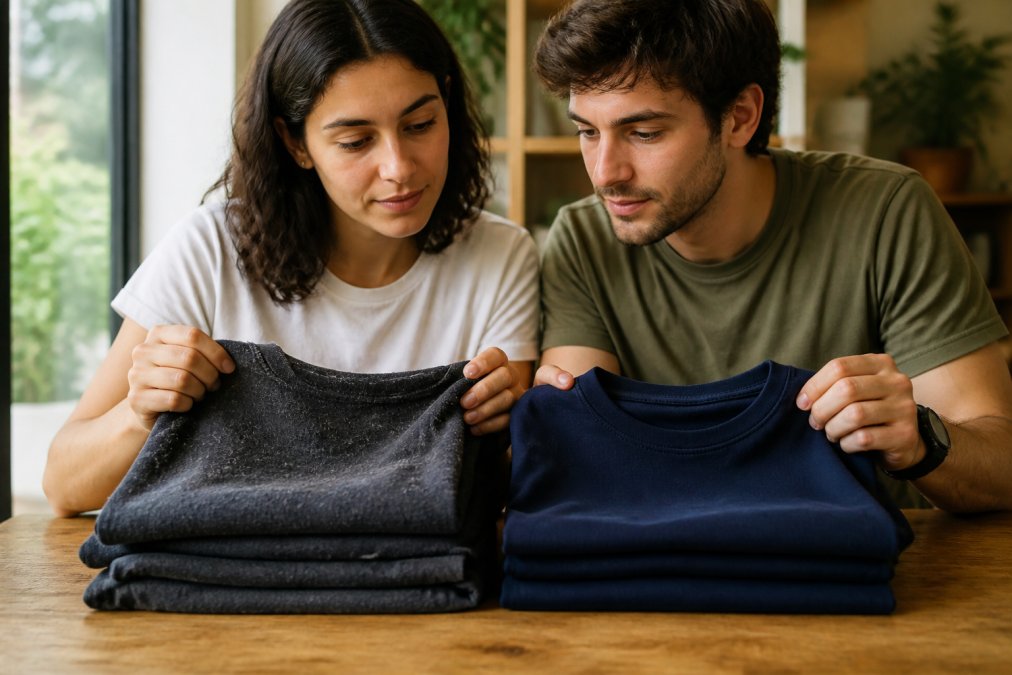
Precise lifespan figures vary by fabric and use, but a well-made sustainable garment lasts several times longer than a comparable fast fashion piece. A fast fashion t-shirt may survive a handful of washes before losing shape, while a heavyweight organic cotton sweatshirt can endure for years with proper care.

The difference comes down to measurable factors you can inspect before buying:
| Factor | Fast Fashion | Sustainable Clothing |
|---|---|---|
| Fabric weight | Lightweight (under 5 oz/yd²) | Heavyweight (6-9 oz/yd²) |
| Fiber type | Synthetic or virgin blends | Organic cotton, natural fibers |
| Seam construction | Single-needle, minimal reinforcement | Double-needle, side-seamed |
| Expected lifespan | Months to 1 year | 3-10+ years with care |
| Cost per wear | Low upfront, high over time | Higher upfront, lower over time |
How to Identify High-Quality Clothing Before You Buy
Most guides tell you to "check the seams" without explaining what makes a seam strong or a fiber durable. This section closes that gap with the measurable properties that decide a garment's lifespan.
Fiber Staple Length: The Hidden Predictor of Pilling
The single most important fiber property is staple length, the length of individual cotton fibers before spinning. Long-staple cotton (such as Pima or Supima) produces smoother, stronger yarn with fewer protruding ends; short-staple cotton has more loose ends that tangle into pills.
A quick test: rub the fabric briskly between your thumb and forefinger for ten seconds. If small balls form immediately, the yarn is likely made from short, low-grade fibers. Long-staple cotton resists this abrasion because its fibers are twisted tightly together.
Yarn Twist and Ply: What Holds the Thread Together
Yarn construction determines tensile strength. Single-ply yarns are cheaper and weaker; two-ply or three-ply yarns twist multiple strands together, distributing stress and resisting breakage. Most fast fashion t-shirts use single-ply; durable sustainable pieces often use two-ply.
You can feel the difference. Pinch the fabric between two fingers and pull gently in opposite directions. A single-ply knit will stretch thin and show gaps between threads; a multi-ply knit will resist and spring back.
Weave and Knit Density: The Structural Grid
A tight weave or knit has more intersections per square inch, meaning more friction points holding the structure together. Look at the fabric against a light source, large gaps between threads mean it will snag and tear easily. A dense fabric blocks light more completely and resists abrasion.
Seam Construction: Where Garments Fail First
Seams are the weakest point of any garment. Fast fashion typically uses single-needle stitching with 8-10 stitches per inch; durable construction uses double-needle topstitching with 12-14. More stitches per inch means more thread holding the seam together, but too many can weaken the fabric.
Check three specific locations:
- Side seams, Look for side-seamed construction (the body is sewn from separate front and back panels) rather than tubular knitting. Side-seamed garments resist twisting after washing.
- Collar and placket, A ribbed collar with a reinforcing tape or self-fabric patch at the back neck prevents stretching and fraying.
- Hem and cuff, Double-needle stitching with a coverstitch allows the fabric to stretch without breaking the thread.
The Button and Zipper Test
Hardware reveals intent. Plastic buttons crack and discolor; corozo or natural shell buttons last decades. A metal zipper with a solid backing tape and locking slider outlasts a plastic zipper by years. Tug on a button, if it wobbles or the thread shows gaps, it will detach within months.
What This Means for Your Buying Decision
With these criteria, the difference between fast fashion and sustainable clothing becomes measurable rather than emotional. A $10 t-shirt made from short-staple single-ply yarn with single-needle seams will degrade structurally regardless of how carefully you wash it; a $30 t-shirt made from long-staple two-ply organic cotton with double-needle side seams has the physical foundation to last a decade.
The price premium reflects real material costs: long-staple organic cotton costs more per pound, two-ply spinning takes more time and energy, and double-needle stitching requires more thread and labor. Understanding the material science shows you where your money goes, and where it does not.
Cost Per Wear Calculation: The Number That Decides Value
The cost per wear calculation is the honest way to compare a $22 t-shirt against a $10 one. Divide the purchase price by the number of times you wear it. A $10 fast fashion tee worn 15 times costs about $0.67 per wear; a $22 sustainable tee worn 100 times costs $0.22 per wear.
To use this method:
- Estimate how often you will wear the piece each month
- Multiply by 12 to get yearly wears
- Estimate the garment's realistic lifespan in years
- Divide the purchase price by the total estimated wears
This value-based purchasing approach shifts the focus from upfront cost to long-term resource efficiency. It also reduces overconsumption, because you buy fewer, better pieces.
Garment Care Tips for Longevity: Make Every Piece Last
The purchase is only the beginning. Most garments fail not because they were poorly made, but because they were poorly maintained. This section explains the mechanisms of fiber degradation and gives a structured care protocol.
The Three Enemies of Fabric: Abrasion, Heat, and Chemicals
Fabric degradation happens through three physical processes:
- Mechanical abrasion, Friction against the washing machine drum or other garments breaks individual fibers, creating pills, thinning, and holes.
- Thermal stress, Heat from dryers and hot water weakens molecular bonds. Cotton loses tensile strength when exposed to high heat; elastane degrades rapidly above 140°F, becoming brittle.
- Chemical breakdown, Detergents strip natural oils from fibers, making them brittle. Chlorine bleach attacks cotton's cellulose structure directly. Fabric softeners coat fibers with a waxy film that attracts dirt and reduces breathability.
The Wash Cycle Protocol: A Step-by-Step System
A structured approach, not occasional good intentions, makes the measurable difference. Follow this protocol for every garment:
Step 1: Sort by color and fabric weight. Separate dark from light to prevent dye transfer, and heavy items from delicates so hardware does not abrade lighter fabrics.
Step 2: Turn garments inside out. This protects the outer surface from direct friction and also protects prints and embellishments.
Step 3: Use cold water (below 70°F). Cold water removes most everyday dirt and sweat without causing thermal stress. Reserve warm water for heavily soiled items or towels. Never use hot water for knit fabrics.
Step 4: Choose a gentle detergent without optical brighteners. Optical brighteners can yellow over time and irritate skin. Look for plant-based, enzyme-free detergents for everyday use; save enzyme detergents for protein stains, as they can weaken wool and silk if used regularly.
Step 5: Skip the fabric softener. Fabric softeners coat fibers with a hydrophobic layer that reduces absorbency and traps odors. Instead, add a half-cup of white vinegar to the rinse cycle once a month, it dissolves detergent residue and restores pH balance without leaving a smell after drying.
Step 6: Air dry, always. The dryer is the single most destructive appliance for clothing: high heat shrinks cotton, melts synthetics, breaks elastane, and causes static. Air drying takes longer but preserves fabric structure.
The Repair Ladder: Fix Before You Replace
A small tear does not mean the garment is dead. Most repairs take under fifteen minutes:
- Loose buttons, Re-sew before the button detaches. Use a toothpick as a spacer to create a thread shank.
- Small tears and seam splits, A running stitch or ladder stitch closes the gap. For visible areas, use matching thread and a blind hem stitch.
- Pilling, Use a fabric shaver (not a razor blade), shaving in one direction with light pressure.
- Frayed hems, Re-hem with a straight stitch or use hemming tape. Catching a fray early prevents it from running up the seam.
- Holes, For knits, use a darning needle and matching thread to weave a patch. For larger holes, apply fusible interfacing on the inside before stitching.
The Storage Protocol: How You Store Matters
Storage mistakes shorten garment life as much as washing mistakes:
- Fold heavy knits and sweaters. Hanging stretches the shoulders and creates permanent bumps.
- Use padded hangers for structured garments. Suits, jackets, and coats need wide hangers that distribute weight across the shoulders.
- Keep garments in a cool, dry, dark place. UV light degrades dyes and weakens fibers. Cedar blocks or lavender sachets deter moths without chemical smells.
- Store seasonal items in breathable cotton garment bags. Plastic dry-cleaning bags trap moisture and cause mildew. If using vacuum-sealed bags, do not compress knits, the pressure creates permanent creases.
The 24-Hour Rule and Rotation System
Fabric needs time to recover between wears. Natural fibers like cotton and wool have elastic memory, they spring back to shape after rest. Wearing the same garment two days in a row stretches it permanently. Rotate pieces with at least 24 hours of rest between wears. This single habit doubles the lifespan of most garments.
The Cost-Per-Wear Impact of Care
Care is not just about preservation; it is about economics. A $30 sustainable t-shirt worn 100 times costs $0.30 per wear. If proper care extends that to 200 wears, the cost drops to $0.15 per wear, cheaper than any fast fashion alternative.
What to Ignore: Common Myths About Sustainable Clothing
Several misconceptions discourage buyers from making the switch. One myth is that all sustainable clothing is fragile, in reality, many sustainable pieces use heavier fabrics and stronger seams than fast fashion counterparts, precisely because they are meant to last.
Another myth holds that natural fibers are always better than synthetics. While organic cotton is renewable and biodegradable, some recycled polyester blends serve a purpose. The Baliveno eco raglan hoodie, for instance, combines organic cotton with recycled polyester from repurposed plastic bottles, achieving warmth and durability while addressing post-consumer waste.

Why Your Shopping Habits Matter More Than the Label
The psychological triggers of fast fashion are powerful. Trends change rapidly, and the low price of a trendy piece makes it easy to justify. But overconsumption drives the fast fashion cycle, filling landfills with garments worn only a handful of times.
Conscious consumerism means resisting that pull, asking whether a piece fits your existing wardrobe, whether it will still look good in three years, and whether you will actually wear it. A sustainable label means little if the garment sits unworn in a closet.
Supply chain transparency helps. Brands that source from audited factories and publish their standards give buyers confidence that their purchase supports fair labor and reduced carbon emissions.
Conclusion: Build a Wardrobe That Outlasts Trends
The choice between sustainable and fast fashion is not just about the environment. It is about whether you want to keep replacing your wardrobe or invest in pieces that serve you for years. Sustainable clothing lasts longer because it is made with heavier fabrics, stronger construction, and natural fibers that resist degradation.
At BALIVENO FASHION HOUSE LTD, we build our collection around these principles: premium quality materials, timeless design, and durability. Every piece is crafted for a refined lifestyle and everyday confidence.
Get started with Baliveno and build a wardrobe that outlasts trends, one well-made piece at a time.
Frequently Asked Questions
How many wears can you expect from sustainable clothing?
A well-made sustainable garment typically delivers 100 to 200 wears, and often far more with proper care. Fast fashion pieces average 7 to 10 wears before they lose shape, pill, or tear. The difference comes down to fabric weight, fiber quality, and construction. A 6 oz organic cotton tee from Baliveno, for example, holds its structure through repeated washing, while a thin fast-fashion top may stretch out after a single season.
Why does fast fashion degrade faster than sustainable alternatives?
Fast fashion relies on low-grade synthetic fibers and loose knits to cut costs. These materials break down quickly under normal wear and washing. Sustainable brands use heavier fabrics, tighter weaves, and reinforced seams. A Baliveno sweatshirt uses an 8.5 oz 3-end fleece with double-needle stitching, which resists pilling and seam failure. The construction quality directly determines how many wash cycles a garment survives.
Is the higher price of sustainable fashion justified by its longevity?
Run a simple cost per wear calculation to see. A $49.96 sustainable tee worn 150 times costs about $0.33 per wear. A $15 fast-fashion tee worn 10 times costs $1.50 per wear. The sustainable option costs less per use and keeps textiles out of landfills. When you factor in the environmental footprint of producing five replacement tees versus one durable one, the value case becomes even clearer.
What factors contribute to the durability of high-quality clothing?
Fabric weight is the first indicator. Look for 6 oz or heavier in t-shirts and 8 oz or more in fleece. Fiber content matters too: organic cotton and recycled polyester blends hold up better than virgin synthetic-only knits. Construction details like side seams, double-needle stitching, and ribbed collars prevent the common failure points. Care habits also play a role: washing in cold water and air drying extends any garment's life significantly.
EXPLORE THE BALIVENO EDIT
Continue the story
Discover a BALIVENO piece or collection related to the ideas in this article.
BALIVENO Sustainability & Our Impact Explore BALIVENO clothing

