

Table of Contents
- Start With a Wardrobe Audit Before You Buy Anything
- How to Identify Ethical Fashion Brands You Can Trust
- Spotting Greenwashing in Fashion: Red Flags and Real Proof
- The Most Sustainable Clothing Fabrics and How to Compare Them
- Calculate Cost-Per-Wear to Justify Every Sustainable Clothing Purchase
- Sustainable Laundry Habits That Extend Garment Longevity
- End-of-Life Garment Management: Repair, Resell, or Recycle
- Frequently Asked Questions
Last Updated: September 10, 2026
Start With a Wardrobe Audit Before You Buy Anything
The most effective way to shop for sustainable clothing is to audit what you already own before spending a dollar. Most shoppers skip this step, then buy duplicates of pieces already hanging in their closet.
A wardrobe audit takes about an hour. Pull everything out, sort into three piles: keep, repair, and donate or resell. Note what you actually wear weekly versus what sits untouched. That gap tells you exactly what your wardrobe is missing.
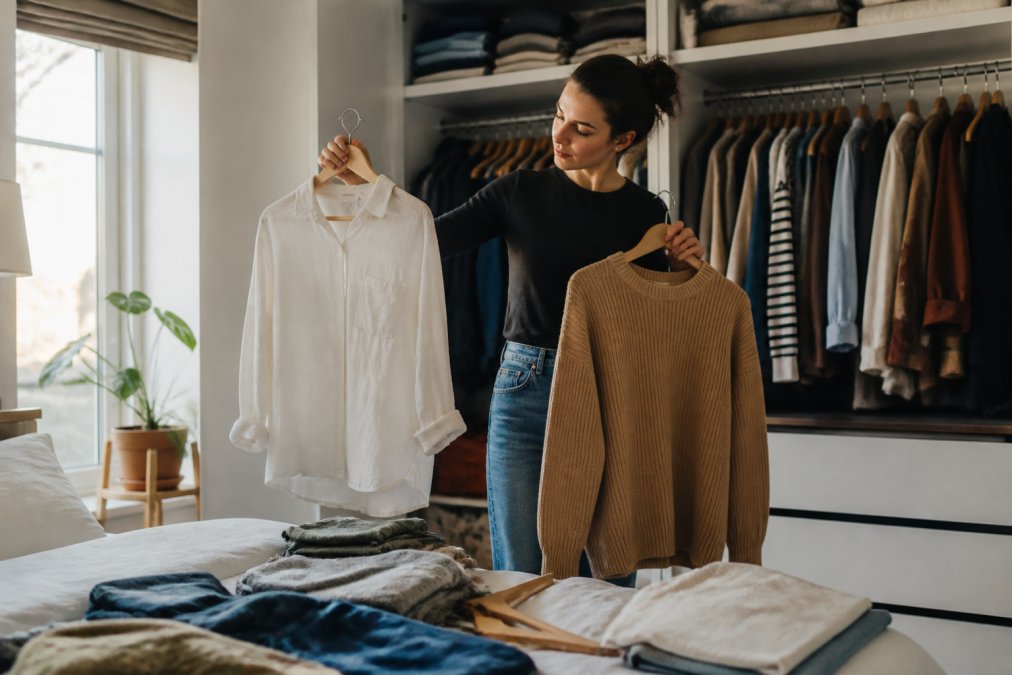
Customers who audit first often buy less and wear more. The audit reveals real gaps, not impulse wants.
How to Identify Ethical Fashion Brands You Can Trust
Identifying ethical fashion brands means verifying claims against third-party certifications and public supply chain data, not marketing language. A brand that publishes factory lists and holds recognized certifications gives you something concrete to check. The goal is a repeatable process you can run in about ten minutes per brand.
A Five-Step Brand Vetting Process
- Check the certification, not the adjective. Look for the certifying body's name and a license or certification number. You can verify most of these directly on the certifier's public database.
- Read the scope of the certification. A GOTS certification may cover one product line, not the whole company. A B Corp score reflects the entire business, but a low score in the Environment pillar tells you where the gaps are.
- Look for a published supplier list. Brands serious about ethical manufacturing name the factories, their locations, and often the audit results. If a company can't tell you where a garment was made, that silence is an answer.
- Check the return and repair policy. A brand confident in its durability typically offers repairs or a generous return window. That's a signal, not proof, but it's a useful one.
- Search the brand name plus "greenwashing" or "lawsuit." Independent reporting and regulatory actions surface faster than marketing pages change.
Certifications That Actually Mean Something
Look for certifications with independent auditing. FTC guidance on environmental marketing claims explains that vague terms like "eco-friendly" carry no legal weight without substantiation. Meaningful certifications include:
- GOTS (Global Organic Textile Standard), covers organic fiber content plus processing and social criteria across the supply chain.
- Fair Trade Certified, focuses on labor standards, worker premiums, and safe conditions at the farm and factory level.
- B Corp, a whole-company assessment across governance, workers, community, environment, and customers.
- OEKO-TEX Standard 100, tests finished products for harmful substances; it does not certify organic content or labor practices.
- bluesign, focuses on chemical safety and resource use in textile production.
Each requires documentation and third-party review, not self-reporting. Note what each one does not cover, that's where greenwashing often hides.
Supply Chain Transparency: What Brands Should Disclose
Transparency means naming the factories that make your clothes. At minimum, a credible brand should disclose:
- Tier 1 suppliers (cut-and-sew factories)
- Tier 2 suppliers (fabric mills)
- Country of origin for raw materials where feasible
- Audit frequency and which auditor conducted the review
If a brand publishes a sustainability report but redacts factory names, treat the report as marketing until proven otherwise.
Spotting Greenwashing in Fashion: Red Flags and Real Proof
Greenwashing in fashion is the practice of making a brand appear more sustainable than its actual operations support. The gap between the claim and the evidence is where you'll find it.
Vague Language vs. Verifiable Claims
Vague claims use words like "conscious," "responsible," or "planet-friendly" with no data behind them. Verifiable claims cite specifics: "made with 100% GOTS-certified organic cotton" or "produced in a Fair Trade Certified facility." One is a feeling. The other is a fact you can check.
Watch for these red flags:
- A single "green" collection alongside a high-volume fast fashion core
- Sustainability language with no certification or factory disclosure
- Discounts so steep the economics of ethical production don't add up
The Most Sustainable Clothing Fabrics and How to Compare Them
The most sustainable fabrics balance fiber origin, durability, processing impact, and end-of-life options. Natural fibers and recycled materials both have a place, but they perform differently, and the "best" fiber depends on what you're buying and how you'll wash it.
Natural Fibers: Organic Cotton, Linen, Hemp, and Wool
- Organic cotton avoids synthetic pesticides and uses less water than conventional cotton, though it still requires significant irrigation. It's soft, breathable, and machine washable, a strong default for everyday basics.
- Linen comes from flax, which grows with minimal irrigation and often on marginal land. It's durable, gets softer with every wash, and is fully biodegradable. It wrinkles, which is a feature for some and a dealbreaker for others.
- Hemp is one of the strongest natural fibers, needs little water, and improves with age. It can feel stiff at first and takes longer to soften than linen.
- Wool is durable, temperature-regulating, and naturally odor-resistant, which means you can wash it less often. Look for certifications on animal welfare and land management when sourcing matters to you.
Recycled and Upcycled Materials
Recycled materials divert textile waste from landfills. Recycled cotton and recycled polyester reduce demand for virgin fiber, though polyester still sheds microplastics during washing. Upcycled garments remake existing fabric into new pieces, which sidesteps new production entirely.
A key trade-off: mechanical recycling of cotton tends to shorten fibers, which lowers durability. Chemical recycling can preserve fiber length but is less widely available. When a brand says "recycled," ask which process and what percentage of the garment is recycled content.
A Decision Framework: Match Fiber to Use
| Fabric | Durability | Care Needs | Best For |
|---|---|---|---|
| Organic cotton | High | Machine washable | Everyday basics |
| Linen | High | Wrinkles easily | Warm-weather wear |
| Hemp | Very high | Softens over time | Durable staples |
| Wool | Very high | Hand wash or dry clean | Cold-weather layers |
| Recycled cotton | Medium | Machine washable | Casual pieces |
| Recycled polyester | High | Machine washable, sheds microplastics | Activewear, outerwear |
Use the table as a starting filter, then ask three questions before buying:
- How often will I wash this? High-wash items favor durable, low-shed fibers.
- What's the climate where I'll wear it? Linen and cotton for heat; wool and hemp for cold.
- What happens at end of life? Single-fiber garments are easier to recycle than blends. A 100% cotton tee can be recycled; a 60/40 cotton-poly blend usually can't.
Calculate Cost-Per-Wear to Justify Every Sustainable Clothing Purchase
Cost-per-wear is the purchase price divided by the number of times you actually wear the item. A $200 jacket worn 100 times costs $2 per wear. A $40 top worn twice costs $20 per wear. The cheaper item can be the more expensive one.
Use this formula before buying:
- Estimate the price
- Estimate realistic wears per year
- Multiply by expected years of use
- Divide price by total wears
A well-made piece from BALIVENO, like our recycled hoodie, often wins this calculation because durability raises the wear count over time.
Sustainable Laundry Habits That Extend Garment Longevity
How you wash clothes matters as much as what you buy. Cold water, less frequent washing, and air drying all extend garment life and cut energy use.
Wash full loads on cold, turn garments inside out, and skip the dryer when you can. Microfiber-catching laundry bags reduce microplastics entering waterways from synthetic fabrics. These habits cost nothing and add years to your wardrobe.
End-of-Life Garment Management: Repair, Resell, or Recycle
Every garment eventually reaches the end of its useful life, and how you handle that moment is part of sustainable clothing shopping. Repair first: a re-stitched seam or replaced button extends wear for years. Resell pieces in good condition through consignment or resale platforms. For worn-out items, textile recycling programs keep fabric out of landfills.
The circular economy depends on this step. Buying sustainably matters less if garments still end up in the trash.
Frequently Asked Questions
What should I look for when buying sustainable clothing?
Check three things: fiber content, certifications, and construction quality. Look for organic cotton, linen, hemp, or recycled materials listed on the label. Verify certifications like GOTS, Fair Trade Certified, or bluesign. Inspect stitching, seams, and fabric weight because durable construction means fewer replacements. A sustainable clothing purchase should last years, not months. If a brand cannot tell you where its fabric comes from, that is a warning sign.
How can I tell if a clothing brand is actually sustainable?
Look for specific, verifiable claims rather than vague phrases like eco-friendly or green. Check whether the brand publishes its supplier list, factory names, or third-party audit results. Certifications such as Fair Trade Certified or GOTS provide independent verification. If a brand claims sustainability but offers no data on its supply chain, treat that claim with skepticism. Real accountability means showing receipts, not just using the right words.
Is it more expensive to shop for sustainable clothing?
The upfront price is often higher because ethical manufacturing, organic fibers, and fair labor practices cost more. However, cost-per-wear changes the math. A $50 hoodie worn 100 times costs $0.50 per wear. A $15 fast fashion top worn five times costs $3.00 per wear. Sustainable clothing typically lasts longer, so the real cost over time is often lower. Budget-conscious shoppers can also buy secondhand or thrifted pieces to reduce upfront spending.
What are the most sustainable fabrics to look for?
Organic cotton, linen, hemp, Tencel lyocell, and recycled wool are among the strongest choices. Organic cotton uses less water and no synthetic pesticides. Linen and hemp require minimal irrigation. Tencel lyocell comes from responsibly sourced wood pulp in a closed-loop process. Recycled wool and recycled polyester divert textile waste from landfills. Avoid conventional polyester and nylon when possible because they shed microplastics during washing.
Sustainable clothing shopping rewards patience and verification over impulse. BALIVENO FASHION HOUSE LTD builds premium, unisex essentials from sustainable materials designed to hold up wash after wash, so your cost-per-wear drops the longer you own them. Explore our premium quality materials, timeless designs, and durable construction. Shop Best Sellers and start building a wardrobe that lasts.
EXPLORE THE BALIVENO EDIT
Continue the story
Discover a BALIVENO piece or collection related to the ideas in this article.
BALIVENO Sustainability & Our Impact Explore BALIVENO clothing

