

Table of Contents
- What Organic Cotton Production Means for the Environment
- Benefits of Organic Cotton vs Conventional Cotton
- Water Usage in Organic Cotton Farming: What the Data Shows
- GOTS Certification Standards: How to Verify Environmental Claims
- The Post-Harvest Gap: Processing, Dyeing, and What Happens After the Field
- Where Organic Cotton Production Falls Short
- Conclusion
- Frequently Asked Questions
Last Updated: September 16, 2026
What Organic Cotton Production Means for the Environment
Organic cotton production is the cultivation of cotton without synthetic pesticides or fertilizers, using methods designed to build soil health and reduce toxic runoff. At BALIVENO FASHION HOUSE LTD, we track how fiber choices ripple from field to finished garment, because the environmental case for organic cotton is real but more nuanced than most marketing suggests.

The USDA Organic Regulations define the baseline: no prohibited synthetic substances, no genetically engineered seed, and mandatory buffer zones between organic and conventional fields. That matters because cotton is one of the most chemically intensive crops grown, and the difference between the two systems shows up in soil, water, and biodiversity.
Below, we break down what the research actually supports, where organic cotton still falls short, and how to verify a brand's claims before you buy.
From Field to Fabric: The Lifecycle at a Glance
Every cotton garment passes through five stages, and environmental impact accumulates at each one:
- Cultivation - growing the fiber, where pesticide and water use are decided
- Harvest and ginning - separating lint from seed
- Spinning and weaving - converting fiber into yarn and fabric
- Dyeing and finishing - the most water and chemical-intensive stage
- Cut, sew, and ship - assembly and transport to market
Most environmental comparisons stop at stage one. That's a mistake, and we'll return to it.
Benefits of Organic Cotton vs Conventional Cotton
Organic cotton's core advantage is what it keeps out of the ground. Conventional cotton farming relies on synthetic inputs that persist in soil and migrate into waterways; organic systems replace them with crop rotation, compost, and biological pest control.
Pesticides, Fertilizers, and What Ends Up in the Soil
Synthetic fertilizers deliver nitrogen directly to the plant, but crops absorb only part of it. The remainder leaches as nitrate, which contaminates groundwater and feeds algal blooms downstream. Pesticide runoff carries similar risks, with chemical residues accumulating in soil organic matter over repeated seasons.
Organic systems avoid these inputs entirely. Instead, growers build fertility through cover crops and compost, which increases soil organic matter and supports carbon sequestration. The trade-off: organic fields often need more land to produce the same yield, a gap that narrows with good management but rarely closes completely.
Biodiversity and Ecosystem Health on Organic Farms
Fewer synthetic chemicals mean more insects, birds, and soil microorganisms survive the growing season. Studies of organic farms consistently find higher species richness than neighboring conventional fields, largely because beneficial insects aren't collateral damage.
Baliveno Organic Cotton Twill Bucket →
Water Usage in Organic Cotton Farming: What the Data Shows
Water consumption is where organic cotton's reputation gets complicated, and where most comparisons stop short. The honest answer is that there is no single water footprint for organic cotton, the number swings by an order of magnitude depending on where the fiber grows and whether it is rain-fed or irrigated.
Blue Water vs. Green Water: The Distinction That Changes the Answer
Water footprint researchers separate two very different inputs:
- Green water, rainfall stored in soil and taken up by the plant. It is renewable within the local water cycle and does not draw down aquifers or rivers.
- Blue water, surface and groundwater delivered through irrigation. This is the water that competes with drinking supplies, wetlands, and downstream agriculture.
Organic cotton is disproportionately rain-fed, so a large share of its total water use is green water. Conventional cotton in water-stressed regions is far more likely to depend on blue water. That distinction is why a simple "gallons per pound" comparison can mislead in either direction.
Why the Regional Variable Matters More Than the Label
A common pattern in lifecycle assessments is that the same crop can look like a water saver in one region and a water drain in another:
- Rain-fed organic cotton in a humid climate, most or all water comes from rainfall, irrigation is minimal, and pressure on local aquifers is low. This is the scenario most organic marketing describes.
- Irrigated organic cotton in an arid region, the organic label does not reduce the volume of blue water pumped onto the field. If yields are also lower, water per pound of fiber can exceed a well-managed conventional operation nearby.
- Conventional cotton in a dry region, often the heaviest blue-water user of all, because irrigation is the only way to grow the crop and synthetic inputs do not change the plant's transpiration demand.
The takeaway is that irrigation source and efficiency, not the certification alone, decide whether a given bale of cotton is a water problem or a water solution.
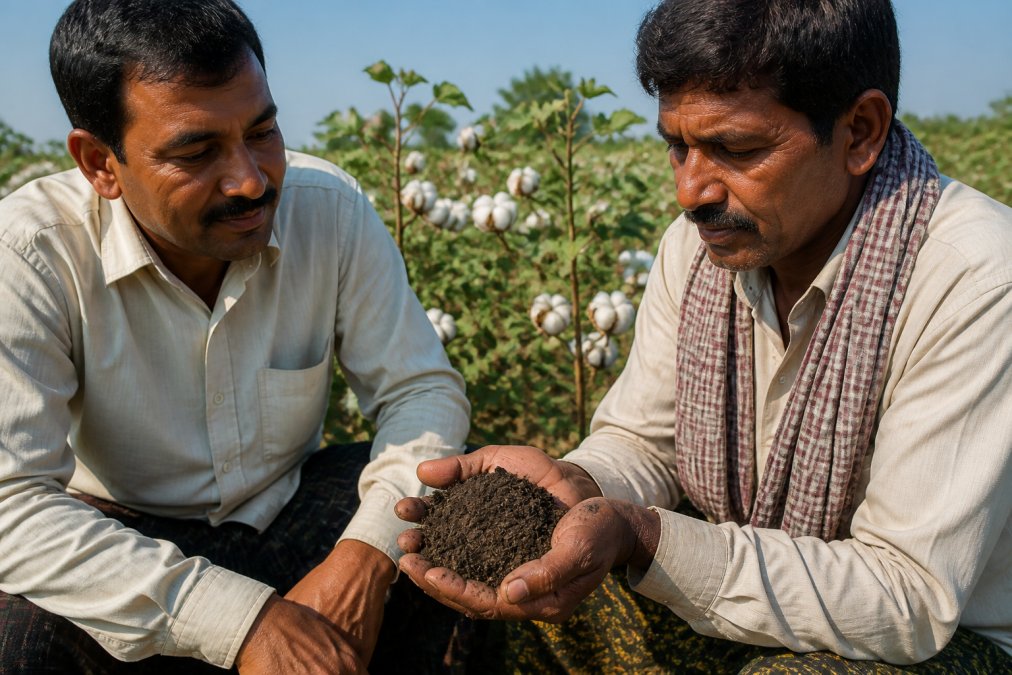
The Yield Trade-Off and Water Intensity
Organic fields generally produce less fiber per acre than conventional ones, especially in the first few years after transition. When that yield gap is large, more land and sometimes more water are needed per pound of finished fiber. The gap tends to narrow with good management, cover cropping, compost, and crop rotation improve soil water-holding capacity over time, but it rarely closes completely.
This is why the water question cannot be answered without also asking about yield, region, and irrigation method. A rain-fed organic field with a modest yield gap can have a smaller blue-water footprint than a high-yielding irrigated conventional field, even though its total water use per acre looks higher.
What the Data Coverage Actually Looks Like
According to Textile Exchange's organic cotton market reporting, organic cotton accounts for a small fraction of global supply.
GOTS Certification Standards: How to Verify Environmental Claims
| Certification | Covers | Organic Threshold | Best For |
|---|---|---|---|
| GOTS | Fiber to finished garment | 70% organic minimum | Full supply chain verification |
| USDA Organic | Agricultural production | 95% organic | Raw fiber claims |
| OCS | Fiber content only | 95% or 50% | Content labeling |
| OEKO-TEX | Chemical safety testing | Not applicable | Residual chemical screening |
The Post-Harvest Gap: Processing, Dyeing, and What Happens After the Field
Here is what most comparisons miss: the field is only the first act.
Baliveno Organic Cotton Twill Bucket →
Ginning and Spinning: The Overlooked Middle
After harvest, the lint is separated from the seed at the gin.
Dyeing and Finishing: The Heaviest Stage
Dyeing and finishing are where water and chemistry concentrate.
End-of-Life and Circularity: The Stage Almost Nobody Covers
- Biodegradability, Untreated or naturally dyed organic cotton can break down in composting conditions, returning carbon and nutrients to soil. Conventional cotton carrying synthetic dyes, resin finishes, or blended synthetic fibers does not biodegrade cleanly and can shed microfibers during washing and disposal.
- Blends complicate everything, A 60/40 cotton-polyester blend cannot be mechanically recycled into new cotton fiber without separating the components, and most municipal systems cannot do that separation. A 100% organic cotton garment is far easier to recycle or compost.
- Durability as a circularity lever, The single biggest end-of-life variable is how long the garment stays in use. A durable organic cotton piece worn for years displaces multiple lower-quality replacements, which is a larger environmental win than the fiber choice alone.
The Worker-Health Dimension
Post-harvest processing is also where the social-environmental nexus is most visible.
Where Organic Cotton Production Falls Short
- Yield gap: organic fields generally produce less fiber per acre, so land use can be higher
- Regional variability: benefits depend on climate, water source, and surrounding land use
- Certification cost: smallholder farmers often can't afford the audit fees, so much organic fiber goes uncertified
Conclusion
Choosing organic cotton means weighing real environmental gains against genuine trade-offs, and the difference between a certified supply chain and a loose claim is where most of the value sits.
Frequently Asked Questions
Does organic cotton production use less water than conventional methods?
Organic cotton typically requires less irrigation because organic soil holds moisture better than soil stripped of organic matter by synthetic inputs. A common figure cited in lifecycle studies is that organic cotton can use roughly 90% less water than conventional cotton, largely because most organic cotton is rain-fed rather than irrigated. That said, water usage in organic cotton farming varies by region and rainfall patterns, so the savings are real but not uniform across every growing area.
What are the downsides of organic cotton?
Organic cotton yields are generally lower than conventional cotton, which means more land may be needed to produce the same volume of fiber. It also costs more to grow because farmers cannot rely on cheap synthetic inputs, and that cost carries through to finished garments. Supply chain transparency can also be harder to verify without certification, which is why GOTS certification standards matter when you're evaluating a brand's claims.
Is 100% organic cotton the same as 100% cotton?
No. '100% cotton' only tells you the fiber content. '100% organic cotton' means the cotton was grown without synthetic pesticides or fertilizers and meets organic certification requirements. The distinction matters because conventional cotton is one of the most pesticide-intensive crops globally, while organic production avoids those inputs entirely. Always check for a certification label rather than relying on the word 'organic' alone.
What certifications should consumers look for to verify organic cotton claims?
GOTS (Global Organic Textile Standard) is the most comprehensive certification because it covers the entire supply chain, from fiber to finished garment, and includes social and environmental criteria. Other relevant standards include USDA Organic for the raw fiber and OCS (Organic Content Standard) for tracking organic content. GOTS certification standards are stricter than most, requiring at least 70% organic fiber and strict limits on chemical processing.
EXPLORE THE BALIVENO EDIT
Continue the story
Discover a BALIVENO piece or collection related to the ideas in this article.
Explore mens clothing See BALIVENO heavyweight hoodie

