

Table of Contents
- Organic Cotton vs Recycled Cotton: Key Differences at a Glance
- What Is Organic Cotton and How Is It Produced
- What Is Recycled Cotton and How Is It Made
- Organic Cotton Benefits and Drawbacks
- Recycled Cotton Benefits and Drawbacks
- Recycled Cotton Fabric Durability: What to Expect
- How to Identify Recycled Cotton Clothing in Your Wardrobe
- Which Should You Choose for Your Wardrobe
- Frequently Asked Questions
Last Updated: October 8, 2026
Organic Cotton vs Recycled Cotton: Key Differences at a Glance
When you're shopping for sustainable clothing, understanding organic cotton vs recycled cotton matters more than you might think. Both materials reduce environmental harm compared to conventional cotton, but they take fundamentally different paths to get there. At BALIVENO FASHION HOUSE LTD, we've spent considerable time understanding these distinctions because they shape which pieces work best for your wardrobe and values.
Organic cotton is grown without synthetic pesticides, fertilizers, or genetically modified seeds. Recycled cotton comes from post-consumer textile waste or pre-consumer fabric scraps that get mechanically broken down and respun into new fibers. The choice between them isn't about picking the "greener" option, it's about understanding what trade-offs matter to you.
Here's the core tension: organic cotton requires significant water and land resources but produces virgin fibers from the ground up. Recycled cotton diverts textile waste from landfills but often blends with virgin fibers and can degrade in quality with each recycling cycle. Neither is a perfect solution. Both have genuine environmental benefits and real limitations.
| Aspect | Organic Cotton | Recycled Cotton |
|---|---|---|
| Source | Grown from seeds without synthetic inputs | Sourced from discarded textiles or fabric scraps |
| Water Use | High (but less than conventional) | Minimal (already consumed during first production) |
| Chemical Exposure | None during farming | Depends on prior garment processing |
| Fiber Quality | Consistent, full length | Shorter fibers, may require blending |
| Durability | Excellent with proper care | Good, but variable by blend |
| Cost | Moderate to high | Moderate |
| Best For | Longevity-focused wardrobes | Circular economy approach |
What Is Organic Cotton and How Is It Produced
Organic cotton is cotton grown without synthetic pesticides, synthetic fertilizers, or genetically modified seeds. It represents a farming approach that prioritizes soil health and biodiversity while eliminating chemical-intensive inputs.
The production process begins with certified organic seeds planted in fields managed without synthetic chemicals. Farmers use crop rotation, natural pest management, and composting to maintain soil fertility. Instead of spraying synthetic pesticides, organic farms rely on beneficial insects, mechanical weeding, and targeted biological controls. This approach takes longer and requires more labor than conventional farming, which is why organic cotton typically costs more at harvest.
Once harvested, organic cotton bolls move through standard processing: ginning separates fiber from seed, then the raw fiber gets carded and spun into yarn. The key difference is certification, every step must be audited to verify no synthetic chemicals contaminated the fiber. This traceability adds cost but guarantees the "organic" claim.

The result is virgin fiber with consistent length and strength. When you wear an organic cotton t-shirt, you're wearing fiber that grew in a system designed to protect farmworker health and preserve soil for future crops. Our Unisex Organic Cotton T-Shirt uses 100% organic ring-spun cotton, which means the fibers were carefully aligned during spinning for enhanced softness and durability.

Organic farming typically requires more land per pound of fiber produced than conventional agriculture, and water consumption remains substantial, cotton is a thirsty crop regardless of farming method. But organic farms often show better water infiltration and retention in soil, which matters during drought periods.
What Is Recycled Cotton and How Is It Made
Recycled cotton is fiber recovered from post-consumer textile waste (discarded clothing, worn-out garments) or pre-consumer waste (fabric scraps from manufacturing). It gets mechanically shredded, respun, and blended into new yarn without chemical reprocessing.
The collection phase is critical. Post-consumer recycled cotton comes from used clothing donations or textile waste streams. Pre-consumer recycled cotton comes from factory cutting waste, the scraps left over when manufacturers cut patterns from fabric rolls. Both sources bypass the resource-intensive farming and initial processing steps.
The mechanical recycling process works like this: collected textiles get sorted by fiber content and color, then shredded into short fibers. These shorter fibers are carded and spun back into yarn, often blended with virgin fibers or polyester to restore strength and length. The blending is necessary because mechanical recycling shortens fibers with each cycle, reducing their ability to hold together.
Recycled cotton requires far less water and energy than virgin fiber production because it skips farming and initial processing. There's no pesticide or fertilizer application. The environmental cost is concentrated in collection, sorting, shredding, and re-spinning, all relatively low-impact steps compared to growing and ginning new cotton.
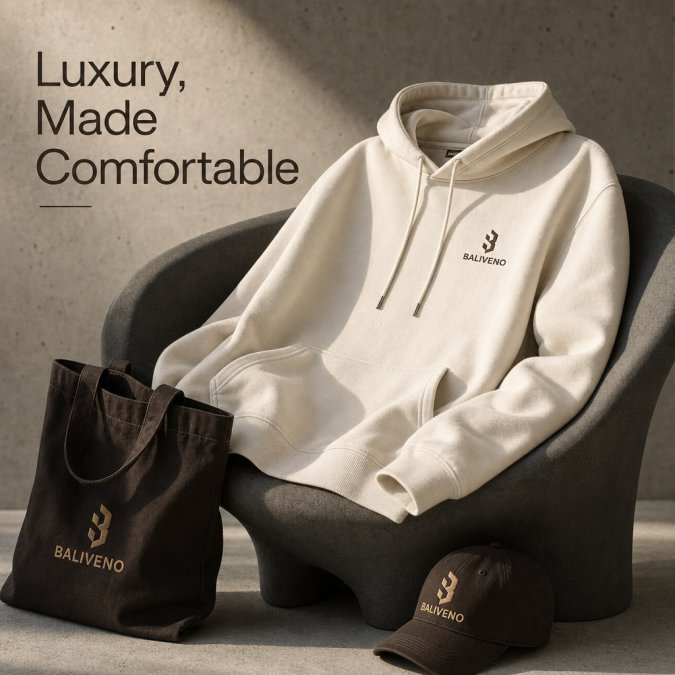
The trade-off is fiber quality. Recycled fibers are shorter and weaker than virgin cotton, which is why most recycled cotton products blend with virgin organic cotton, recycled polyester, or other fibers. Our BALIVENO Stylish Hoodie uses 50% post-consumer remanufactured organic cotton blended with 50% organic cotton, which maintains durability while keeping a significant portion diverted from landfills.

Recycled cotton fabrics often show visible color variation because they're made from mixed sources. This isn't a defect, it's a signature of the circular process. Durability depends entirely on the blend ratio and fiber length achieved during respinning.
Organic Cotton Benefits and Drawbacks
The primary benefit of organic cotton is environmental impact during farming. Growing cotton without synthetic pesticides protects farmworkers from chemical exposure, preserves soil biology, and avoids contaminating groundwater with agricultural runoff. For people with chemical sensitivities, organic cotton eliminates a significant source of pesticide residue.
Organic cotton fiber quality is excellent. Because it's spun from full-length virgin fibers, organic cotton creates durable, soft garments that withstand repeated washing. Many people find organic cotton feels softer and breathes better than conventional cotton. It resists pilling better than recycled blends because the fibers maintain their structural integrity.
The longevity factor matters for sustainability. A well-made organic cotton garment that lasts five years delivers better environmental value than a lower-quality recycled item that falls apart in two years. Our Baliveno Unisex Organic Sweatshirt combines 80% organic cotton with 20% recycled polyester, creating a piece designed for years of wear.

The drawbacks are real. Organic cotton farming requires substantial water, roughly the same amount as conventional cotton per pound. It also demands more land because yields are typically lower without synthetic fertilizer inputs. The certification process adds cost throughout the supply chain. For budget-conscious shoppers, organic cotton pieces carry a higher price tag.
Organic farming is geographically limited. Not all regions have established organic cotton infrastructure, certification bodies, or farmer networks. This concentration in certain growing regions can create supply constraints and price volatility.
Recycled Cotton Benefits and Drawbacks
The primary benefit of recycled cotton is waste diversion, but the size of that benefit depends entirely on where the fiber came from and what happens to it next. Every pound of recycled fiber represents textile waste kept from landfills. This matters because textile waste is massive, Americans discard roughly 81 pounds of clothing per person annually, and most of it ends up in landfills or incinerators rather than being reworn or remade.
Recycled cotton requires dramatically less water and energy than virgin fiber production because the cotton was already grown, ginned, and spun once. The remaining environmental cost is concentrated in collection, sorting, shredding, carding, and re-spinning. That is a real advantage, but it is also where most marketing claims get fuzzy. A "recycled cotton" figure that only counts the recycling step will look far better than one that includes the original farming, dyeing, and transport of the source garment. When you compare recycled and organic cotton, ask what the number actually includes.
A useful way to think about it is lifecycle boundaries. A cradle-to-gate figure for recycled cotton typically starts at the collection bin and ends at the yarn mill. A cradle-to-grave figure adds the original garment's farming and processing, plus the new garment's dyeing, finishing, shipping, use phase, and end of life. Most published comparisons mix these boundaries, which is why two articles can cite opposite conclusions from the same data.
The circularity story has a hard limit. Mechanical recycling shortens fibers, and each additional cycle shortens them further. First-generation recycled cotton can carry a meaningful share of a yarn. Second- and third-generation fiber becomes progressively weaker and shorter, which is why most recycled cotton yarns blend in virgin cotton, organic cotton, or a synthetic carrier fiber to reach usable strength. That blend requirement is the single biggest constraint on true circularity: a 50/50 recycled/virgin blend can be recycled again, but the recycled share tends to shrink with each loop unless new virgin fiber keeps entering the system.
Blends also complicate end of life. A mono-material cotton garment is easier to recycle mechanically than a cotton/polyester blend, because the two fibers have to be separated before either can be respun. Many recycled cotton products are blended specifically to restore performance, which improves durability but reduces the next garment's recyclability. This is the trade-off most product pages do not explain: the blend that makes recycled cotton wearable today can make it harder to recycle tomorrow.
Color and texture variation is inherent to recycled cotton because it comes from mixed sources. Some people appreciate the mottled, heathered aesthetic. Others find it inconsistent, and achieving a uniform color usually requires additional dyeing or sorting, which adds back some of the impact the recycling step saved. Sorting by color at the collection stage reduces that penalty but is labor-intensive.
Certification is where claims become checkable. The Global Recycled Standard (GRS) verifies recycled content and traces it through the supply chain, including chain-of-custody requirements at each processing stage. The Recycled Claim Standard (RCS) verifies recycled content but with a narrower scope than GRS. Neither standard certifies that the source garment was organic, and neither guarantees the finished product is recyclable. OEKO-TEX certifies that the finished textile is free from harmful substances, not that it contains recycled fiber. Reading the certification scope, not just the logo, tells you what is actually being verified.
Recycled Cotton Fabric Durability: What to Expect
Recycled cotton fabric durability depends almost entirely on the blend ratio. A piece that's 70% virgin organic cotton and 30% recycled cotton will outperform a 50/50 blend because the virgin fibers provide structural support and length.
The mechanical recycling process shortens fibers significantly. Virgin cotton fibers can be 1-1.5 inches long. Recycled cotton fibers often measure 0.5-0.75 inches after shredding and respinning. Shorter fibers create looser yarns that pill more easily and weaken faster under stress. Blending with virgin fiber or polyester compensates for this weakness.
Pilling is the most common durability issue with recycled cotton blends. Pilling occurs when short fibers break free and ball up on the fabric surface. It doesn't mean the garment is failing, it means the fibers are shorter. You can remove pills with a fabric shaver, but frequent pilling suggests a lower virgin fiber content.
Washing and drying practices significantly affect recycled cotton durability. Washing in cool water, using gentle cycles, and air-drying extends fabric life considerably. Machine drying creates friction that accelerates fiber breakage in blended fabrics. High heat weakens both virgin and recycled fibers.
Quality recycled cotton pieces, those with adequate virgin fiber content and proper construction, last 2-3 years of regular wear with reasonable care. Premium blends can last 4-5 years. This is respectable but typically shorter than comparable organic cotton pieces, which often last 5-7 years with the same care.
The BALIVENO Stylish Hoodie's 50/50 blend of post-consumer remanufactured organic cotton and organic cotton creates a durable piece because the virgin organic component provides structural integrity while the recycled portion diverts waste. The result is a garment designed to withstand regular wear while maintaining its commitment to circular production.
How to Identify Recycled Cotton Clothing in Your Wardrobe
Identifying recycled cotton is harder than it sounds because "recycled" is a content claim, not a quality claim, and the label rarely tells you the whole story. The fiber content tag is your first stop. Look for "recycled cotton," "reclaimed cotton," "post-consumer cotton," or "regenerated cotton fiber." The percentage matters: 30% recycled cotton with 70% virgin organic cotton performs and recycles very differently from 70% recycled with 30% virgin.
Vague language is a warning sign. "Sustainable cotton," "eco-friendly cotton," and "conscious cotton" do not mean recycled. Those terms can describe organic cotton, conventionally grown cotton with a sustainability program, or nothing verifiable at all. Only "recycled" explicitly points to post-consumer or pre-consumer waste sourcing, and only a certification with a defined scope makes that claim checkable.
Certifications are the closest thing to a verification shortcut, but each one verifies something different. The Global Recycled Standard (GRS) verifies recycled content and requires chain-of-custody tracking through processing, manufacturing, and trading, plus social and environmental criteria at certified sites. The Recycled Claim Standard (RCS) verifies recycled content with a narrower scope and does not include the social or environmental criteria GRS adds. OEKO-TEX verifies that the finished textile is tested for harmful substances; it does not verify recycled content. Fair Trade certification addresses labor and trade terms, not fiber sourcing. A product can carry several of these, and the combination tells you more than any single logo.
Chain-of-custody is the part most shoppers never check. A valid recycled-content claim should be traceable from the collection point through sorting, shredding, spinning, and finished goods. If a brand cannot say which certified facility processed the fiber or which standard the claim was verified under, the claim is marketing rather than verification. Reputable brands publish the certification body, the standard, and often the certificate number on the product page or in a linked sustainability report.
Visual and tactile clues still help, but treat them as hints rather than proof. Recycled cotton blends often show subtle color variation or mottling because they come from mixed sources. The fabric may feel slightly less uniform than 100% virgin cotton. Seams and hems can show visible color differences if they were cut from different parts of the roll. None of these signals is definitive, because a well-sorted, well-blended recycled yarn can look and feel nearly identical to virgin cotton.
End-of-life is the question almost no label answers, and it is the one that determines whether a garment is truly circular. "Recyclable" means the material can be processed into new fiber in principle, but that depends on collection infrastructure, fiber separation, and whether the garment is a mono-material or a blend. "Compostable" and "biodegradable" are different claims again, and they apply to how the material breaks down, not to whether it can be remade into new clothing. A cotton/polyester blend is generally not recyclable through mechanical cotton recycling without separating the fibers, and it is not compostable in most home or municipal systems. A 100% cotton garment, organic or recycled, is the cleaner input for the next recycling loop.
A practical checklist for the next time you are reading a product page: confirm the recycled percentage, confirm which standard verified it and at what scope, check whether the garment is a mono-material or a blend, and check whether the brand describes what happens to the piece at end of life. If a page answers all four, the claim is doing real work. If it answers none, the word "recycled" is carrying more weight than the evidence behind it.
Which Should You Choose for Your Wardrobe
The choice depends on what matters most to you: longevity, chemical-free farming, waste reduction, or price.
Choose organic cotton if you prioritize durability and plan to wear pieces for years. Organic cotton garments age well, resist pilling, and maintain their shape through repeated washing. If you're building a minimalist wardrobe of timeless basics, organic cotton delivers better value over time because each piece lasts longer. Our Organic Cotton T-Shirt at $22 is an entry point for organic basics, while the Baliveno Unisex Organic Sweatshirt at $35 offers a blend designed for longevity.
Choose recycled cotton if you want to support circular fashion and reduce landfill waste. Recycled cotton makes sense for pieces you'll wear regularly but not expect to last a decade. It's ideal for parents buying children's clothing that will be outgrown, or for anyone rotating seasonal pieces. The environmental benefit of diverting textile waste is real and measurable.
Consider blended pieces for balanced sustainability. Our Calmness Organic Sweatshirt combines 80% organic cotton with 20% recycled polyester, creating durability through organic fiber while incorporating recycled content. This approach acknowledges that pure recycled cotton has limitations and that blending produces better long-term environmental outcomes than lower-quality single-material pieces.
Your body type and fit preferences matter too. Organic cotton pieces often have more consistent sizing because virgin fiber behaves predictably. Recycled cotton blends may fit slightly differently due to fiber variation. If you struggle with fit and returns, organic cotton's consistency might reduce frustration.
Budget influences the decision. Organic cotton costs more upfront but delivers better cost-per-wear over years of use. Recycled cotton pieces often cost less initially, making them accessible for building a wardrobe on a tighter budget.
Choosing between organic cotton and recycled cotton isn't about finding the perfect material, both have genuine trade-offs. Organic cotton delivers durability and chemical-free farming at the cost of water and land use. Recycled cotton diverts waste but requires blending to achieve adequate durability. At BALIVENO FASHION HOUSE LTD, we believe the most sustainable choice is the garment you'll actually wear for years. Our pieces combine organic and recycled fibers strategically to maximize longevity while supporting circular production. Shop our collection of organic and blended basics designed for everyday confidence and lasting wear.
Frequently Asked Questions
Is recycled cotton more sustainable than organic cotton?
Both materials reduce environmental impact compared to conventional cotton, but in different ways. Recycled cotton diverts textile waste from landfills and requires less water and energy than growing new fiber. Organic cotton eliminates synthetic pesticides and fertilizers, protecting soil health and biodiversity. The best choice depends on your priority: waste reduction (recycled) or chemical-free farming (organic).
Can recycled cotton fabric durability match organic cotton?
Recycled cotton can be durable, but it typically has shorter fiber length than virgin organic cotton, which may affect longevity. Fiber strength depends on the blend, recycled cotton blended with organic or synthetic fibers often performs better than 100% recycled. Quality construction, fabric weight, and care matter more than material type alone. Blended pieces like the Calmness Organic Sweatshirt combine both materials for balanced durability.
How can you tell whether cotton is organic or recycled?
Check the product label for certification marks (GOTS for organic, GRS for recycled content) and fiber composition percentages. Organic cotton labels state 'organic' and list certification bodies. Recycled cotton labels use terms like 'recycled content,' 'post-consumer waste,' or 'remanufactured.' Read the full product description, most retailers disclose material sourcing. If unsure, contact the brand directly for supply chain transparency.
What are the downsides of organic cotton fabric?
Organic cotton typically costs more than conventional cotton due to stricter farming standards and smaller production volumes. Supply is more limited, which can affect availability. The farming process is more labor-intensive, and yields per acre may be lower. Organic certification requires third-party verification, adding cost. Despite these trade-offs, organic cotton eliminates synthetic pesticide exposure for farmers and consumers, and supports healthier soil ecosystems.


