

Table of Contents
- What Makes Unisex Design Work Across Body Shapes
- Core Principles Behind Inclusive Unisex Fit
- How to Measure for Unisex Clothing
- Unisex Sizing Chart Conversion and Grading Standards
- Body Shape Analysis and Proportional Balance
- How to Style Oversized Unisex Shirts for Your Silhouette
- Design Elements That Enable Fit Consistency Across Sizes
- Conclusion
Last Updated: August 15, 2026
What Makes Unisex Design Work Across Body Shapes
Creating unisex clothing that fits well across different bodies requires abandoning the idea that one cut must work equally for everyone. Instead, it's about designing pieces that work differently for each person, adapting to individual proportions rather than fighting them.
Unisex design is a construction philosophy that prioritizes versatility and inclusive sizing over gender-specific tailoring. It achieves this by building garments with proportions that feel balanced across a wider range of body types, silhouettes, and sizes. The goal isn't neutrality in appearance, it's functionality across diversity.
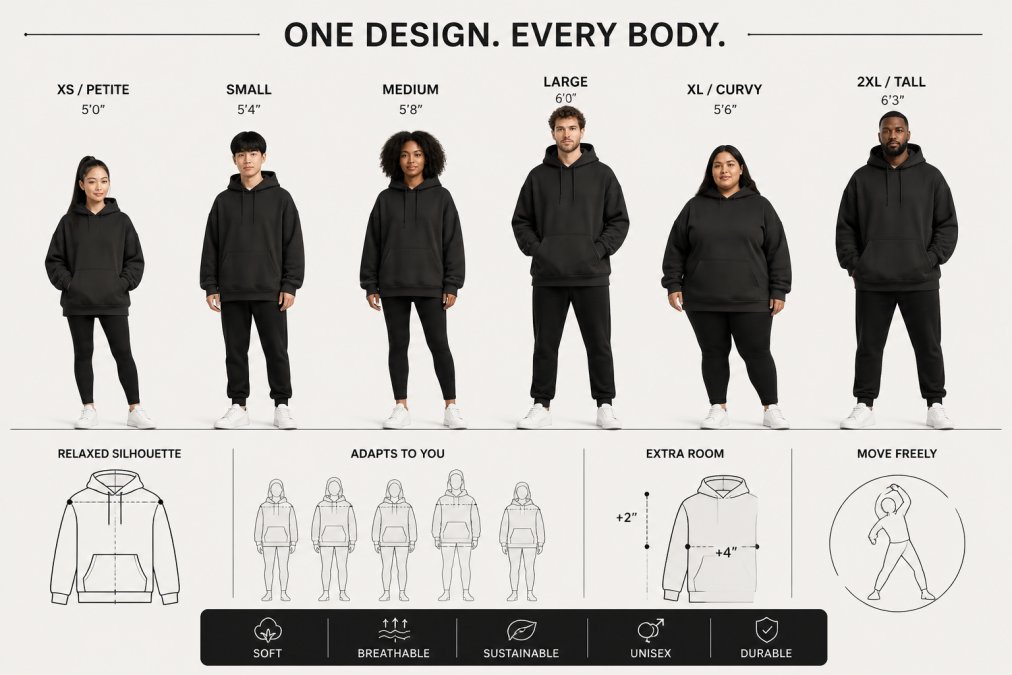
The most successful unisex pieces share three core characteristics: they use strategic volume placement, they employ fabrics that move with the body, and they're graded across size ranges with consistent proportional relationships. This means a size XS doesn't just shrink a size XL uniformly; instead, each size maintains the same visual balance and fit intention, adjusted for different body dimensions.
Core Principles Behind Inclusive Unisex Fit
Creating unisex clothing that works across body shapes requires understanding the mechanical principles of garment construction. Deliberate design choices made during pattern making determine whether a unisex piece feels balanced on multiple bodies or awkward on most.
Relaxed Fits and Dropped Shoulders
A relaxed fit means strategic negative space, not shapelessness. When shoulders are dropped (typically 1-2 inches below the natural shoulder point), the garment creates visual proportion across bodies with narrower and broader frames alike. This positioning removes the pressure of matching a specific shoulder width.
The Baliveno Essential Oversized Fleece Boxy Hoodie uses this principle extensively. By dropping the shoulder seam and creating a boxy silhouette, the piece accommodates different shoulder widths without requiring multiple fit models or complex grading adjustments. Someone with narrow shoulders doesn't feel drowned; someone with broad shoulders doesn't feel constrained.

A relaxed fit also affects how the garment hangs on the torso. Instead of following the natural waistline, a unisex piece typically skims past it, allowing the fabric to drape freely. This eliminates the common problem where a fitted garment that works for one body shape creates unflattering bunching or pulling on another.
Fabric Drape and Movement
The relationship between fabric choice and fit consistency is critical. A rigid fabric exposes proportion mismatches immediately; a fabric with appropriate drape hides them. This is why most successful unisex pieces use blended fabrics or structured knits rather than stiff wovens.
A cotton-polyester blend, for example, has enough structure to hold shape while allowing enough movement to accommodate different body geometries. The fabric doesn't cling or create unflattering lines; it moves with the wearer.
Unisex designs that work well across body shapes build in extra ease at key points: the chest, the hip area, and the sleeve cap. This ease allows the fabric to shift and adjust as the wearer moves, rather than pulling tight in certain areas. The Baliveno Fleeced Boxy Hoodie's thick cotton-polyester blend provides enough give that the garment adapts to movement rather than resisting it.
How to Measure for Unisex Clothing
Unisex sizing prioritizes different reference points than traditional sizing. Instead of measuring from the natural waist (which varies significantly across body types), unisex sizing typically uses shoulder width, chest circumference, and length as primary measurements.
Start with shoulder width. Measure from the outside of one shoulder bone to the outside of the other. This measurement is more consistent across body types than waist circumference and serves as a better anchor for how a garment will sit on the frame.
Next, measure chest circumference at the fullest point, typically about 1-2 inches below the armpit. For unisex sizing, this measurement is taken with the tape held loosely (about 1 inch of give), reflecting the garment's intended relaxed fit rather than a precise body measurement.
Finally, measure length from the back neck down to your desired hem point. For oversized unisex pieces, this is often the hip or mid-thigh. Length is critical because it affects visual proportion; a piece that's too short can look boxy and unflattering, while one that's too long can overwhelm the frame.
Understanding Anthropometric Data in Sizing
Anthropometric data is the statistical measurement of human body dimensions. In unisex clothing design, this data informs how garments are graded across sizes. Rather than using a single fit model, designers use population data to ensure that proportions remain consistent across a size range.
Many brands use anthropometric databases that measure thousands of individuals across different demographics. This data reveals patterns: how shoulder width relates to chest circumference across different body types, or how arm length correlates with torso length. When applied to unisex grading, this data ensures that a size Small maintains the same visual balance as a size Large.
The key insight is that bodies don't scale proportionally. Unisex sizing that ignores these differences will inevitably fit some bodies well and others poorly. Unisex sizing that incorporates proper anthropometric grading creates pieces that work across a genuinely diverse size range.
Unisex Sizing Chart Conversion and Grading Standards
Grading is the process of scaling a garment pattern from one size to the next while maintaining design intent. In unisex sizing, grading is more complex than in traditional menswear or womenswear because it must account for different body proportion patterns.
A standard grading system might increase chest width by 1 inch per size and add 0.5 inches to length. However, unisex grading often uses different increments for different measurements. Shoulder width might increase by 0.75 inches per size (because shoulder width varies less across body types), while hip circumference might increase by 1.25 inches per size (because hip variation is greater).
Understanding how to read a unisex sizing chart requires recognizing that the numbers reflect design choices, not arbitrary scaling.
| Measurement | XS | S | M | L | XL |
|---|---|---|---|---|---|
| Chest Circumference | 38" | 40" | 42" | 44" | 46" |
| Shoulder Width | 16" | 16.75" | 17.5" | 18.25" | 19" |
| Length (center back) | 26" | 27" | 28" | 29" | 30" |
This table shows how unisex grading maintains proportional relationships: chest grows more than shoulders, reflecting how bodies actually scale.
Body Shape Analysis and Proportional Balance
Different body shapes have different proportion relationships. Unisex design works by creating pieces that feel balanced on each shape, rather than trying to create a single silhouette that flatters all equally.
For rectangular body shapes (where shoulders and hips are roughly aligned), relaxed unisex pieces create visual interest by adding volume without clinging. The dropped shoulder and boxy cut prevent the silhouette from looking flat.
For pear-shaped bodies (wider at the hip), unisex pieces with sufficient length and volume through the hip area prevent the garment from pulling or emphasizing the lower body.
For apple-shaped bodies (fuller through the torso), the key is volume distribution. Unisex pieces that are equally relaxed through the chest and hip create visual balance, whereas pieces that nip in at the waist can emphasize the midsection.
For hourglass body shapes (defined curves), the relaxed fit can be more flattering than it appears, especially when paired with fitted layers underneath. The oversized outer layer creates balanced visual proportion while fitted pieces underneath maintain definition.
How to Style Oversized Unisex Shirts for Your Silhouette
The way you style an oversized unisex shirt dramatically affects how it reads on your body. The garment itself is only half the equation; the other half is how you layer, accessorize, and proportion the overall look.
Balancing Volume with Fitted Layers
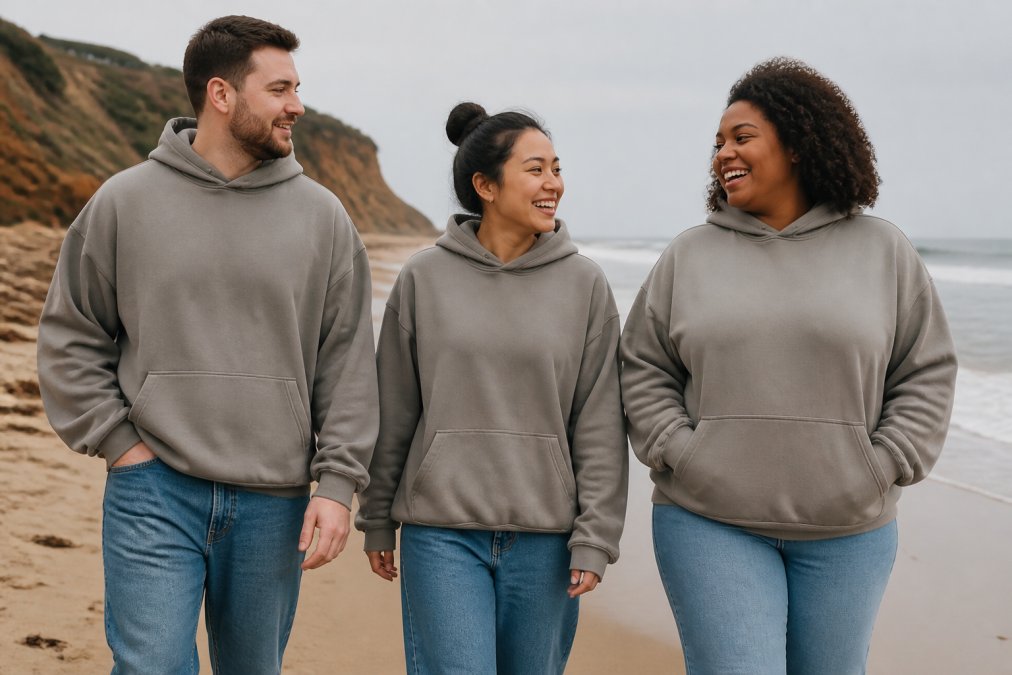
When wearing an oversized unisex shirt, the most effective styling approach is to contrast the volume with fitted pieces below. Pair an oversized hoodie or shirt with fitted or tapered bottoms, jeans, leggings, or tailored trousers. This creates visual balance: the eye perceives the outfit as proportional even though the top is relaxed.
The Baliveno Essential Unisex Oversized Fleece Boxy Hoodie works exceptionally well with this approach. Its substantial volume through the shoulders and torso is balanced by fitted jeans or leggings, creating a silhouette that feels intentional and flattering across multiple body types.
If your oversized top hits at mid-hip, fitted bottoms should be visible. If your top is longer (reaching the hip or mid-thigh), cropped, tapered, or fitted bottoms all work. The key is ensuring that some portion of your lower body is visibly fitted, creating proportion contrast.
Hem Length and Structural Balance
Hem length is one of the most underestimated factors in how an oversized unisex piece reads on different bodies. A piece that's too long can overwhelm a shorter frame; a piece that's too short can look boxy on a taller frame.
For oversized unisex shirts, the ideal hem length depends on your proportions. If you have a longer torso relative to your legs, a longer hem (mid-to-lower hip) works well. If you have a shorter torso relative to your legs, a shorter hem (upper hip) prevents the piece from visually shortening your frame further.
Styling tricks can adjust perceived hem length. Tucking the front of an oversized shirt while leaving the back untucked creates visual interest and shortens the apparent length without actually hemming the piece. Rolling the sleeves adds visual balance by drawing the eye upward and preventing the oversized sleeves from overwhelming the frame.
Design Elements That Enable Fit Consistency Across Sizes
The difference between a unisex piece that fits consistently across sizes and one that feels different in each size comes down to specific design decisions made during pattern-making.
Seam placement is critical. In traditional tailored garments, seams follow the body's natural lines. In unisex design, seams are often positioned to create visual structure independent of body shape. A side seam positioned further forward creates a different visual line and affects how the garment sits across different body types.
Armhole depth and width are another crucial consideration. A shallow armhole creates a different silhouette than a deep armhole. Unisex pieces typically use moderate armhole depth to accommodate different shoulder structures without creating pulling or excess fabric.
Sleeve length and width also affect fit consistency. Unisex pieces often use slightly longer sleeves than traditional menswear to account for different arm-length proportions. The sleeve width is typically consistent from shoulder to cuff, creating a relaxed, uniform look.
The relationship between ease (extra fabric) and structure determines how a piece adapts to different bodies. A piece with significant ease but minimal structure will conform to the wearer's body shape. A piece with moderate ease and more structure will maintain its intended silhouette regardless of body shape. Most successful unisex pieces use a balance of both.
The way unisex designs fit different bodies comes down to thoughtful construction choices, not magic. By understanding how proportions, fabric, and silhouette work together, you can make informed choices about which pieces will work for your body and how to style them for maximum impact. At BALIVENO FASHION HOUSE LTD, we've built this philosophy into every unisex piece, from the Baliveno Unisex Boxy Color Block Polo Shirt to our full range of oversized hoodies. When you choose unisex design that prioritizes inclusive fit, you're choosing pieces built to work with your body, not against it. Explore our collection and discover how thoughtful design translates to everyday confidence and lasting wear.

Frequently Asked Questions
What does unisex fit mean in clothing?
Unisex fit refers to a garment cut designed to work across different body shapes and gender presentations without significant alteration. Rather than tailoring to one specific silhouette, unisex designs use relaxed proportions, dropped shoulders, and strategic fabric drape to provide comfort and aesthetic appeal regardless of body type. This approach prioritizes inclusive design and garment versatility over traditional gendered tailoring.
How do you determine your size in unisex apparel?
Start by measuring your chest, shoulders, and sleeve length, the primary dimensions in unisex sizing. Most unisex charts use these anthropometric data points rather than traditional gendered measurements. Compare your measurements against the brand's specific sizing chart, as grading standards vary. Many unisex pieces run intentionally larger, so check garment construction details like dropped shoulder placement and hem length to ensure the proportional balance suits your frame.
Why is unisex clothing often boxier than gendered clothing?
Boxy cuts are fundamental to unisex design because they remove fitted seams that typically follow gendered body contours. A boxier silhouette provides equal comfort across different body shapes, wider shoulders, narrower frames, and varied proportions all fit naturally without pulling or excess fabric in unintended areas. The relaxed fit also allows for layering and movement, making the garment functional for diverse lifestyles and body types.
How can you style unisex clothing to fit different body shapes?
The key is balancing volume with fitted layers. Oversized unisex pieces work best when paired with tailored bottoms or layered under fitted garments that create structural balance. Hem length matters significantly, cropping an oversized shirt at the hip creates proportion for petite frames, while longer lengths suit taller silhouettes. Accessories like belts and layered pieces help define shape without compromising the comfort and inclusive design that makes unisex clothing appealing.
This article was written using GrandRanker


