

Table of Contents
- How to Build a Sustainable Capsule Wardrobe: A Step-by-Step Framework
- Step 1: Conduct a Wardrobe Audit and Begin Decluttering
- Step 2: Define Your Personal Style and Color Palette
- Sustainable Fashion Tips for Choosing Quality Over Quantity
- Organic Cotton Clothing and Sustainable Fabrics: What to Look For
- Essential Wardrobe Staples and Capsule Checklist for Minimalist Living
- Eco-Friendly Clothing Brands Worth Your Investment
- Capsule Maintenance and Repair: Extending the Life of Your Pieces
How to Build a Sustainable Capsule Wardrobe in 2026
Last Updated: July 24, 2026
Building a sustainable capsule wardrobe doesn't require overhauling your closet overnight. The most successful approach combines intentional decluttering, strategic planning, and investment in quality pieces that work together seamlessly. At BALIVENO FASHION HOUSE LTD, we've guided thousands of people through this transformation, and the common thread isn't perfection, it's consistency. Below, we'll show you the five core strategies that separate a functional wardrobe from a cluttered one.
What You'll Need Before Starting
Gather these essentials: a full-length mirror, natural lighting, a measuring tape, three sorting bins, a notebook to track choices, and honest feedback from someone who knows your lifestyle. Understanding your weekly activities, office work, gym sessions, social events, shapes what pieces actually serve you. Jot down three outfits you felt genuinely confident wearing recently. What did they have in common? These patterns reveal what actually works for you.
Step 1: Conduct a Wardrobe Audit and Begin Decluttering
Pull every wearable item from your closet. Plan for 2-3 hours minimum. As you pull each piece, ask three questions: Do I wear this? Does it fit my body right now? Does it align with how I want to present myself in 2026?
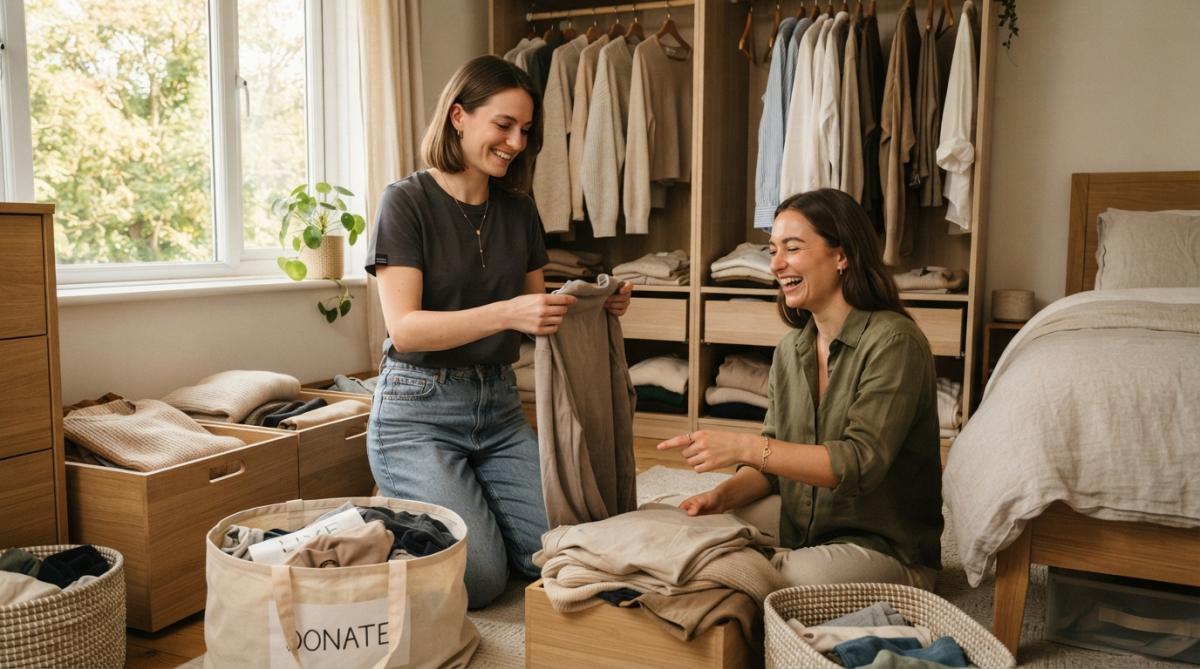
Many people keep clothes for guilt (expensive items rarely worn), nostalgia, or obligation. These aren't valid reasons. Create three piles: keep, donate/sell, and unsure. The unsure pile gets a 30-day test, wear items intentionally over the next month. If you don't reach for them, they go.
Pay attention to what you're discarding. Are most pieces poor quality? Do they have fit issues? These patterns inform your future purchasing decisions.
The One-In, One-Out Rule for Long-Term Success
Once you've built your capsule wardrobe, maintain it using the one-in, one-out rule: for every new piece you bring in, one existing piece leaves. This prevents slow creep back to an oversized wardrobe and forces intentional purchasing decisions. Before buying that new sweater, identify which current piece it's replacing. Often, this clarity reveals whether you actually need the new item.
Step 2: Define Your Personal Style and Color Palette
Your personal style is how you want to feel in your clothes, not what fashion magazines say you should wear. Create a mood board using Pinterest or printed clippings. Save 20-30 images of outfits that appeal to you. Look for patterns: Are most images minimalist or maximalist? Warm-toned or cool-toned? These patterns reveal your authentic style preferences.
Consider your lifestyle's actual demands. If you work in a creative field with casual dress codes and spend weekends hiking, a formal minimalist wardrobe won't serve you. Your style framework should accommodate 80% of your actual weekly activities.
Creating a Cohesive Mix and Match System
The power of a capsule wardrobe comes from pieces that work together. Choose a color palette where most items coordinate. Start with 2-3 neutral base colors that form your foundation (60-70% of pieces), add 2-3 secondary colors (20-30% of pieces), and choose 1-2 accent colors for visual interest. Every piece should pair with at least three other pieces.
Test this by laying out potential outfits. Can you create 10+ distinct combinations? If not, your color palette is too restrictive or you're missing key neutrals.
Sustainable Fashion Tips for Choosing Quality Over Quantity
Quality pieces cost more upfront but deliver dramatically better value over time. A $120 organic cotton shirt that lasts five years costs $24 per year. A $30 synthetic shirt that pills after six months costs $60 per year. Use "cost per wear" as your decision-making tool.
To calculate cost per wear, divide the item's price by the number of times you'll realistically wear it. If a $200 blazer gets worn 100 times over five years, that's $2 per wear. Higher-quality items typically have lower cost-per-wear because you'll actually wear them repeatedly.
When evaluating quality, examine construction details: Are seams reinforced? Do hems look finished? Is the fabric weight substantial? BALIVENO FASHION HOUSE LTD pieces use reinforced seaming and premium fabric weights specifically designed for longevity, meaning your investment actually lasts through years of regular wear.
Understanding Cost Per Wear
Track cost per wear for items already in your closet. Count how many times you've worn each piece in the past year. Divide the price by that number. Items with high cost per wear (under $2) are keepers. Items with low cost per wear (over $5) are candidates for removal.
When shopping for new pieces, estimate how often you'll wear them. A work blazer worn twice weekly gets 100+ wears per year. A formal dress worn quarterly gets 4 wears per year. Be realistic about your lifestyle.
Organic Cotton Clothing and Sustainable Fabrics: What to Look For
Fabric choice directly impacts both durability and environmental impact. Organic cotton eliminates synthetic pesticides and uses significantly less water than conventional cotton. It's soft, breathable, and durable when quality is high. Linen is exceptionally durable, becoming softer with each wash. Wool regulates temperature naturally and resists wrinkles, perfect for structured pieces like blazers.
Recycled synthetics like recycled polyester reduce demand for new petroleum extraction. Tencel (lyocell) is made from wood pulp using a closed-loop process, meaning solvents are recycled rather than released. It feels luxurious and drapes beautifully.
Avoid fabrics that pill easily, lose shape quickly, or require special care you won't actually do. Cheap polyester blends often pill within months.
Eco-Conscious Materials That Last
The most sustainable fabric is one that lasts years without deteriorating. Pure natural fibers (100% cotton, 100% linen, 100% wool) typically outlast blends. Blends can work well, a 95% cotton, 5% elastane blend provides stretch, but avoid blends where synthetics exceed 20% unless there's a specific functional reason.
Check care instructions before purchasing. If an item requires dry cleaning, factor that cost into your decision. BALIVENO FASHION HOUSE LTD emphasizes machine-washable pieces specifically because everyday wearability matters more than pristine condition.
Look for certifications like GOTS (Global Organic Textile Standard) for organic cotton, which verifies the entire supply chain meets environmental and labor standards. FSC certification for Tencel indicates responsible forestry.
Essential Wardrobe Staples and Capsule Checklist for Minimalist Living
A functional sustainable capsule wardrobe includes foundational pieces that work across multiple outfits. Most people need: white t-shirt, neutral sweater, structured blazer, dark jeans, neutral trousers, white button-down, simple dress, and neutral outerwear. Beyond basics, include pieces that reflect your lifestyle.
Shoes require similar strategy: neutral everyday shoes, professional shoes if needed, casual shoes, and one dressier option. Five to seven pairs maximum, with most in neutral tones. Accessories (belts, scarves, jewelry) should coordinate with your color palette.
Building Your Core Capsule Collection
Start with pieces you already love wearing. These become your anchor items. A 30-piece capsule wardrobe typically breaks down as: 8-10 tops, 4-5 bottoms, 2-3 dresses, 2-3 layers, 1-2 outerwear pieces, 5-7 shoes, and accessories. This creates roughly 50+ outfit combinations.
The exact breakdown depends on your lifestyle. Build your capsule to serve your actual life, not an imagined version. As you add pieces, photograph them and create a digital inventory noting color, material, fit details, and which pieces it coordinates with. This prevents duplicate purchases and helps you visualize outfit combinations.
Eco-Friendly Clothing Brands Worth Your Investment
When shopping for your sustainable capsule wardrobe, brand choice matters. Look beyond claims to actual practices: transparent supply chains, fair labor standards, durable construction, and environmental certifications. Prioritize brands that publish sustainability reports detailing their environmental impact and improvement goals.
BALIVENO FASHION HOUSE LTD stands out for combining premium quality with sustainable practices. Their pieces use organic and recycled materials, employ reinforced construction designed for longevity, and focus on timeless designs that outlast trends. The unisex luxury comfort approach means pieces work across body types and lifestyles. This adaptability extends garment lifespan, which is the ultimate sustainability metric.
Consider brand reputation in your community. Do people you know own pieces from this brand? How long have they owned them? Real-world durability matters more than marketing claims.
Evaluating Ethical Supply Chains and Transparency
Ethical supply chains mean fair wages, safe working conditions, and transparent accountability. Ask brands: Where is manufacturing located? Do they publish audit reports? What are their labor standards?
Long-term factory relationships indicate stability and investment in worker training. Fair trade certifications verify that workers receive fair compensation and work in safe conditions. Look for brands that report on their supply chain publicly and acknowledge areas for improvement.
Capsule Maintenance and Repair: Extending the Life of Your Pieces
A sustainable capsule wardrobe requires maintenance. Wash items less frequently than you think, most pieces need washing only after 3-5 wears unless visibly soiled. Spot-clean small stains rather than washing entire garments. When washing, use cold water, gentle cycles, and appropriate detergent.
Air-dry whenever possible; machine drying damages fabrics and fades colors. Store items properly during off-seasons using breathable containers rather than plastic bins. Fold heavy knits rather than hanging them.
Learn basic repairs: replacing buttons, fixing seams, hemming pants, and patching small holes. These skills take minimal time to learn and cost almost nothing.
Common Mistakes to Avoid When Building Your Sustainable Capsule Wardrobe
The biggest mistake is buying pieces you think you should wear rather than pieces you actually want to wear. Guilt-driven purchases never get worn. Your capsule should feel easy and comfortable, not restrictive.
Avoid building a capsule around trends. Choose timeless silhouettes and classic colors. A well-cut blazer in navy works in 2026 and will work in 2030.
Don't underestimate the importance of proper fit. An expensive piece that doesn't fit your body perfectly will sit unworn. Tailoring transforms pieces that almost fit into pieces you love wearing.
Resist the urge to fill your capsule quickly. Building intentionally over 2-3 months beats rushing to fill gaps. Don't forget about accessories, a small collection of coordinating pieces multiplies outfit combinations without adding many items. Jewelry from BALIVENO FASHION HOUSE LTD's minimalist collection works across seasons and styles, like the 18K gold geometric-shaped necklace, bracelet, and earrings set.
If you live somewhere with distinct seasons, your capsule needs seasonal adjustment. Maintain a core year-round capsule and rotate in seasonal pieces. Finally, avoid comparison with others' capsules. The right size is whatever lets you get dressed easily while maintaining pieces you genuinely wear.
Building a sustainable capsule wardrobe requires intention, but the payoff extends far beyond fashion. You'll spend less money, waste less clothing, and feel more confident in what you own. BALIVENO FASHION HOUSE LTD makes this easier by offering quality basics designed for durability and versatility, with reinforced construction that justifies the investment and timeless designs that coordinate across seasons. Start with your wardrobe audit, define your style, and add pieces intentionally. Your future self, and the planet, will thank you.
Frequently Asked Questions
What is a sustainable capsule wardrobe and how is it different from regular minimalism?
A sustainable capsule wardrobe combines minimalism with ethical and eco-conscious choices. Unlike generic minimalist wardrobes, a sustainable capsule wardrobe prioritizes pieces made from organic cotton, recycled materials, or other sustainable fabrics from ethical brands. It emphasizes quality over quantity, slow fashion principles, and cost per wear to ensure each piece serves multiple outfit combinations while reducing environmental impact. The goal is creating a cohesive collection of timeless pieces that last longer and support responsible manufacturing practices.
How many items should I include in my sustainable capsule wardrobe?
Most capsule wardrobes contain 30-50 core pieces, though the exact number depends on your lifestyle and climate. Start with essential wardrobe staples, basic tops, bottoms, and layering pieces, then add items based on your personal style and seasonal needs. Focus on pieces that create multiple outfit combinations through strategic mix and match rather than aiming for a specific number. Quality matters more than quantity; five versatile, durable pieces from sustainable brands will serve you better than twenty fast-fashion items that wear out quickly.
What sustainable fabrics should I prioritize when building my capsule collection?
Prioritize organic cotton clothing, linen, hemp, and Tencel when selecting pieces for your sustainable capsule wardrobe. These eco-conscious materials are grown and processed with minimal environmental impact and typically offer excellent durability. Avoid synthetic blends that shed microplastics and don't biodegrade. When evaluating sustainable fabrics, check for certifications like GOTS (Global Organic Textile Standard) or OEKO-TEX, which verify that materials meet strict environmental and safety standards. Invest in pieces from eco-friendly clothing brands that transparently source their materials.
How do I know if an eco-friendly clothing brand is actually ethical and sustainable?
Evaluate ethical brands by researching their supply chain transparency, manufacturing practices, and third-party certifications. Legitimate eco-friendly clothing brands publish detailed information about where and how their garments are made, labor practices, and material sourcing. Look for certifications from Fair Trade, B Corp, or industry-specific standards. Check customer reviews about durability and longevity, brands that emphasize capsule longevity typically stand behind their products. Avoid brands making vague sustainability claims without supporting evidence; transparency about both strengths and areas for improvement indicates genuine commitment to ethical practices.
What maintenance steps will help my sustainable capsule wardrobe pieces last longer?
Proper capsule maintenance directly extends the life of your investment. Wash items in cold water, use gentle detergents, and air-dry whenever possible to prevent fabric degradation. Learn basic repair skills like sewing buttons, mending small tears, and fixing seams before they worsen, this is crucial for capsule longevity. Store pieces properly using breathable hangers and cedar blocks to prevent pilling and moth damage. Follow care labels specific to sustainable fabrics; organic cotton and natural fibers often require gentler handling. Regular maintenance transforms your capsule wardrobe into a durable, long-term investment rather than disposable clothing.


